
Tae Bo offers a no-contact way to do aerobic movement that some people enjoy enough to repeat. This guide separates the direct study findings from an unofficial five-minute movement sample.
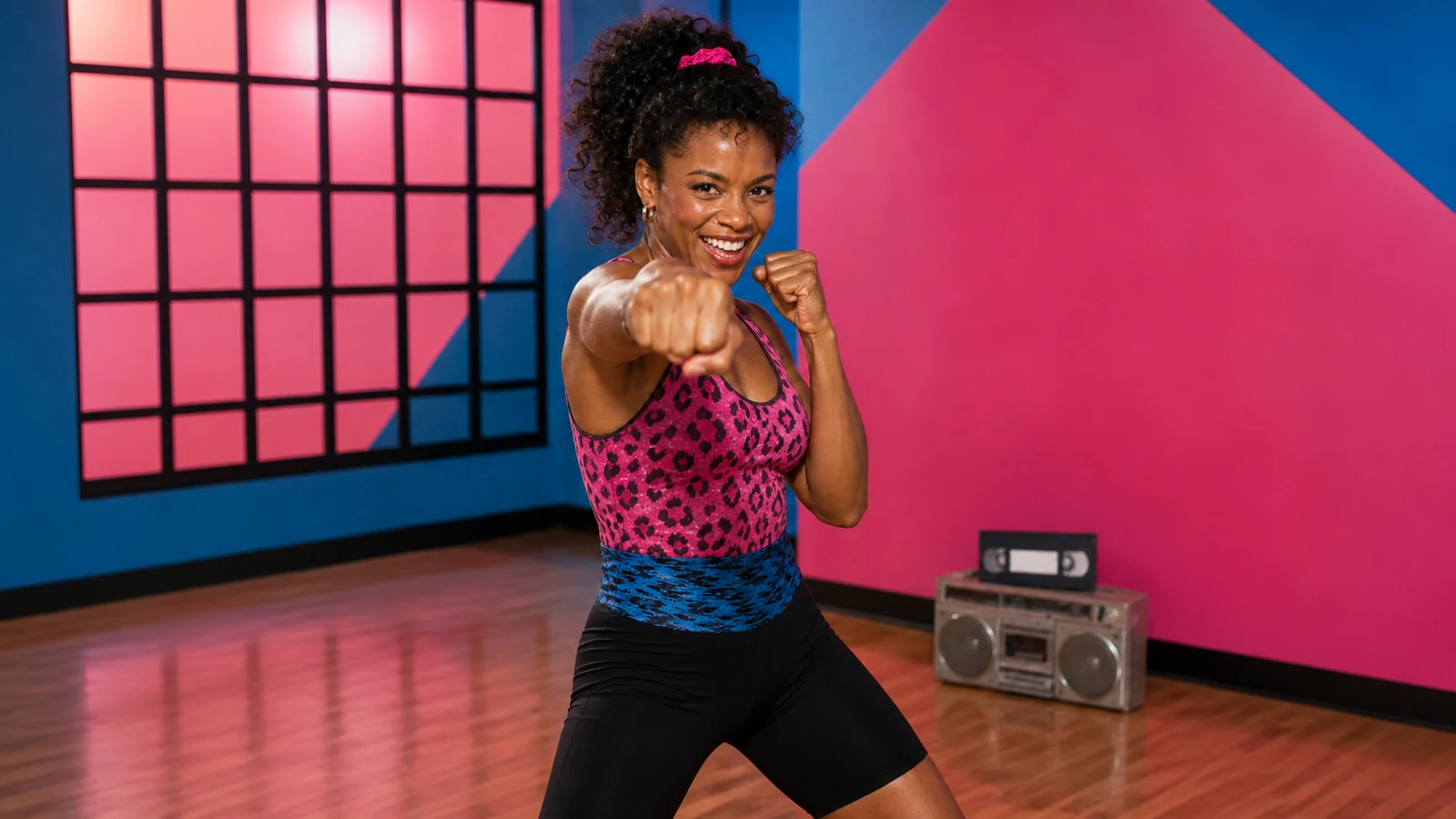
Billy Blanks made Tae Bo a home-workout phenomenon by mixing martial-arts-inspired movements with music. Its current comeback gives beginners another way to move, and the right question is which benefits have actually been measured.
Tae Bo benefits: evidence at a glance
| Possible benefit | What the evidence supports | What remains uncertain |
|---|---|---|
| Aerobic fitness | Read the direct-study section below. | The study does not establish that every video or five-minute try has the same result. |
| Coordination and balance practice | The measured balance finding appears in the study section below. | That does not prove fall prevention or neurological benefit for general readers. |
| Body measurements | Read the design and reporting cautions below. | Results cannot isolate Tae Bo from other activity or predict an individual’s weight change. |
| Enjoyment and consistency | Music and follow-along instruction may make this style appealing to some people. | Personal enjoyment varies and is not proof of a health outcome. |
| Competitive-boxing effects | Boxing bouts can be physiologically demanding. | Competitive injury and lactate data do not measure a no-contact Tae Bo class. |
What direct Tae Bo studies tested
In a 2023 community program, 60 young adult women completed 45 to 60 minutes of group Tae Bo three times weekly for ten weeks, while 65 others were in a waiting control group. The authors reported better cardiorespiratory endurance, static balance, flexibility and several other fitness measures in the intervention group.
It was a quasi-experimental study in one rural South African setting, not a randomized trial of modern home videos. Its results support further study of sustained Tae Bo training, but do not establish an outcome for other ages, populations or doses.
An earlier 2019 before-and-after study followed 32 sedentary women, ages 21 to 40, through three 90-minute Tae Bo sessions weekly for eight weeks. It reported changes in waist measurement and blood lipids, but had no nonexercise control group and contains an inconsistent weight-change value in its table.
The 90-minute sessions included warm-up and cool-down. Without a control group, neither those changes nor the inconsistent weight figures establish a Tae Bo weight-loss effect.
Neither study directly compared Tae Bo with walking, cycling or another aerobic class under matched conditions.
Why the format may feel different from other cardio
Tae Bo combines stepping to music with upper-body strikes and controlled leg movements. Learning a short combination can hold attention in a way a treadmill session may not, although enjoyment is personal.
Music, an instructor’s energy and repeated combinations may make a session appealing, while another person may dislike the pace. The decision is practical: does this format fit your body, schedule and preferences well enough to repeat?
A five-minute, no-contact beginner try
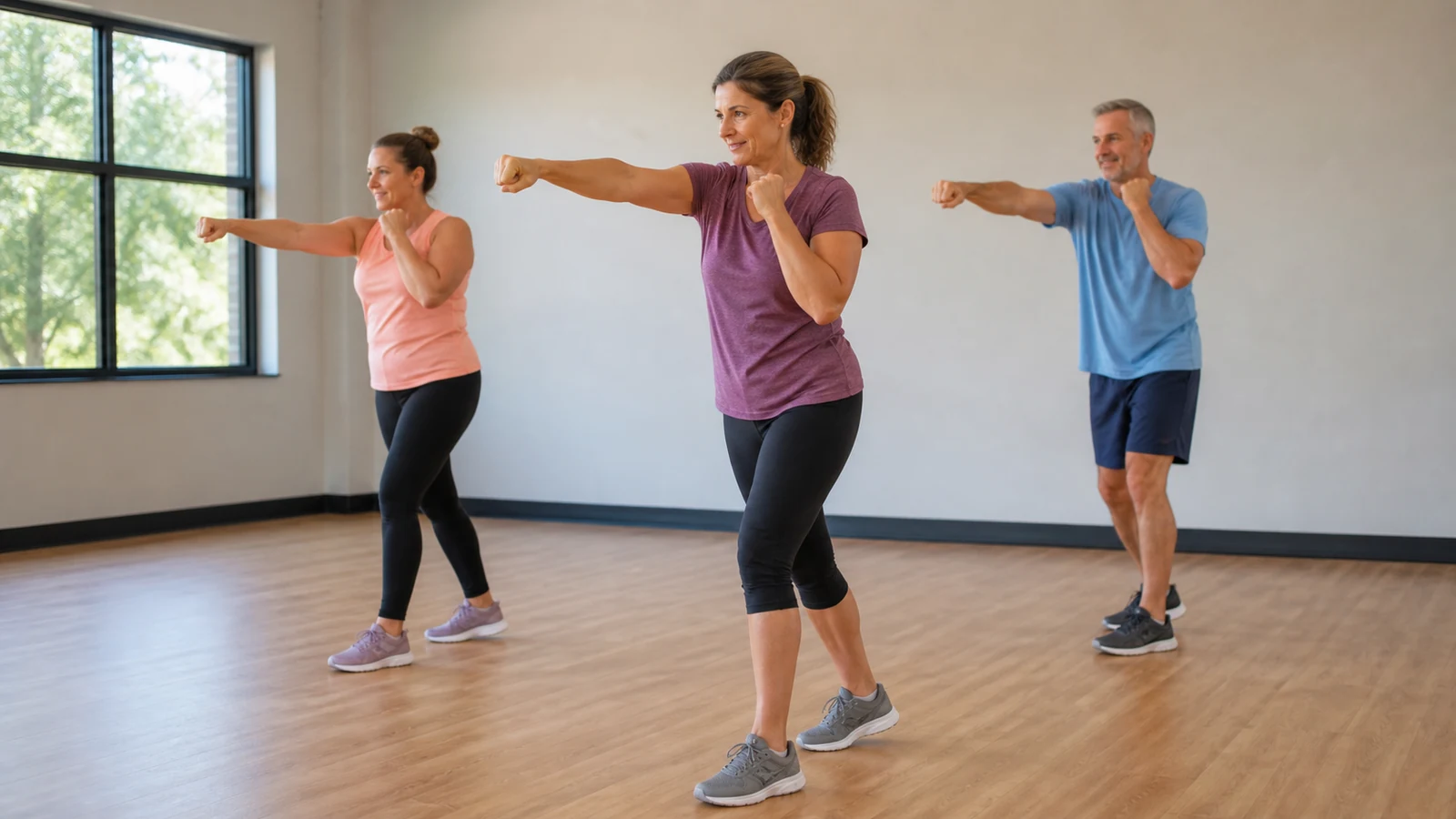
This is an original editorial movement sample, not an official Billy Blanks or Tae Bo routine. It lets you see whether the stepping-and-striking style is enjoyable before choosing a longer beginner class.
| Minute | Movement | Low-impact or support option |
|---|---|---|
| 0:00 to 1:00 | Easy march and relaxed shoulder circles | Step in place or march seated |
| 1:00 to 2:00 | Slow alternating jabs at chest height | Stay planted; keep the punches small |
| 2:00 to 3:00 | Side step, then a single controlled jab | Tap sideways without traveling; use a stable chair for balance and skip the jab |
| 3:00 to 4:00 | Alternate low front kicks or heel taps | Hold a fixed counter and tap the heel forward instead of kicking |
| 4:00 to 5:00 | Slow march and easy breathing | Return to seated marching if needed |
Move at a pace that allows a sentence of conversation, and do fewer repetitions when you need them. A full minute is a convenient timer, not a requirement to keep moving through pain or loss of balance.
Keep knees and elbows soft rather than snapping each strike straight, and turn your whole body gently instead of forcing a twist through a planted knee. If a move feels awkward, return to marching or stop.
Choosing a longer class
Preview a class for low kicks, manageable speed, clear space and non-contact instruction. A beginner or low-impact option can help you learn the pattern before trying fast combinations.
A longer class can be a different experience from this sample. Add time gradually around your current fitness and other activity.
Cardio kickboxing can sit alongside regular strength work and other activity you like. Our running versus weightlifting guide explains why different exercise formats can serve different goals rather than one winning every comparison.
What this article does not claim
Competitive-boxing injury rates do not apply directly to a class where no one is struck. Likewise, high boxing-bout lactate values do not tell us how intense your no-contact class will be.
The studies establish neither disease prevention, unique brain benefits nor individual fat loss.
Stop for chest pain, faintness, sudden dizziness or sharp joint pain, and seek appropriate medical advice. If you have a current injury, cardiovascular condition, balance concern or pregnancy-related exercise restrictions, ask a clinician or physical therapist how to adapt the format.
Watch the original comeback segment
The Good Morning America clip that prompted this article covers Tae Bo’s return to the spotlight. It is a trend report, not a controlled test of its benefits.
Want more like this? Subscribe to WorkoutHealthy Insider for practical explanations behind popular fitness claims.
References
- Mathunjwa et al. (2023), community Tae Bo program and physical fitness.
- Turgut and Metin (2019), eight-week Tae Bo study in sedentary women.
This article is for general information only and is not medical advice. If you have an injury, ongoing pain or a medical condition, talk to a doctor or physical therapist before changing how you train.