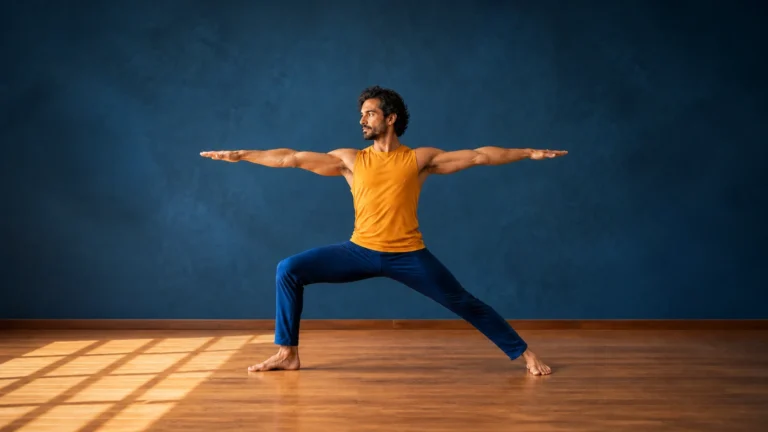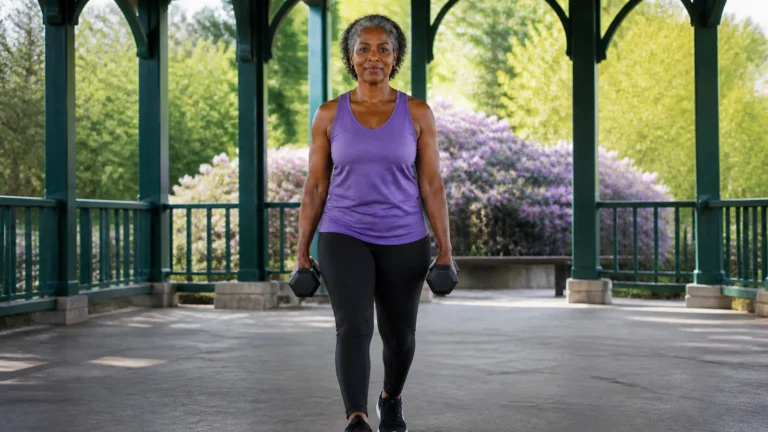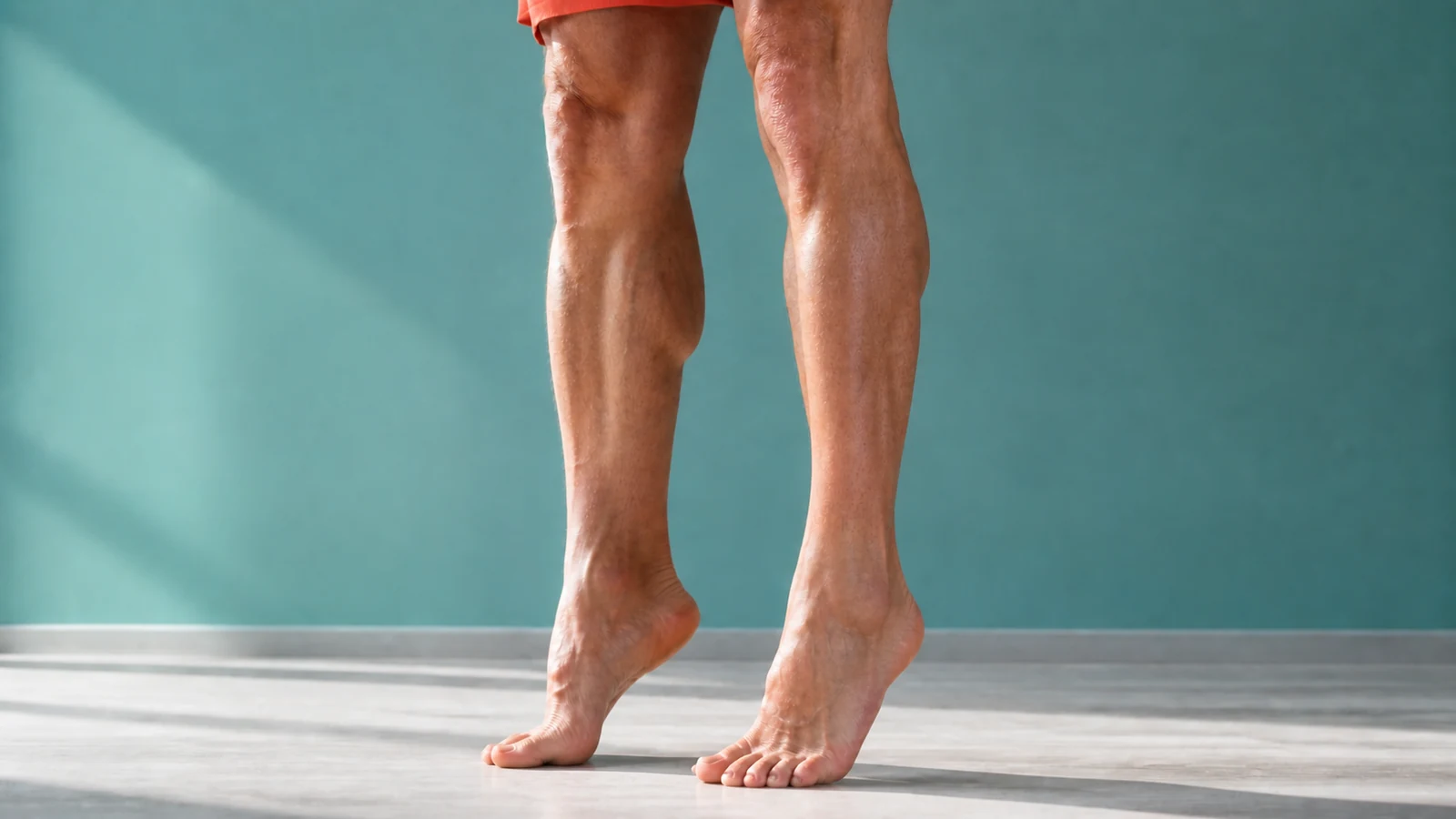

Cold feet, swollen ankles, and heavy legs can have many causes. Exercise may help some people, but it is not a diagnosis or a substitute for vascular care.
In a recent video, vascular and interventional radiologist Dr. Prashant Pote demonstrates three seated movements for leg circulation.
The related Facebook post simplifies that into ankle pumps, calf pumps, and walking. Walking is useful general advice, but it is not one of the three named exercises in Dr. Pote’s video.
This article separates the doctor’s actual demonstration from three broader, evidence-informed movement options that readers can discuss with a clinician when needed.
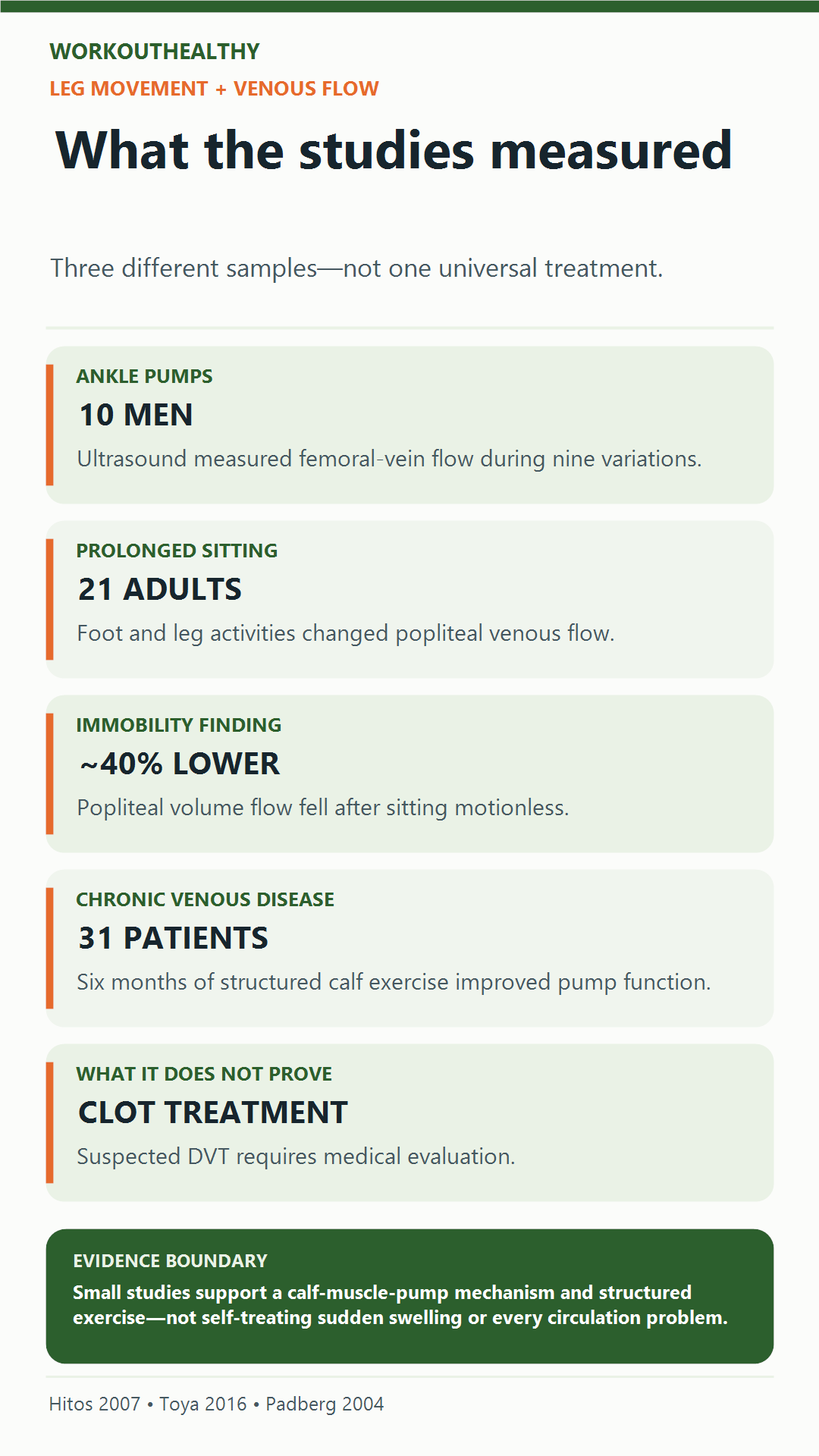
The evidence supports leg movement for specific venous outcomes, not a universal fix for every symptom. We look at the mechanism, the limits, and the warning signs that require medical evaluation.
What Dr. Pote Actually Demonstrates
The original video names a seated march, a leg extension with ankle flexion, and a seated calf pump. These are its three exercises.
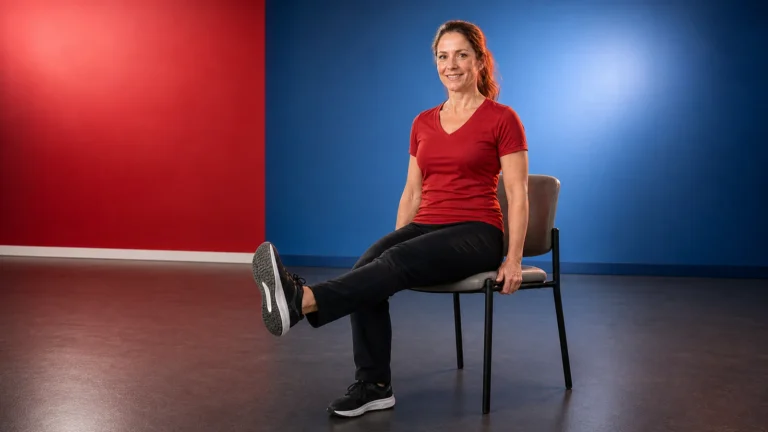
A seated march alternates lifting the knees while sitting upright. A leg extension with ankle flexion straightens one knee and moves the foot toward the shin.
For the seated calf pump, the heels rise and lower while the forefeet stay planted. Dr. Pote presents these as quick home movements, not as treatment for a blood clot or blocked artery.
The three evidence-informed options below overlap with that video but are not an exact transcript: ankle pumps, calf raises, and walking. The distinctions matter because walking is not the video’s third demonstrated move.
Why Legs Struggle to Move Blood Back Up
Blood does not just flow back to the heart on its own once it reaches your feet.
Gravity is pulling it down, not up, for every minute you are standing or sitting.
The veins in your legs rely on outside help to push blood upward against that pull.
That help mostly comes from your leg muscles, especially the calf.
When circulation slows down, blood can pool in the lower legs and feet.
Over time, that pooling is linked to swelling, varicose veins, and in more serious cases, chronic venous insufficiency, a condition where the vein valves stop closing properly.
The Calf Muscle Pump: The Mechanism Behind These Exercises
The reason calf raises, ankle pumps, and walking all show up on the same exercise lists is a structure researchers call the calf muscle pump.
Every time your calf muscle contracts, it squeezes the deep veins that run through it.
That squeeze pushes blood upward, toward the heart.
One-way valves inside the veins keep that blood from sliding back down once the muscle relaxes.
Researchers have described this system as a second heart for the legs, because of how much work it does to keep blood moving against gravity.
A 2005 study in The Journal of Physiology measured blood flow in the leg’s femoral vein directly.
It found that muscle contraction from the legs, not heart pressure alone, drives a large share of blood flow back up toward the heart during movement (Miller et al., 2005).
The calf muscle pump does more work than most people realize. Every step squeezes blood upward, against gravity, using nothing but muscle contraction and a set of one-way valves.
This is why simply moving your ankle and calf muscles, even without walking anywhere, can meaningfully affect blood flow in the legs.
Watch Dr. Pote’s Three Seated Leg Exercises
Exercise 1: Ankle Pumps
Ankle pumps are exactly what they sound like: flexing your foot up and down while seated or lying down.
They are often the first exercise recommended after surgery, during a long flight, or for anyone stuck sitting for hours.
A 2016 study in the Journal of Physical Therapy Science measured blood flow velocity in the femoral vein during ankle pumping exercises done in different positions.
The researchers found that ankle position and how often the pumps were repeated both affected how much blood flow increased (Toya et al., 2016).
In other words, doing the exercise correctly and consistently mattered more than doing it occasionally.
How to do ankle pumps:
- Sit or lie down with your legs relaxed and unsupported at the ankle.
- Point your toes away from you, then pull them back toward your shins.
- Move through the full range of motion you comfortably can.
- Start with a few comfortable repetitions during a movement break. The exact dose should follow your clinician’s advice if you have a vascular condition or recent surgery.
Exercise 2: Calf Raises
Calf raises directly work the muscle that powers the calf pump.
Standing calf raises are the most common version, though seated calf raises work well for people who cannot stand for long.
The clearest evidence for structured calf exercise comes from a randomized trial published in the Journal of Vascular Surgery.
Researchers had patients with chronic venous insufficiency, a condition where leg veins struggle to return blood properly, complete a supervised program built around calf strengthening and range of motion work.
After the program, calf muscle pump function improved measurably compared to patients who did not do the structured exercise (Padberg et al., 2004).
This suggests that consistent calf work can help the pump mechanism work better, not just build muscle size.
How to do calf raises:
- Stand with your feet hip width apart, holding onto a wall or chair for balance if needed.
- Slowly rise up onto the balls of your feet, lifting your heels as high as comfortable.
- Hold for a second at the top.
- Lower back down slowly, taking two to three seconds.
- Begin with a manageable number of controlled repetitions. The cited six-month trial used a supervised program; it did not validate one universal home dose.
Exercise 3: Walking
Walking combines the calf pump with rhythmic movement through the whole leg.
Every step contracts and relaxes the calf, repeatedly squeezing blood upward through the deep veins.
Walking is also one of the few circulation exercises with decades of research behind it as a general health habit, not just a circulation fix.
If you want a simple target for how much to add, this guide on how many miles you should walk a day breaks down realistic goals by age and activity level.
For circulation specifically, shorter, more frequent walks tend to matter more than one long walk.
Getting up and walking for even a few minutes every hour interrupts the long periods of stillness that let blood pool in the lower legs.

How to build in more walking:
- Consider brief walking breaks during prolonged sitting when it is safe to do so. This is practical advice, not a treatment for suspected DVT.
- Take phone calls standing up or walking around when you can.
- Park farther away or take one extra loop before heading inside.
- Build toward a daily walking habit rather than one long weekend walk.
Sitting, Travel, and a Different Kind of Risk
Long periods of sitting do more than make legs feel stiff.
They slow venous blood flow enough to raise the risk of a blood clot forming in the deep veins of the leg, a condition called deep vein thrombosis, or DVT.
A study published in the Journal of Thrombosis and Haemostasis measured popliteal vein blood flow in seated volunteers during several hours of enforced immobility, similar to a long flight.
The researchers found that simple leg exercises performed periodically increased venous blood flow and reduced the stasis that raises clot risk (Hitos et al., 2007).
This is a separate concern from general poor circulation, and it is worth taking seriously on its own.
If you already spend long hours sitting at a desk, this look at whether standing is actually better than sitting covers more of the tradeoffs involved.
What This Research Does Not Prove
None of these studies show that ankle pumps, calf raises, or walking can cure varicose veins or reverse chronic venous insufficiency on their own.
The research shows improved blood flow and pump function, which is meaningfully different from curing an underlying vein disease.
Most of the strongest studies also used supervised programs, not casual, occasional exercise.
People with visible varicose veins, persistent swelling, or vein disease that has already been diagnosed should treat these exercises as a support tool, not a replacement for medical treatment.
The exact numbers you might see in a short video, like a specific percentage improvement in circulation, often trace back to a single study or a marketing claim rather than a broad body of evidence.
Treat any specific percentage claim about circulation improvement with some healthy skepticism unless it names its source.
Circulation claims are not the only fitness claims that get stretched this way in short videos.
This breakdown of sauna use and heart health looks at a different circulatory claim and shows how to check the evidence behind it.
Common Mistakes People Make
Doing the exercises once and expecting lasting change is the most common mistake.
The calf pump responds to consistency, not a single session.
Another mistake is skipping the exercises specifically on the days spent sitting the most, which is exactly when they matter most.
Some people also perform calf raises too quickly, which reduces the muscle’s time under tension and may reduce the pumping benefit.
Elevating the legs is helpful for symptom relief, but it is not a replacement for active muscle contraction.
Passive elevation reduces pressure temporarily, but it does not train the pump the way active movement does.
Finally, ignoring warning signs like sudden swelling, redness, or one leg that looks different from the other is a mistake with real consequences, covered in more detail below.
Who Should Check With a Doctor First
Most people can safely do ankle pumps, calf raises, and walking without any special precautions.
But leg circulation is a topic that can brush up against real medical conditions, and a few groups should talk to a doctor before starting.
If you have a suspected or diagnosed blood clot, exercise is not the first move.
According to the Mayo Clinic, deep vein thrombosis can occur with little warning, and a piece of that clot can break loose and travel to the lungs, a life-threatening event called a pulmonary embolism.
Warning signs of a possible clot include leg swelling, pain or cramping that starts in the calf, and skin that looks red or feels warm to the touch.
Sudden shortness of breath, chest pain that worsens with a deep breath, or coughing up blood are signs of a possible pulmonary embolism and need emergency care right away, not a home exercise routine.
If a blood clot is suspected, exercise is not a first step to try at home. It is a decision for a doctor to make, based on an actual diagnosis, not a guess.
People with peripheral artery disease, where narrowed arteries reduce blood flow to the legs, need a different approach entirely.
Walking is often part of treatment for peripheral artery disease, but it usually works best as a structured, sometimes supervised program rather than a casual daily walk, according to guidance summarized by the Cleveland Clinic.
Pushing through leg pain without medical guidance in this case can do more harm than good.
Anyone with varicose veins that are already causing pain, skin changes, or ulcers should ask a doctor before starting a new exercise routine, since some cases need treatment beyond exercise.
The same caution applies to anyone recovering from recent leg surgery or a known clotting disorder.
If you are unsure which group you fall into, a quick conversation with a doctor is faster and safer than guessing.
Get the next evidence check. Subscribe to WorkoutHealthy Insider for practical explanations behind popular fitness claims.
References
Hitos, K., Cannon, M., Cannon, S., Garth, S., & Fletcher, J. P. (2007). Effect of leg exercises on popliteal venous blood flow during prolonged immobility of seated subjects: Implications for prevention of travel-related deep vein thrombosis. Journal of Thrombosis and Haemostasis, 5(9), 1890 to 1895. https://doi.org/10.1111/j.1538-7836.2007.02664.x
Miller, J. D., Pegelow, D. F., Jacques, A. J., & Dempsey, J. A. (2005). Skeletal muscle pump versus respiratory muscle pump: Modulation of venous return from the locomotor limb in humans. The Journal of Physiology, 563(Pt 3), 925 to 943. https://doi.org/10.1113/jphysiol.2004.076422
Padberg, F. T., Jr., Johnston, M. V., & Sisto, S. A. (2004). Structured exercise improves calf muscle pump function in chronic venous insufficiency: A randomized trial. Journal of Vascular Surgery, 39(1), 79 to 87. https://doi.org/10.1016/j.jvs.2003.09.036
Toya, K., Sasano, K., Takasoh, T., Nishimoto, T., Fujimoto, Y., Kusumoto, Y., Yoshimatsu, T., Kusaka, S., & Takahashi, T. (2016). Ankle positions and exercise intervals effect on the blood flow velocity in the common femoral vein during ankle pumping exercises. Journal of Physical Therapy Science, 28(2), 685 to 688. https://doi.org/10.1589/jpts.28.685
This article is for general information only and is not medical advice. If you have an injury, ongoing pain, or a medical condition, talk to a doctor or physical therapist before you change how you train or eat.