
Foot massage benefits: what can it actually do?
Foot massage may feel soothing and may help some people relax in the short term. Studies in specific groups report changes in anxiety or sleep, but they do not show that a few minutes of self-massage treat disease or that pressing a spot on your foot heals a matching organ.
You can use light, comfortable touch as a personal comfort practice without buying into a reflexology map. If the foot hurts, is injured, or has reduced sensation, the decision is different; see the stop and avoid guidance below.
Benefits and claims, graded by what was studied
| Claim | What the evidence can support | Practical reading |
|---|---|---|
| It feels pleasant after a long day | A personal comfort response is plausible, but an individual’s pleasant feeling is not a medical outcome study. | Use gentle pressure if it feels good and leaves the foot no worse afterward. |
| It improves anxiety or sleep | Some trials of structured foot massage or reflexology in particular groups reported short-term changes. Intervention, comparison and population differ across studies. | Possible for some people; do not promise treatment of anxiety or insomnia from a home routine. |
| A precise foot point treats an organ | The NIH National Center for Complementary and Integrative Health says the proposed point-to-body healing link has not been proven. | Do not use a foot map to diagnose or treat a condition. |
| It improves whole-body circulation or heals injury | The cited studies do not establish those outcomes from ordinary foot massage. | Persistent swelling, pain or injury calls for appropriate medical assessment. |
This table separates a reasonable comfort choice from claims about clinical treatment. It is not a rating of every possible massage technique or a substitute for individual care.
What the foot massage research found
A 2022 randomized trial in 70 postmenopausal women compared seven days of foot massage with no intervention and reported differences in anxiety, fatigue and sleep measures. The group and protocol were specific, and a no-treatment comparison cannot show whether foot massage outperforms quiet attention, touch elsewhere, or another relaxing activity.
A 2002 trial of 76 women with menopausal symptoms compared reflexology with nonspecific foot massage over nine sessions. The researchers did not find reflexology more effective than ordinary foot massage for the psychological symptoms measured.
A 2020 review of 26 reflexology trials reported improvements in anxiety, depression symptoms and sleep quality across its included studies, while calling for larger, more rigorous trials and longer follow-up. Those findings concern studied reflexology programs in varied groups, not this page’s brief self-massage example.
Ordinary foot massage versus reflexology
Ordinary foot massage is touch and pressure applied to the foot for local comfort. Reflexology adds a theory that certain pressure points on the feet or hands correspond to distant body parts.
The NIH describes that proposed matching and healing mechanism as unproven. A person may still enjoy the touch, but a comfortable response does not validate a map of organs or a special vagus-nerve pathway from the arch.
A three-to-five-minute seated comfort sequence
This is an optional way to explore comfortable touch, not a clinically tested protocol. Skip it when an injury, wound, infection, unusual swelling, or reduced foot sensation makes self-massage a poor choice.
- Get stable: Sit in a secure chair and support the foot where you can reach it without twisting or balancing awkwardly.
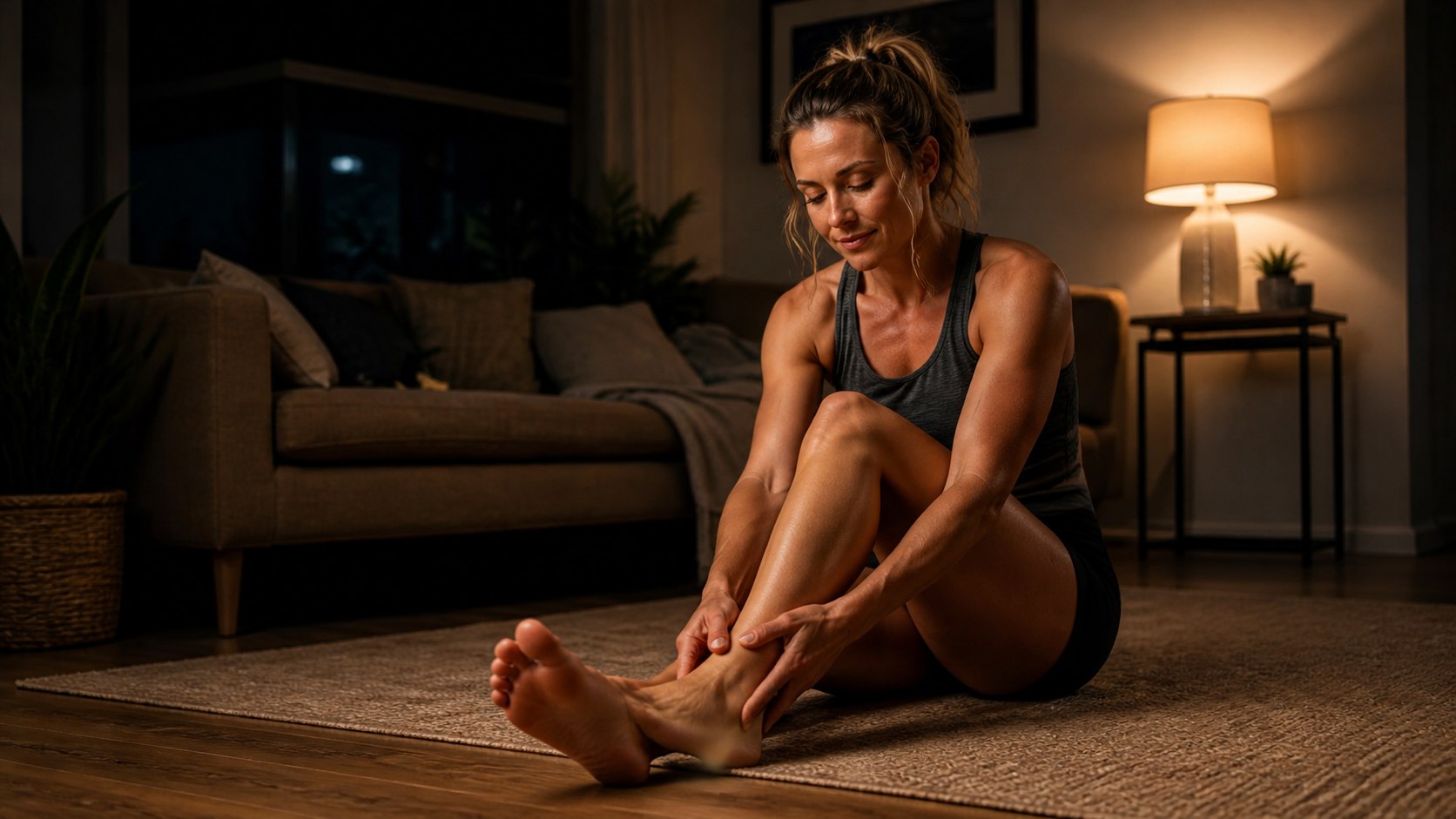
- Start lightly: Rest a warm hand on the foot for a few breaths, then make slow, broad strokes across the sole and top of the foot for about a minute.
- Explore comfortable areas: Use a thumb or fingertips to make small, gentle circles through the sole, arch and heel for another minute or two. Bypass any tender point instead of pushing through it.
- Finish and check: Gently move the toes if that is comfortable, then stop and notice whether the foot feels the same or better.
If reaching the foot is awkward, a soft cloth, a comfortable seated position, or help from a trusted person can make the practice more accessible. No special ball, pressure-point chart, or exact duration is required.
Use a comfort test, not a pressure target
Gentle pressure should feel comfortable during the massage and leave the foot no worse afterward. Stop for sharp pain, burning, numbness, tingling that spreads, or a new change in color or swelling.
More pressure is not automatically more useful. The goal of this sequence is to see whether light touch feels pleasant to you, not to force a physiological response.
When to skip massage and ask for help
Do not massage an acute injury, an open wound, infected skin, a suspected fracture, or a hot and swollen area. If you have reduced sensation, circulation problems, or a condition that affects your feet, ask your clinician before trying pressure on them.
Recurring or worsening pain deserves assessment rather than repeated self-treatment. Foot massage does not replace appropriate footwear, gradual activity changes, or medical care for a persistent problem.
If the discomfort followed a change in walking volume, our daily walking guide can help you think through the activity side. Our standing versus sitting guide discusses movement breaks without making claims about foot treatment.
Frequently asked questions
Can foot massage help me relax?
It may feel relaxing for you, and trials in particular groups have reported some short-term benefits. It is reasonable to use gentle touch for comfort when your feet are healthy, but it is not a proven treatment for a medical condition.
Is reflexology the same as foot massage?
No. Both involve touch on the foot, but reflexology adds claims about special points corresponding to other body parts, which the NIH says have not been proven.
How hard should I press?
Use only pressure that feels comfortable and leaves the foot no worse afterward. Stop if a sensation is sharp, burning, numb, or otherwise concerning.
Get the next evidence check.
Five practical fitness stories worth your time, every Friday.
Weekly email with no product pitches. Unsubscribe in one click.
References
- NIH National Center for Complementary and Integrative Health, Reflexology, on the unproven point-to-body mechanism.
- Gökbulut and colleagues, 2022 foot massage randomized trial, in postmenopausal women.
- Williamson and colleagues, 2002 randomized trial, reflexology versus nonspecific foot massage.
- Wang and colleagues, 2020 review, reflexology trials and their limitations.
This article is general comfort and health information, not a diagnosis or medical treatment plan. Ask a qualified clinician about persistent pain, injury, reduced sensation, or a condition affecting your feet.