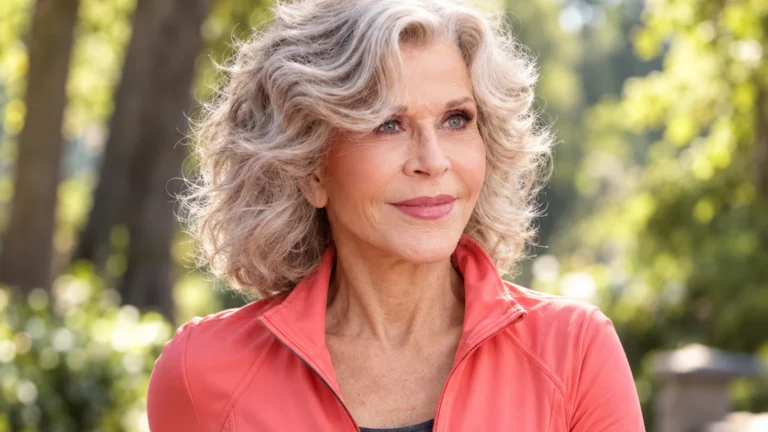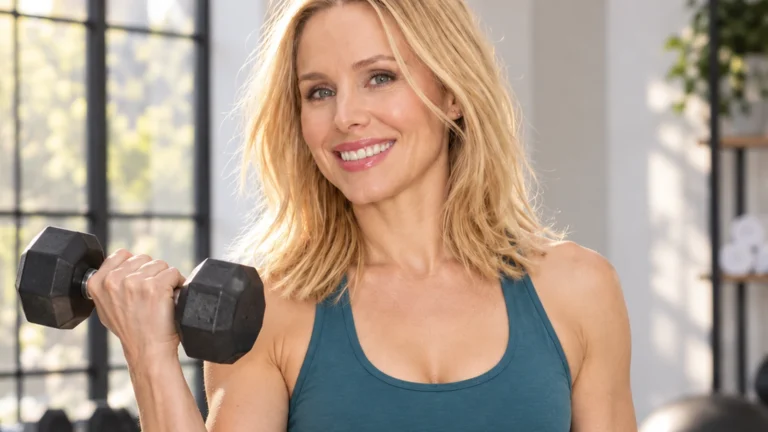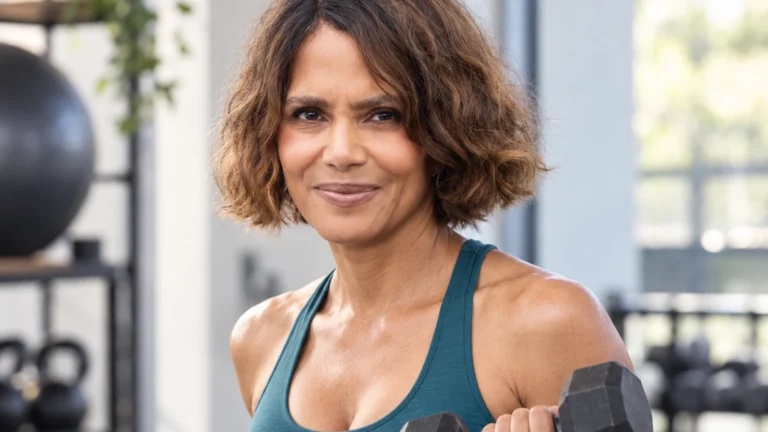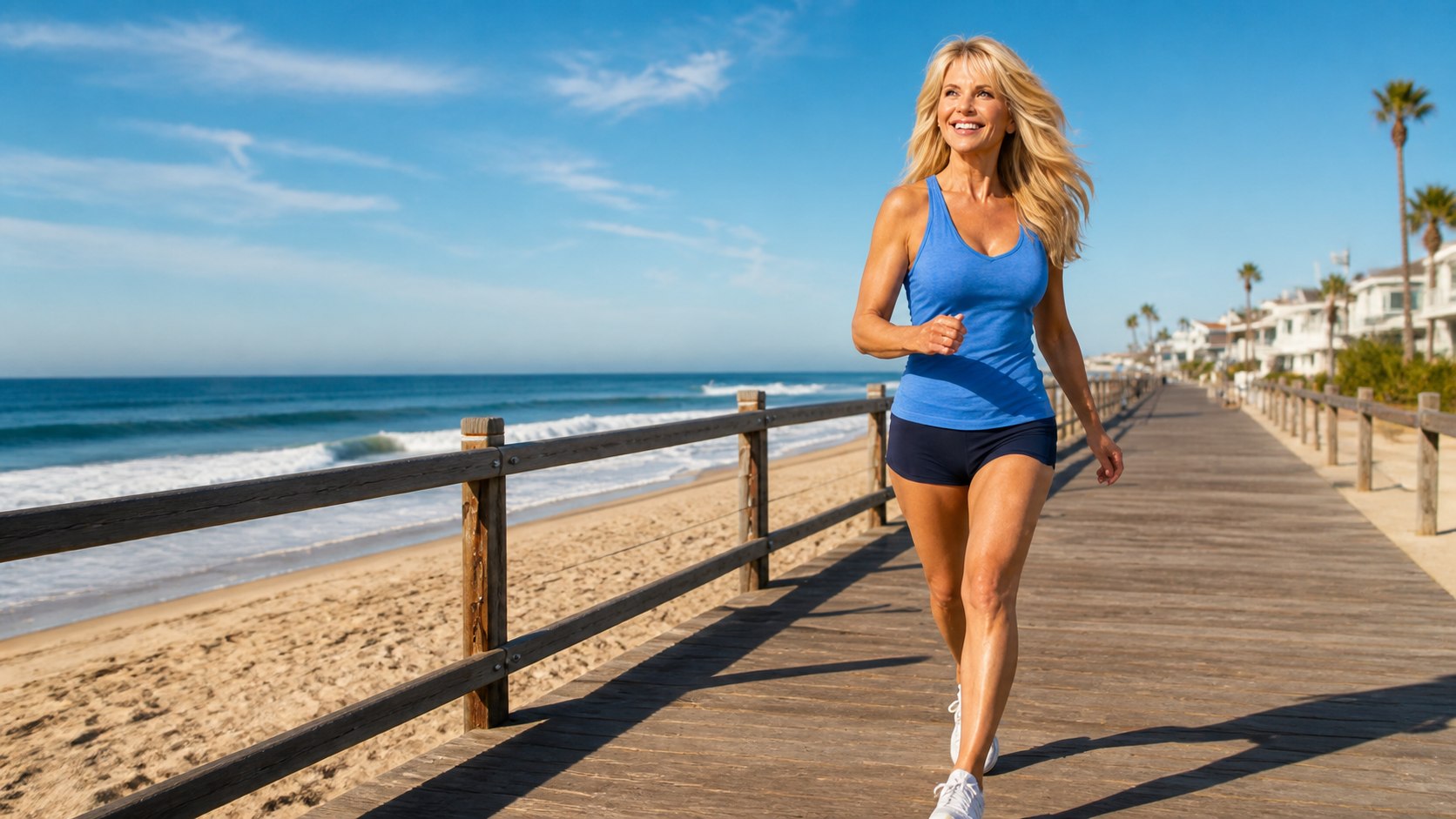

A WorkoutHealthy Facebook post said Christie Brinkley stayed camera ready at 63 through lifelong activity and a plant forward diet. The age and photo context point to her 2017 return to the Sports Illustrated Swimsuit Issue, not a new claim about her routine today.
Brinkley was 63 in 2017, and the useful lesson is not that one celebrity has found a shortcut. It is that she described movement as something varied, enjoyable, and built into ordinary life.
The strongest part of this story is not a perfect program. It is the idea that movement becomes easier to repeat when it fits the life you already have.
What Brinkley actually said in 2017
In a 2017 Sports Illustrated article, Brinkley said she needed variety and preferred outdoor movement, dance classes, beach bike rides, kayaking, and paddleboarding. She also described herself as a longtime vegetarian.
Those are personal preferences, not a clinical prescription. They also do not prove that any single food pattern or exercise explains appearance, health, or aging.
What is documented and what is interpretation
The documented facts are fairly narrow: Brinkley was 63 during the 2017 shoot, she described a varied approach to activity, and she identified as a longtime vegetarian. The broader idea that these habits produced her appearance is an interpretation, not something the source can prove.
Genetics, resources, work demands, medical care, sleep, stress, and decades of individual choices can all shape how someone looks and feels. A photograph cannot separate those influences or measure fitness, cardiovascular health, strength, or mobility.
This is why the article focuses on repeatable behavior instead of a celebrity result. The useful question is whether variety makes your own routine easier to continue.
Why variety can be a practical advantage
A routine only works when it is repeated. Rotating among walking, cycling, strength work, classes, and outdoor activity can give you more ways to stay active when weather, time, or motivation changes.
That does not mean changing the plan every day. It means keeping a small menu of activities that serve the same goal, much like choosing among the options in our guide to daily walking mileage.
Social support can also help. If solo routines fade quickly, our look at workout partner benefits explains where accountability can be useful.
Public health guidance supports both consistency and variety. The World Health Organization recommends regular aerobic and muscle-strengthening activity across adulthood, while U.S. guidance encourages people who are inactive to begin with manageable amounts and build over time.
Those recommendations are weekly targets, not a requirement to perform one perfect workout. Walking, cycling, dancing, paddling, and resistance training can all contribute when the intensity and volume fit the person.
The WorkoutHealthy minimum viable movement test
Here is the original value worth taking from the story: identify the smallest version of movement you would still do on a crowded day. It might be a brisk walk around the block, one short strength circuit, or ten minutes on a bike.
If the activity feels too large to start when your schedule is messy, make it smaller until it becomes repeatable. You can always add time after you begin.
This is not a replacement for progressive training. It is a way to protect consistency, then build from a stable floor when your capacity improves.
Once the floor is reliable, add direction. Choose one quality to improve, such as walking endurance, lower-body strength, balance, or mobility, and make the next month of training specific enough to measure.
That combination solves two different problems. The minimum keeps the habit alive, while the measurable goal gives the habit somewhere to go.
A routine that survives busy days can do more for consistency than an impressive routine that only happens under perfect conditions.
What to copy and what to leave behind
Copy the durable ideas: enjoyable movement, useful variety, and meals centered on minimally processed plant foods when that pattern suits you. Leave behind comparisons with a celebrity image, assumptions about current habits, and the belief that visible appearance proves internal health.
If you want more structure, our guide to deciding whether to hire a personal trainer can help you judge when professional coaching is worth it.
A practical way to use the story
Build a short activity menu for three situations: a normal day, a busy day, and a day when weather or equipment changes the plan. The options should serve similar goals without requiring the same setting.
For example, a normal day might include a longer walk and strength session, while a busy day keeps only the short walk. An indoor bike or simple bodyweight routine can cover the weather problem without turning the week into a restart.
Review the menu after several weeks. Keep the options you actually use, remove the ones that create friction, and progress the activities that matter most to your goals.
Get the next evidence check.
Five practical fitness stories worth your time, every Friday.
One email a week. No product pitches. Unsubscribe in one click.
Medical disclaimer: This article is general product information, not medical advice. The equipment described here is not a treatment for any condition. If you have an injury, ongoing pain, or a medical condition, talk to a doctor or physical therapist before using any of it.