
Will lifting weights make me bulky if I am a woman? Lifting can increase muscle size, but neither a heavy dumbbell nor a few workouts determines how your body will look.
Training, food, genetics, starting size, and your own definition of “bulky” all matter.
That last point is easy to miss. Some women welcome more visible muscle; others dislike a small change in how their sleeves or jeans fit, and neither preference needs correcting.
Studies of female lifters can describe average muscle-size changes. They cannot tell you how your own clothes will fit.
The useful question is what changed and whether you want to adjust your training. This guide checks six common fears against research and gives you a practical way to make that decision.
First, separate a temporary change from muscle growth
| What you notice | What it could mean | A useful check |
|---|---|---|
| A muscle looks or feels fuller just after training | A temporary exercise response, including increased blood flow and fluid, can change its appearance. | Compare on a rest day, not immediately after a workout. |
| The scale changes over several days | Body weight reflects more than muscle: fluid, food, and many other factors move it. | Do not call a short-term scale change “bulk.” |
| A sleeve or pant leg fits differently for weeks | Muscle, body fat, clothing variation, or several factors may be involved. | Use the same garment at similar times and consider whether the change actually bothers you. |
| Your lifts improve but your clothes fit much the same | Strength can improve without an obvious visible change. | Keep a simple record of what you lifted and how it felt. |
This is a decision aid, not a home body-composition test. No single scale reading, photo, or clothing check identifies how much muscle you gained.
Fear 1: “A few weeks of lifting will suddenly make me bulky”
Resistance training can build muscle, including in women. Yet the amount and pace vary, and an early change in appearance is not automatically new muscle tissue.
The 2025 Refalo review analyzed 29 studies of healthy adults aged 18 to 45 who completed the same training programs. It measured muscle-size changes, not whether participants considered their appearance bulky.
Use your own observation over time instead of a universal “you will look toned in ten weeks” promise. A slow, repeatable comparison is more informative than inspecting a muscle right after a session.
Fear 2: “Women cannot build much muscle, so I should not worry at all”
That reassurance goes too far. The Refalo review found broadly similar relative muscle-size gains for women and men in the studied programs, while absolute gains slightly favored men overall.
A separate 2020 Roberts review found no significant sex difference in its pooled hypertrophy outcomes. Neither review says every person gains the same amount or that a woman cannot build visibly larger muscles.
The reviews report muscle-size outcomes across study groups, so their pooled results cannot predict your clothing fit. For the programming question, see our separate guide to whether women and men need different workouts.
Fear 3: “Heavy weights build bulk, but light weights only tone”
“Toning” is a look, not a special biological effect of light dumbbells. In a 2017 meta-analysis of 21 studies, low- and high-load programs produced similar average muscle-growth measures when participants took sets to momentary failure; heavier loads had a clearer advantage for maximal one-repetition strength.
Those studies do not mean beginners must train to failure. They show why switching to very light weights is not a reliable way to prevent size gains while still improving strength.
Choose a load and exercise you can control, then adjust it to match the strength and appearance changes you actually want. If a movement causes pain or you cannot perform it with control, reduce the difficulty and seek qualified help as needed.
Fear 4: “If the scale rises, it must be muscle”
A higher number alone cannot tell you which tissue changed. Exercise can alter fluid and other short-term factors, while muscle and fat changes require appropriate measurements to distinguish.
A 2022 Wewege review found that resistance training, on average, reduced body-fat percentage and fat mass compared with no exercise in healthy-adult studies. That group result cannot predict your weight, waist, or clothing fit.
If the scale is useful to you, treat it as one optional signal alongside strength, comfort, and how you feel. You do not need to track weight or measurements to benefit from lifting.
Fear 5: “If I stop lifting, muscle turns into fat”
Muscle and fat are different tissues, so one does not literally turn into the other. If activity changes, muscle size, body fat, and body weight may each change over time for different reasons.
You also need not maintain the same routine forever to keep every benefit. A plan you can resume and adapt is more useful than treating a missed week as a body-composition emergency.
Fear 6: “Female bodybuilders show what normal lifting does”
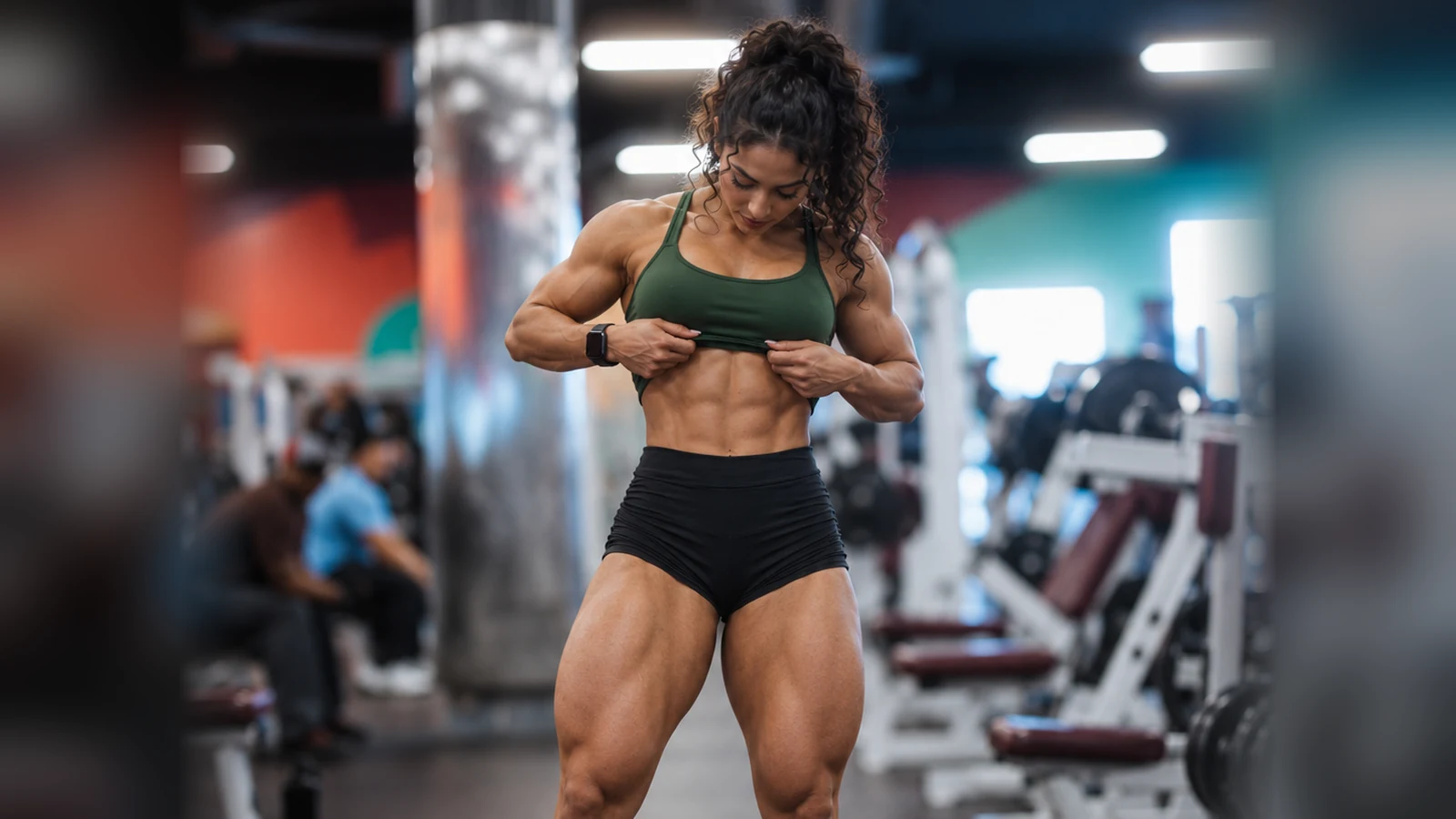
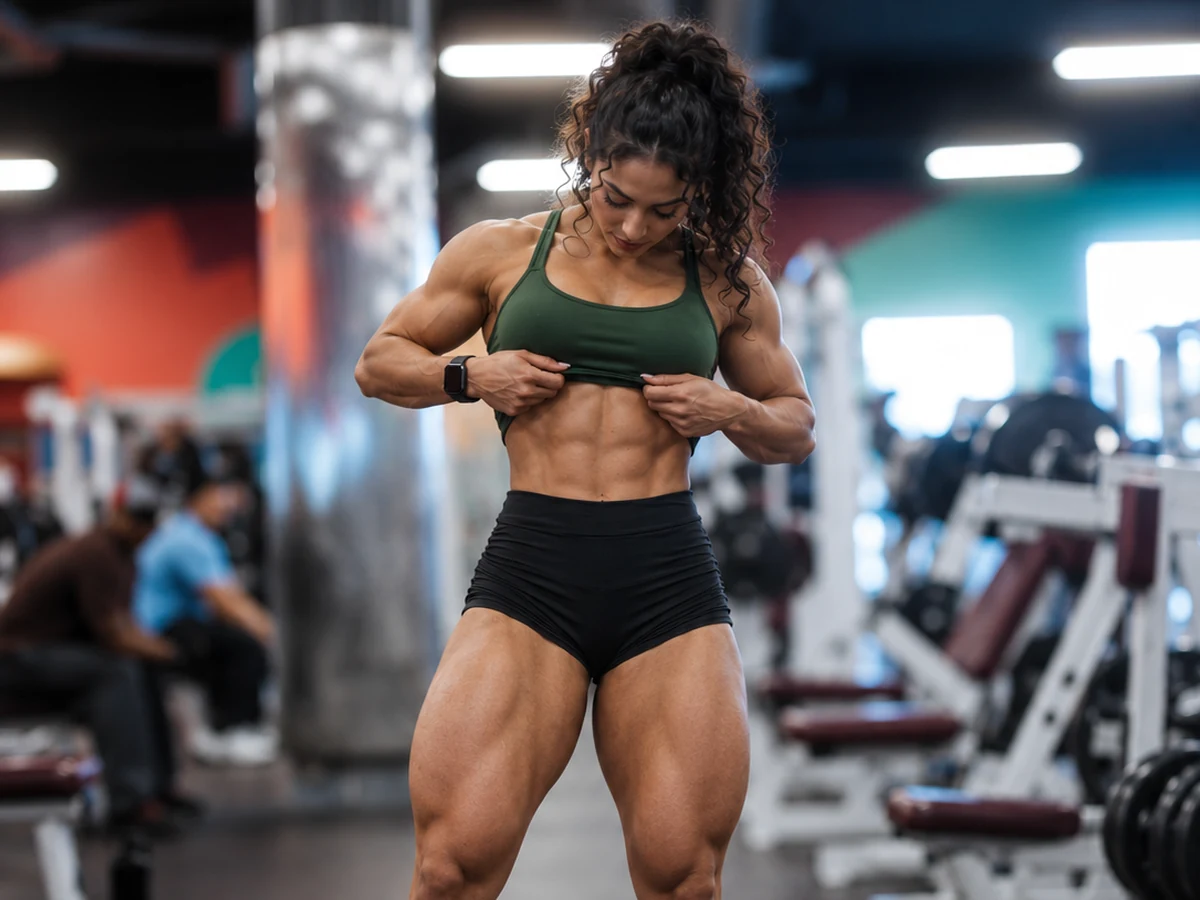
Competitive bodybuilding is a specific appearance sport with deliberate training and presentation. A stage photograph cannot predict what a beginner will look like after an ordinary strength program.
Still, dismissing every concern as a “myth” misses the personal part: a modest change in muscle size may be welcome to one person and unwanted by another. The honest answer is that lifting can change your shape, and you can change your plan if your result is not what you want.
A simple way to adjust without giving up strength training
For a generally healthy beginner, the ACSM’s 2026 guidance emphasizes regular participation and working major muscle groups at least twice a week. It also emphasizes tailoring the load and weekly work to personal goals rather than following one rigid program.
- State the goal. Examples include feeling stronger, being comfortable in your clothes, or building visible muscle. You can value more than one outcome.
- Start with a manageable routine. An editorial example is two nonconsecutive sessions with a leg movement, a push, a pull, and a hip-hinge or carry. Choose supported machines, bands, or free weights according to your comfort and access.
- Record the useful signals. Note the exercises, load or band, repetitions, and whether the last few repetitions stayed controlled. Clothing fit is optional and need only be checked under comparable conditions.
- Review after a consistent stretch. If you like the result, continue. If a particular area is growing more than you prefer, a qualified coach can help adjust exercise selection or training volume while keeping the strength work you value.
This is a flexible example, not a tested “anti-bulk” program. There is no exercise, repetition range, or eating rule that guarantees a particular silhouette.
If you are managing an injury, pregnancy, a recent birth, or a medical condition that affects exercise, ask an appropriate clinician or qualified exercise professional how to adapt the routine. If appearance concerns are driving distress or restrictive eating, a clinician or registered dietitian can help without imposing a body-size target.
Why the fear persists
Gym comfort and social judgment can shape whether women try lifting at all. Salvatore and Marecek’s 2010 research studied evaluation concerns as a barrier to women’s weight lifting; it does not measure how much muscle a program produces.
If a gym setting feels unwelcoming, starting at home, with a trusted partner, or with an instructor can make the first sessions easier. None of those choices makes your training less valid.
Watch the original video
Juice & Toya discuss the fear of becoming bulky in the video that prompted this article. Their perspective is useful context, while the research above sets the limits on what anyone can promise about appearance.
Sources
- Refalo et al. (2025), sex differences in muscle-size changes after resistance training.
- Roberts et al. (2020), sex differences in resistance-training adaptations.
- Schoenfeld et al. (2017), low- versus high-load resistance training.
- Wewege et al. (2022), resistance training and body-fat measures.
- American College of Sports Medicine (2026), resistance-training guidance.
- Salvatore and Marecek (2010), evaluation concerns in the gym.
This article provides general fitness information, not medical advice. Seek personalized guidance for an injury, ongoing pain, pregnancy-related concerns, or a medical condition.