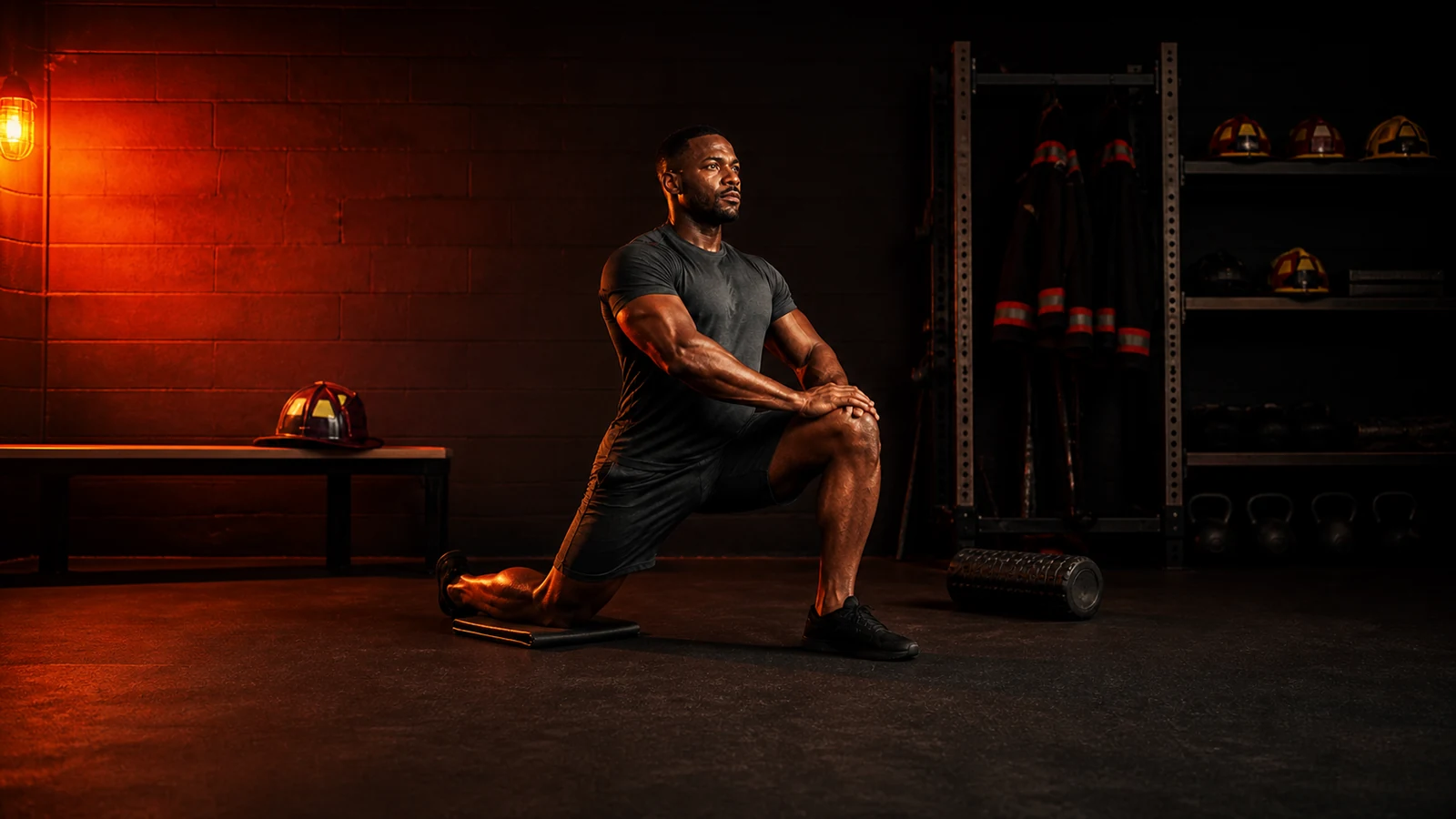

A kettlebell coach on YouTube recently posted a recovery day workout built around mobility drills and light movement.
The video promises that easy movement between hard training sessions beats doing nothing at all.
It also promises that mobility work protects your joints from injury.
Both claims show up constantly in fitness content.
Both are also more complicated than a single video can show.
This article checks those two claims against real, peer reviewed research.
It looks at what active recovery actually does to soreness and performance.
It also looks at what mobility and stretching research says about injury prevention.
Many readers here already lift weights instead of running.
Our reader survey on why more readers favor weightlifting over running found injury concerns are a big part of that choice.
For lifters like that, a smart recovery day is not optional.
It is part of the training plan, not an afterthought.
What the Video Claims
The video comes from RCFITNESSKB, a kettlebell focused YouTube channel.
The channel’s public about page identifies the presenter only as “Coach, Dad, Firefighter/Medic.”
No specific strength or mobility coaching certification is listed anywhere on that page.
That does not automatically make the advice wrong.
It does mean the advice should stand on its own evidence.
The video itself is framed as a demonstration, not a research summary.
It walks through a sequence of mobility drills and light kettlebell movement.
The routine is meant for a day between two hard training sessions.
The core claim is simple.
Moving lightly on a rest day helps recovery more than sitting still.
A second claim runs through the mobility segment of the video.
Working on joint mobility is presented as a way to prevent injury.
Both ideas are repeated constantly across fitness media.
That popularity is worth separating from the actual evidence.
What Real Research Shows About Active Recovery
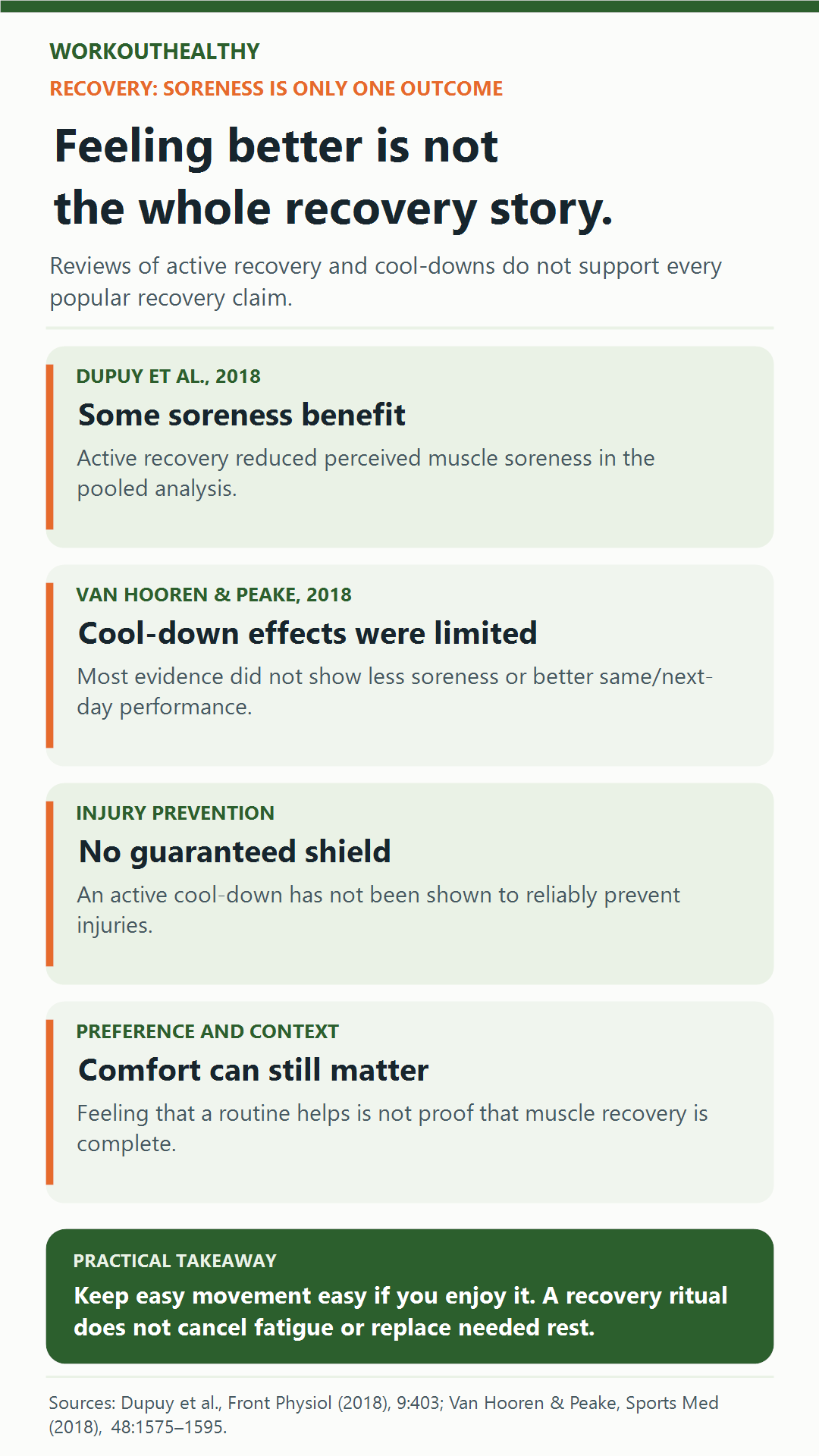
One influential 2018 systematic review compared several post-exercise recovery techniques, but it did not establish a universal recovery-day prescription.
Researchers led by Olivier Dupuy pooled data from dozens of recovery trials (Dupuy et al., 2018).
They compared techniques like massage, cold water immersion, compression, and active recovery.
Each technique was measured against doing nothing at all, meaning passive rest.
The outcomes tracked were muscle soreness, blood markers of muscle damage, and performance.
Active recovery showed a small but real benefit for reducing muscle soreness.
It did not clearly outperform passive rest on blood markers of muscle damage.
Massage actually came out as the single most effective technique in that review.
In that pooled review, active recovery was associated with less perceived soreness than passive rest. Other reviews of immediate cool-downs have not consistently found that benefit, so it should not be treated as guaranteed for a later recovery-day routine.
Across the pooled trials, active recovery eased perceived soreness more than complete rest, though the effect was modest rather than dramatic.
A separate 2018 review examined active cool-downs performed soon after exercise, which are related to but not the same as a gentle session on a later recovery day (Van Hooren & Peake, 2018).
Van Hooren and Peake found that most studies did not show a significant reduction in later muscle soreness, better same-day or next-day performance, or prevention of injury.
Most studies also did not show a measurable improvement in psychological recovery, although many participants said they preferred an active cool-down to passive rest.
That difference between preference and measured recovery matters when interpreting a recovery-day video.
Walking is one of the simplest, most accessible forms of active recovery.
Our guide on how many miles you should walk in a day covers how easy walking fits into a weekly plan.
A short, easy walk on a rest day is a reasonable way to apply this research.
What Real Research Shows About Mobility and Injury Prevention
The injury prevention claim is where the research turns out to be more nuanced.
A widely cited review looked at how muscle stretching affects performance, range of motion, and injury (Behm et al., 2016).
David Behm and colleagues reviewed dozens of studies on static and dynamic stretching.
They found that stretching reliably increases range of motion.
That part of the claim holds up well across the research.
The injury evidence, though, was far less consistent.
Some studies in that review found a protective effect from regular stretching.
Other studies found no meaningful injury effect at all.
A separate review focused directly on this exact question (McHugh & Cosgrave, 2010).
Malachy McHugh and Caitlin Cosgrave reviewed the role of stretching in injury prevention specifically.
Their conclusion was more textured than a simple yes or no.
General flexibility training showed little clear benefit for injury prevention in most sports.
Fixing an actual, measured flexibility deficit at one joint showed more promise.
Fixing a genuine flexibility deficit at a specific joint shows more promise than stretching everything, all the time, as a blanket routine.
In other words, mobility work seems to help most when it corrects a real limitation.
It seems to help less when it is applied as a generic warm up ritual.
That distinction rarely survives being compressed into a sixty second video.
What Real Research Shows About Recovery Day Structure
A recovery day is not really about one technique like stretching or walking.
It is about total training load across a whole week.
The Dupuy review noted something important about this bigger picture (Dupuy et al., 2018).
No single recovery technique reliably restored full performance within twenty four hours.
Soreness and reduced power output can linger for two or three days after hard training.
That means one gentle mobility session will not undo the cost of a brutal workout.
Spacing hard sessions further apart may matter more than any single recovery tool.
Consistency across a week tends to beat one dramatic recovery ritual.
Passive recovery methods deserve a mention here too.
A relaxing foot massage will not build strength or repair muscle tissue.
It can still play a real role in how a rest day feels.
Our article on whether foot massage can help you relax covers that relaxation evidence in more depth.
Neither massage nor a mobility routine replaces the physiological need for time.
Adequate rest and a lower training load still do most of the real work.
The Mechanism
Hard exercise creates small amounts of damage at the muscle fiber level.
That damage triggers inflammation, which is a normal part of repair.
Inflammation is also part of why muscles feel sore a day or two later.
Light movement increases blood flow to the affected muscles.
More blood flow may help clear some metabolic byproducts a little faster.
It may also slightly ease the stiffness that makes soreness feel worse.
None of this speeds up the actual repair of damaged muscle fibers.
Repair still depends mainly on time, sleep, and enough protein.
Mobility work operates through a different mechanism entirely.
Stretching a muscle repeatedly increases what researchers call stretch tolerance.
Your nervous system slowly allows a joint to move further before it signals discomfort.
Over weeks, this can also lead to small structural changes in connective tissue.
A joint with more usable range may absorb an awkward position more safely.
That is the theory behind why mobility work could lower injury risk.
But more range of motion is not the same as controlling that range under load.
Strength through a joint’s full range appears to matter just as much as the range itself.
Watch the video
What This Evidence Does Not Prove
This research does not prove that any single recovery routine is the single best option.
Most recovery studies were done on trained athletes, not casual gym goers.
Results in a controlled lab setting do not always match how a tired person trains at home.
The stretching research does not prove that stretching is useless for injury prevention.
It shows that generic stretching alone is not a reliable shield against injury.
It also does not prove that the specific drills in any one video are right for your body.
A video demonstration is not the same as an individual movement assessment.
No study measured the exact kettlebell sequence shown in the source video.
The presenter’s routine may still be a reasonable general template for many people.
It just has not been tested as a specific protocol in a published study.
That gap is common across fitness content, and it is worth naming honestly.
Common Mistakes
Treating a recovery day as a second hard workout is a common mistake.
If a recovery session leaves you breathless, it is not really recovery.
Skipping recovery days entirely is an equally common mistake in the other direction.
Some lifters chase the same explosive movements every single day.
Our article on whether box jumps build muscle notes how much fatigue high impact work adds.
Stacking that kind of work onto a recovery day defeats the whole purpose.
Another mistake is expecting mobility drills to fix pain that needs a real diagnosis.
Chronic joint pain is a signal worth investigating, not just stretching through.
A third mistake is copying a stranger’s routine without checking it against your own limits.
A kettlebell drill that looks smooth on video may still be wrong for your specific joints.
A final mistake is judging recovery only by soreness, not by actual performance.
Soreness can fade while strength and power are still quietly reduced underneath it.
Who Should Be Extra Careful
Anyone recovering from a recent injury should be cautious with new mobility drills.
A joint that was recently injured needs guided rehabilitation, not a generic video routine.
Our article on Misty Copeland’s hip replacement recovery shows how gradual real rehab actually looks.
People with diagnosed hypermobility conditions need a different approach entirely.
For them, more range of motion is rarely the actual goal.
Stability is usually the priority instead.
Older adults returning to exercise should also move carefully into new mobility work.
Bone density and joint tissue change with age, so range should increase gradually.
Anyone who feels sharp pain during a stretch, not just tightness, should stop.
That kind of pain deserves a real evaluation, not more stretching.
Pregnant exercisers should also check specific movements with a doctor first.
Joint laxity naturally increases during pregnancy, which changes how stretching should be dosed.
None of this means mobility work is unsafe for these groups.
It means the same drill needs a different starting point for different bodies.
A Practical Takeaway
Use active recovery as one small, useful tool, not a magic fix.
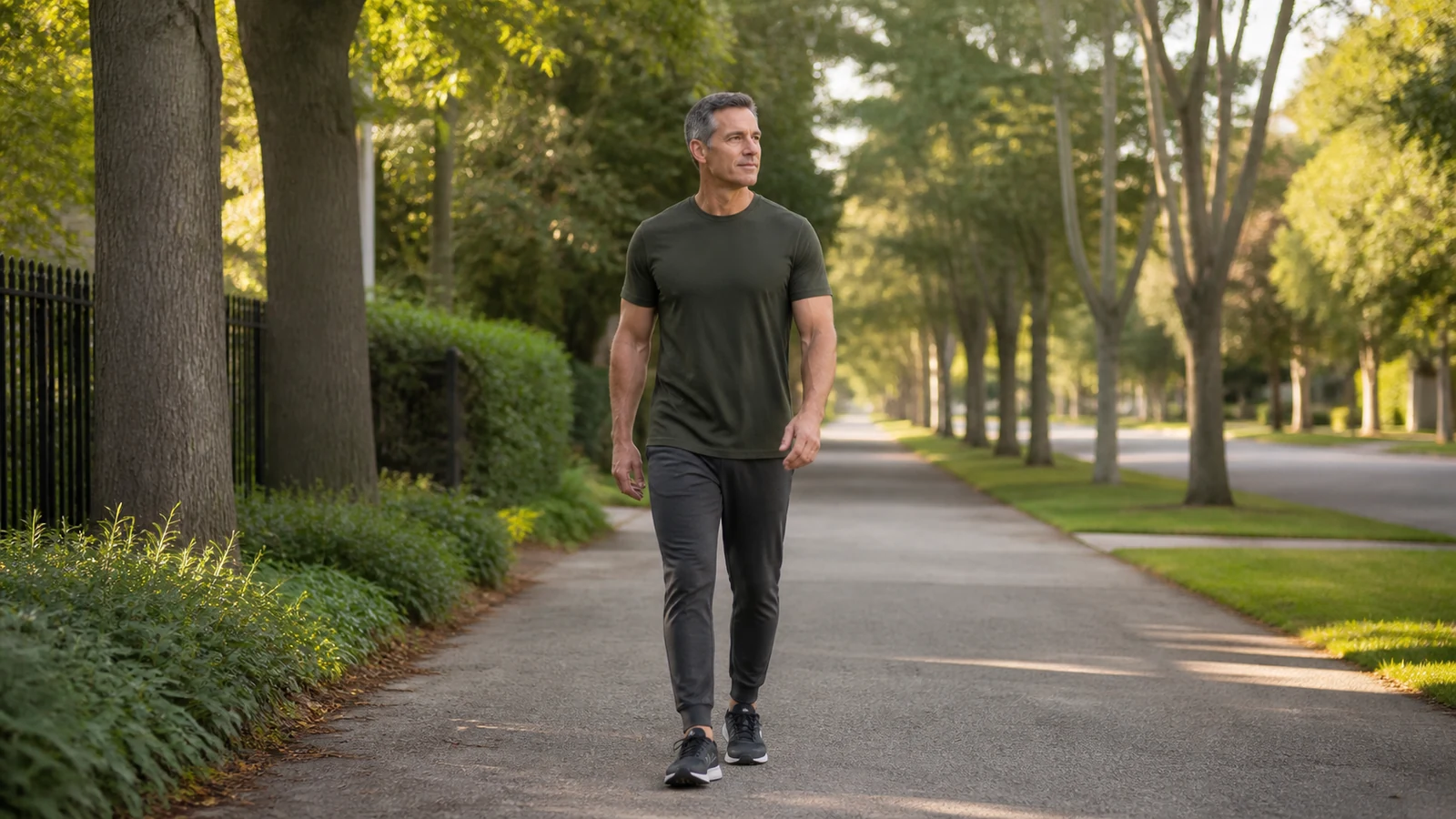
A twenty to thirty minute walk on a rest day is a reasonable, evidence backed choice.
Keep the effort light enough that your breathing stays easy the whole time.
Add mobility work where you actually have a measured limitation, not everywhere at once.
A tight ankle that limits your squat depth is worth targeted mobility work.
Stretching a joint that already moves freely adds very little protective value.
Space your hardest training sessions at least forty eight hours apart when you can.
Sleep and protein intake still matter more than any single recovery technique.
If pain shows up during a mobility drill, stop and get it evaluated.
Treat a video like this one as a starting idea, not a finished prescription.
Want more like this? Subscribe to WorkoutHealthy Insider for practical explanations behind popular fitness claims.
References
Behm, D. G., Blazevich, A. J., Kay, A. D., & McHugh, M. (2016). Acute effects of muscle stretching on physical performance, range of motion, and injury incidence in healthy active individuals: A systematic review. Applied Physiology, Nutrition, and Metabolism, 41(1), 1 to 11. https://doi.org/10.1139/apnm-2015-0235
Dupuy, O., Douzi, W., Theurot, D., Bosquet, L., & Dugué, B. (2018). An evidence-based approach for choosing post-exercise recovery techniques to reduce markers of muscle damage, soreness, fatigue, and inflammation: A systematic review with meta-analysis. Frontiers in Physiology, 9, Article 403. https://doi.org/10.3389/fphys.2018.00403
McHugh, M. P., & Cosgrave, C. H. (2010). To stretch or not to stretch: The role of stretching in injury prevention and performance. Scandinavian Journal of Medicine & Science in Sports, 20(2), 169 to 181. https://doi.org/10.1111/j.1600-0838.2009.01058.x
Van Hooren, B., & Peake, J. M. (2018). Do we need a cool-down after exercise? A narrative review of the psychophysiological effects and the effects on performance, injuries and the long term adaptive response. Sports Medicine, 48(7), 1575 to 1595. https://doi.org/10.1007/s40279-018-0916-2
This article is for general information only and is not medical advice. If you have an injury, ongoing pain, or a medical condition, talk to a doctor or physical therapist before you change how you train or eat.