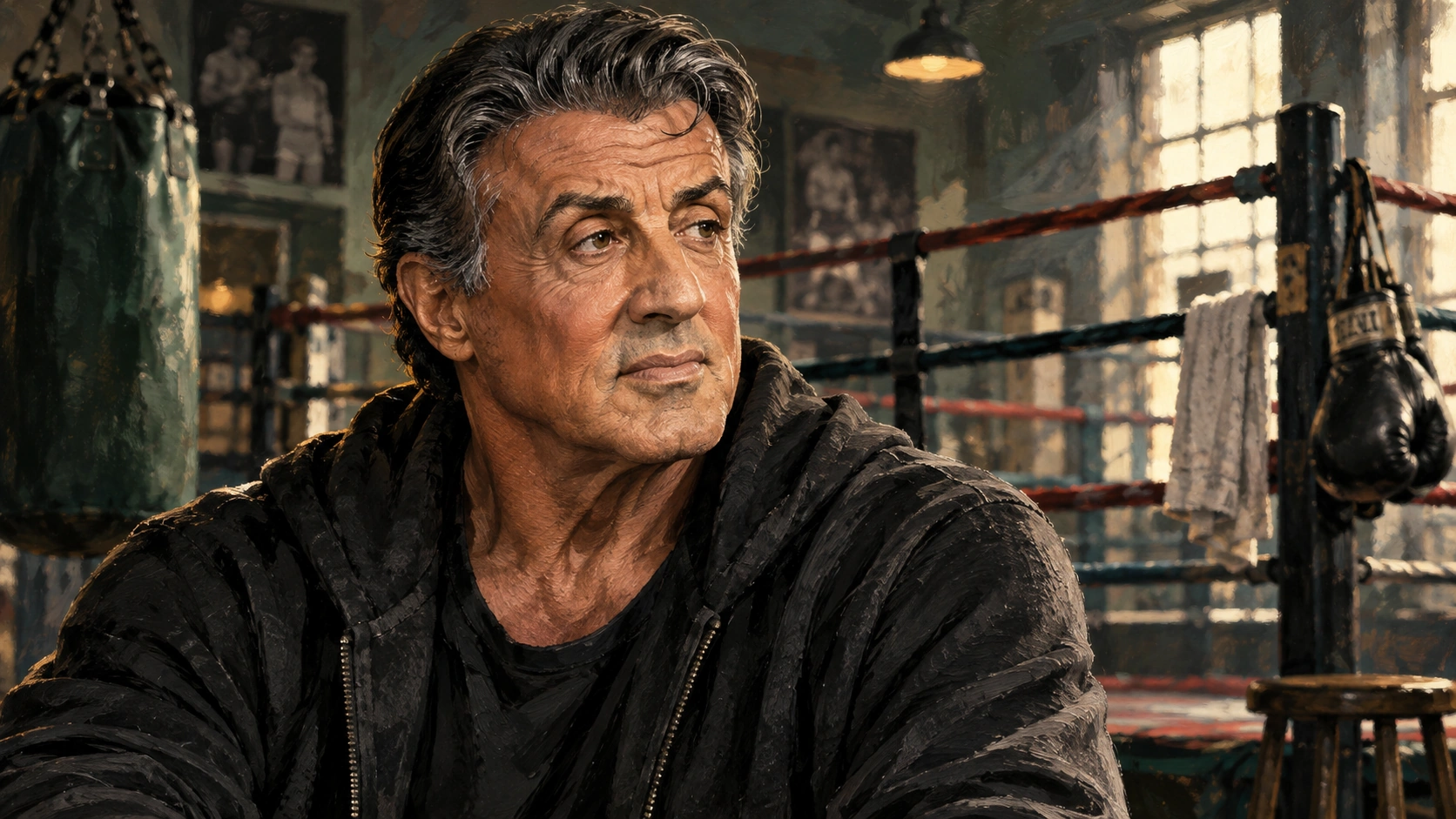

Sylvester Stallone says the physique he pursued for Rocky III came with bulimia and steroid use. In a September 26, 2026, interview with The New York Times, the actor described how his focus on his appearance grew into an obsession. His account puts a more difficult story behind one of the most familiar bodies in action movies.
What Stallone said about his Rocky III physique
Stallone told The Interview podcast that he thought of his body as “armor.” As the Rocky and Rambo roles changed, he became increasingly focused on shaping it for the screen. During Rocky III, he said, that focus went too far: he became bulimic and struggled with whether to keep food down.
He also said he reached 2.6% body fat for the film. That figure is Stallone’s recollection from the interview; the reporting does not provide an independent measurement. The key point does not depend on a precise percentage. Stallone described a period in which maintaining a particular look had taken over his relationship with food and his body.
The 1982 film helped make his lean, muscular appearance an enduring part of the Rocky image. Viewers saw the finished scenes. Stallone is now talking about what he says was happening outside the frame.
He also discussed steroid use
In the same interview, Stallone acknowledged using steroids while working to maintain his physique. He said the pursuit took a toll on him and described his earlier approach to fitness as an obsession. Those are his reflections on his own experience, not a training method or a recommendation for anyone else.
Stallone also spoke about years of physical wear and numerous operations. He has said doing his own stunts was another choice he would reconsider. It would be misleading to attribute every later surgery to steroid use or to a single film; his interview discussed several kinds of strain across a long career.

What a movie body does not show
A film captures a carefully chosen moment. It does not show how an actor felt, what they ate, or whether the process was sustainable. Stallone’s account is a striking example: a physique praised on screen was, by his telling, tied to an eating disorder and a level of pressure he now regrets.
For anyone who trains, the useful distinction is between looking ready for a scene and building a routine you can live with. Strength, energy, recovery, and a workable relationship with food matter more than matching a body seen for a few minutes in a movie. This is a general perspective, not a diagnosis or a plan based on Stallone’s experience.
Stallone says he still wants to stay in shape at 80. His recent comments do not erase what the Rocky films meant to fans. They add context to an image that, for decades, looked like a simple symbol of discipline.
Sources and context
- The New York Times, The Interview with Sylvester Stallone, September 26, 2026.
- The Hollywood Reporter coverage of Stallone’s comments.
- People’s report on the interview, September 27, 2026.
If concerns about food or body image feel personal, consider speaking with a qualified health professional. Stallone’s experience is his own, and support is available.