
Suni Williams’s marathon story connects two very different courses across nearly two decades. In 2007, she completed the Boston Marathon distance on a treadmill aboard the International Space Station while the race took place on Earth. In April 2026, the retired astronaut ran the actual Boston course and finished in 5:52:49, according to contemporary race coverage. The distance was the same; the mechanics, environment, and purpose of each effort were not.
It is tempting to describe the two runs as proof that “fitness travels anywhere.” That is inspirational but too simple. Orbital running requires a harness to hold a person against a treadmill in microgravity. Astronaut exercise also serves as a countermeasure against the loss of muscle and bone during spaceflight. A road marathon involves changing terrain, weather, gravity, crowds, and pacing decisions. Williams’s achievements are remarkable precisely because the conditions differ.
The 2007 marathon in orbit
Williams qualified for the Boston Marathon before her space mission. When race day arrived in April 2007, she was aboard the International Space Station. NASA arranged for her to take part from orbit, and she covered the marathon distance on a treadmill while runners traveled from Hopkinton to Boston below. Guinness World Records lists the orbital marathon at 4 hours 24 minutes. It was the first marathon completed in space, a milestone NASA later highlighted in its account of her career.
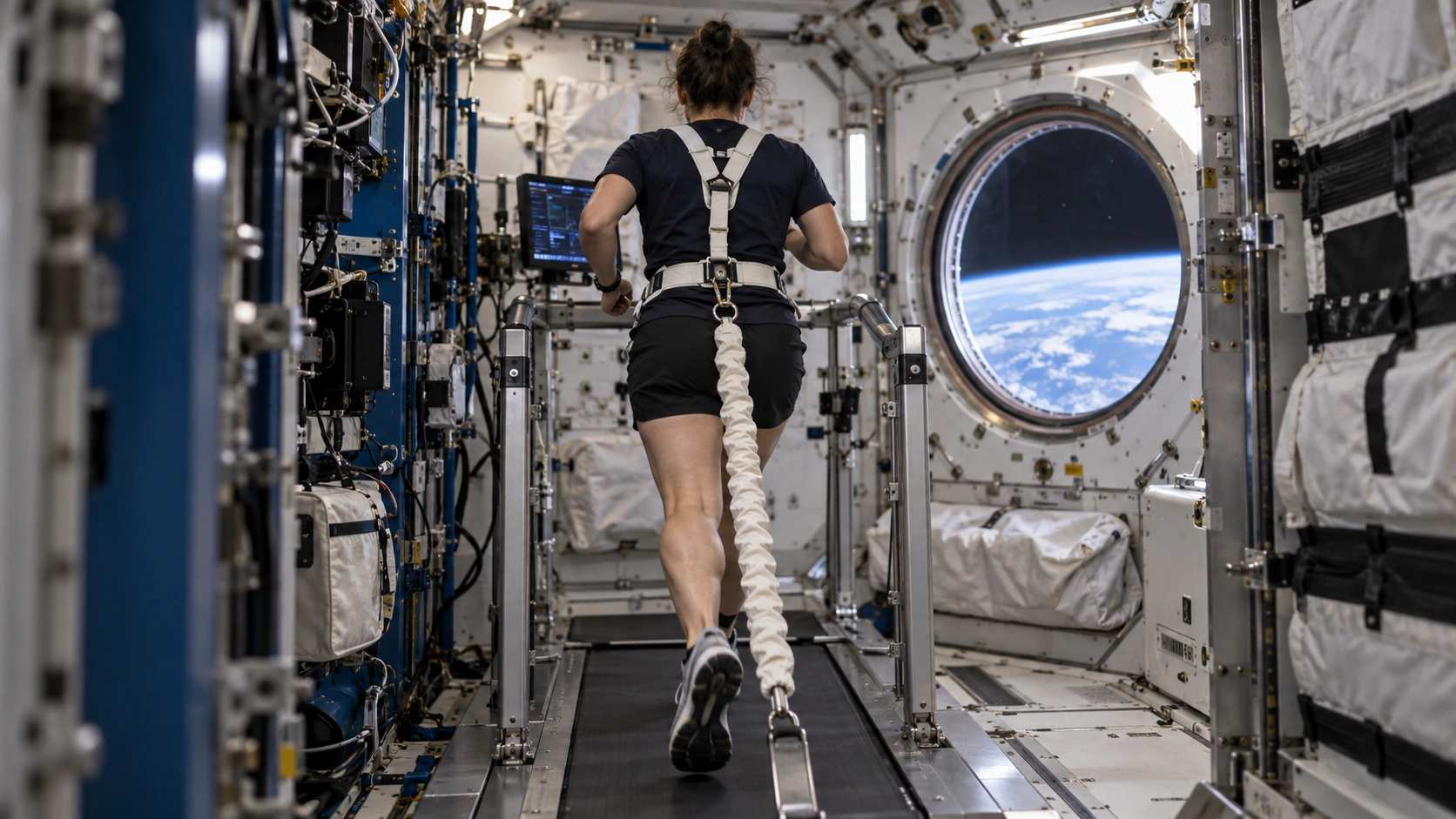
Running in microgravity is not a matter of stepping onto an ordinary treadmill and letting gravity do its work. Without a downward load, a runner would not stay in normal contact with the belt. A harness and bungee-like restraints apply force to the body. The equipment helps create loading for the legs and makes running possible, although it does not recreate every sensation or force of running outdoors on Earth.
The time from 2007 should not be compared straight across with an Earth-road result as if the courses were identical. Equipment, loading, temperature, ground reaction forces, fueling, and the absence of hills or wind all differ. The feat remains a full 26.2-mile endurance effort, but the environment changes what the number means. Even the experience of maintaining contact with the treadmill is a technical challenge that ordinary marathoners never face.
What happened in Boston in 2026
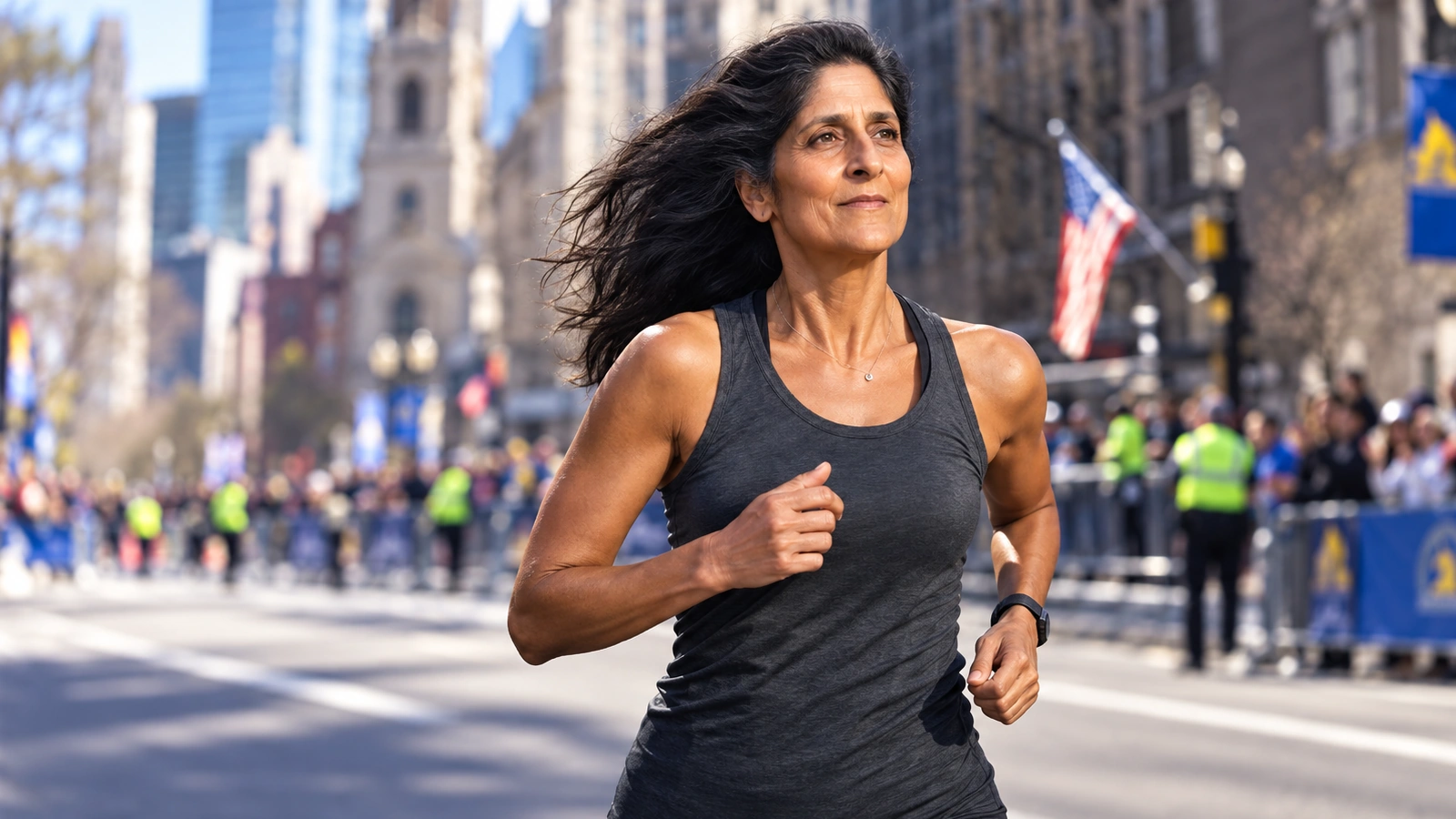
Williams retired from NASA at the end of 2025, after a long career that included multiple missions and hundreds of days in space. The Boston Athletic Association named her a 2026 Patriots’ Award recipient and included her in race plans. On April 20, 2026, she completed the Boston Marathon on the ground. Associated Press reporting lists her finish at 5:52:49.
That is not her first experience of a road marathon; reporting on her running history notes earlier races, including Boston in 2009. The more precise story is that she completed Boston’s distance in orbit in 2007 and returned to the event’s physical course in 2026. Calling 2026 her first Earth marathon would erase an important part of her running history. The appeal of the story does not require that exaggeration.
The time difference between 2007 and 2026 is not a verdict on fitness. Williams was older in 2026, had a different training context, and faced a different environment. A marathon finish is an outcome of preparation and conditions on the day, not a single universal test of worth. Treating the 2026 run as a “slower second half” of a two-part contest would miss the science and the human story.
Why astronauts exercise in space
NASA explains that in microgravity, muscles and bones can weaken because they no longer bear Earth’s usual loads. Exercise aboard the station is an essential countermeasure, not merely recreation. Current equipment includes a treadmill, a cycle ergometer, and an advanced resistive exercise device. Crew members use structured training to help preserve strength, aerobic capacity, and bone health during missions.
NASA has also studied how the treadmill harness affects loading. A harness can be uncomfortable, and insufficient or poorly tolerated loading may limit the bone-protection benefits of running. Space exercise specialists therefore care not just about how long someone moves, but about how much useful load the body receives and how consistently a crew member can tolerate the equipment.
One marathon in orbit did not single-handedly protect Williams from every physiological effect of spaceflight. Astronauts follow broader exercise programs and medical monitoring. The relevant lesson is that endurance work, resistance training, equipment design, and individualized support all matter. The space marathon was an extraordinary sporting event within a much larger system of health countermeasures.
What carries over from orbit to a road race?
Both efforts depend on endurance, pacing, and the ability to sustain work over a long period. Running economy, fueling, recovery, and mental focus matter on Earth. The orbital run also demanded adaptation to specialized hardware and life aboard a space station. Her background as an experienced runner undoubtedly mattered, but it would be speculative to claim that a precise “cardiovascular base” remained unchanged across nineteen years.
Fitness is specific. Aerobic capacity can support multiple activities, yet adaptation to one setting is not a guarantee of performance in another. A cyclist may have a strong heart and lungs but still need time to adapt joints and muscles to road running. Likewise, a person returning from space must readapt to gravity. NASA’s astronaut strength and rehabilitation program provides support before flight, during flight, and after landing for exactly this reason.
Williams’s story is therefore best read as persistence plus adaptation, not as proof that training anywhere is interchangeable. She had experience on Earth, a demanding mission environment, and then another major road race. Each phase required its own preparation. The shared thread is a willingness to keep moving and adapt the method to the setting, within the guidance of professionals and the limits of the body at that time.
What ordinary runners can learn
There are practical lessons without pretending that a neighborhood treadmill is the International Space Station. First, keep the training method matched to the goal. If the goal is a road marathon, gradually build road-running tolerance even if some aerobic work happens indoors. The feet, calves, hips, and connective tissues need progressive exposure to the forces of the event. Sudden mileage jumps can increase injury risk.
Second, use equipment to solve a real constraint rather than chasing novelty. A treadmill can be useful when weather, safety, or schedule makes outdoor running difficult. In space, specialized harnesses make running possible at all. On Earth, the analogous principle is to choose accessible tools that allow consistent, tolerable training. The most sophisticated device is not automatically the best one for every person.
Third, make room for strength and recovery. Marathon training is not just running farther. Supportive resistance training, adequate food and fluid, and sleep help a runner tolerate the workload. For astronauts, resistance exercise is central to maintaining muscle and bone under unusual conditions. For recreational runners, a balanced plan may reduce the temptation to solve every performance problem by adding mileage.
Fourth, interpret finish times in context. Course profile, weather, age, training history, illness, and goals all influence the clock. Williams’s 2026 finish should be celebrated as a finish, not judged against her 2007 orbital time. The same principle applies to a runner returning after injury or completing a first marathon: the achievement is larger than a single number.
Common questions about the two marathons
Was the 2007 run an official Boston Marathon participation? Williams was an entrant and completed the distance aboard the station while the event was held on Earth. It was a special orbital participation, not a run over the Boston road course.
Did she need a harness? Yes. In microgravity, a loading system holds a runner against the treadmill. NASA’s descriptions of astronaut exercise explain why load is important for musculoskeletal health.
Did she run Boston only twice? No. Accounts of her running career also describe a 2009 Boston participation. Avoid phrasing that implies 2026 was her first time racing on Earth.
Does her story show that anyone can run a marathon after spaceflight? No. Williams is a highly trained individual with extensive support. Her result is inspiring, but it is not evidence that every person could or should attempt the same sequence.
The real achievement
The strongest version of this story needs no invented superlatives. Williams ran the marathon distance aboard the ISS in 2007, an unprecedented feat. Nearly nineteen years later, she finished the 2026 Boston Marathon on its actual course. The two efforts show a long relationship with running through radically different circumstances. They also offer a reminder to respect the details: the harness, the reason astronauts train, the years between efforts, and the difference between an orbital treadmill and a road race.
Sources and reporting notes
- NASA: Suni Williams’s career and first marathon in space.
- Guinness World Records: 2007 orbital marathon details.
- Boston Athletic Association 2026 media guide.
- Associated Press: 2026 Boston Marathon notable finishers.
- NASA: why and how astronauts exercise in space.
- NASA: treadmill harness design and loading.