
Prince Royce grew up in the Bronx.
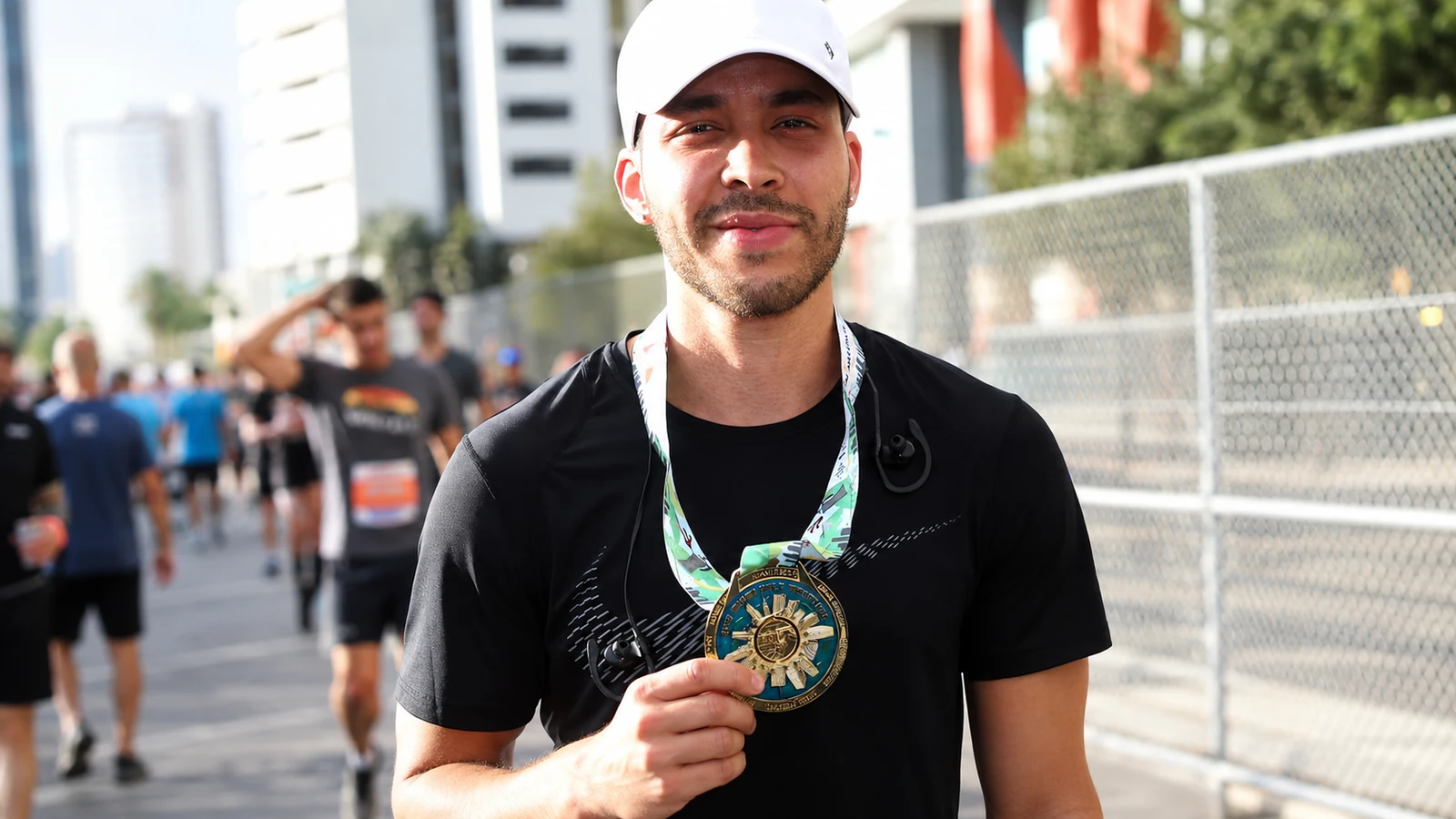
In 2017 he brought that hometown pride back to its streets. He ran the New York City Marathon, a 26.2 mile race that winds through all five boroughs, alongside tens of thousands of everyday runners.
It was his marathon debut. He used the race to raise money for causes close to him, including Change for Kids and the National Kidney Foundation, turning a personal physical challenge into a fundraising push.
Training for a first marathon is no small task on its own. Doing it while keeping up a touring and recording schedule makes it harder still. Finishing in the city where he grew up added something most marathoners never get. He ran past neighborhoods that helped shape who he became.
Who Is Prince Royce
Prince Royce is a Bronx-born singer and songwriter whose first marathon had a clear hometown connection.
Before the 2017 race, he told Runner’s World that he could see the marathon from the window of his old neighborhood.
New York Road Runners later listed him among its finishers in 4 hours, 39 minutes, and 30 seconds.
He also used the race to support the National Kidney Foundation and Change for Kids, two causes identified in the race reporting.
A Marathon Built on Hometown Pride
Running a first marathon is a significant physical undertaking for anyone.
Doing it in the same city where a person grew up adds something extra. It adds an emotional layer that a race in an unfamiliar city simply cannot replicate.
The New York City Marathon route runs through parts of the Bronx. That gives a Bronx born runner a stretch of the course that passes through genuinely familiar ground, past corner stores and blocks that shaped his childhood.
Pairing a milestone like this with fundraising is common among first time celebrity marathoners. A cause tied to the effort can provide real motivation during the hardest parts of training. The appeal of a finish line alone is not always enough to get a person out the door for another long run on a cold morning.
What a 4:39:30 Finish Actually Means
New York Road Runners recorded Royce’s official finish time as 4:39:30.
That is 279.5 minutes over 26.2 miles, or about 10 minutes and 40 seconds per mile on average.
The calculation is simple: multiply four hours by 60, add 39 minutes and 30 seconds, then divide by the race distance.
A marathon average does not reveal how evenly someone paced the course, how many training weeks they completed, or how their cardiovascular measurements changed.
It does show that Royce completed the full event while managing a career outside endurance sport.
For a new runner, the useful comparison is with their own starting point, schedule, and recovery, not a celebrity’s finish time.
The published first-marathon research involved groups of novice runners and measured vascular changes directly.
Those group findings cannot be assigned to Royce from his race result alone.
A finish time is a record of one race. It is not a medical test or a measure of someone else’s potential.
What Marathon Training Actually Does to the Body
Training for a first marathon is not only about building the ability to cover 26.2 miles.
It changes the body in measurable ways, some of which show up long after the finish line.
A 2020 study published in the Journal of the American College of Cardiology looked closely at this exact question.
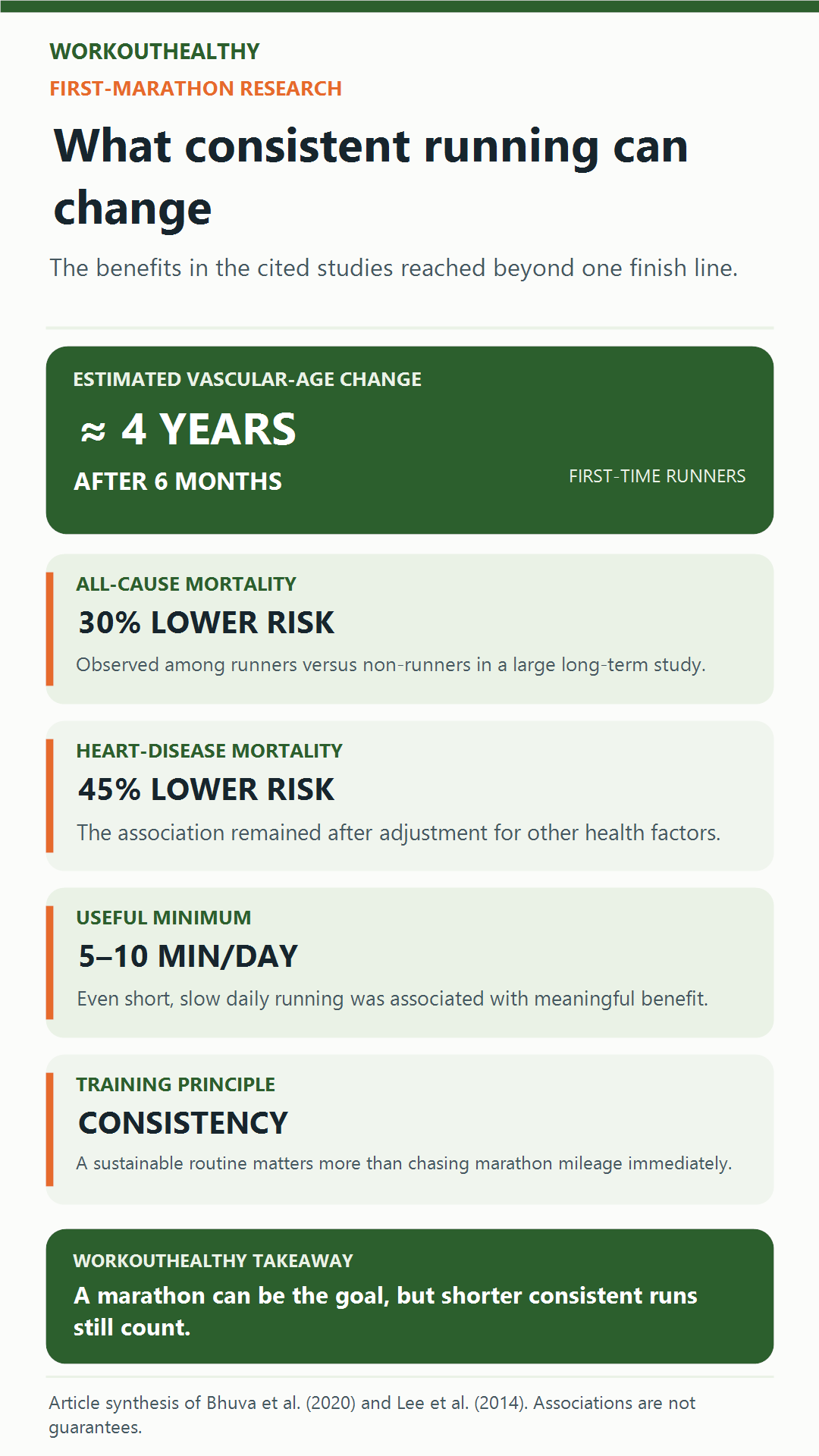
Researchers led by Anish Bhuva ran the study over six months. The participants were healthy adults training for their first marathon; the study described them as previously untrained. The team measured the stiffness of each runner’s aorta, the body’s largest artery, before and after the training block.
The results were notable. Six months of marathon training measurably reversed age related stiffening in the aorta, an effect roughly equivalent to knocking four years off the vascular age of the runners studied. Blood pressure also dropped in the group, particularly among runners who had started with higher readings.
A first marathon is often framed as a test of willpower. The research suggests it is also, quite literally, a workout for the arteries.
That finding applies to the study’s previously untrained adult participants. Royce’s prior training and vascular measurements were not part of that study, so it cannot tell us how his arteries changed. It does show one possible health effect of a structured training block in the people studied.
The Case for Running Even Without a Marathon Goal
Not everyone needs to run 26.2 miles to get a meaningful benefit from running.
A large 2014 study published in the same journal was led by Duck-chul Lee. It followed more than 55,000 adults over about 15 years.
The study found a striking gap between runners and non-runners. Runners had a 30 percent lower risk of death from any cause. They also had a 45 percent lower risk of death from heart disease specifically. Both gaps held up even after researchers adjusted for other health and lifestyle factors.
Perhaps the most useful detail in that study for busy people is this. Runners who ran as little as 5 to 10 minutes a day, at a slow pace, still showed a similar mortality benefit to runners who ran much longer distances. The floor for meaningful benefit turned out to be lower than many people assume.
That detail matters for anyone with a schedule as demanding as a touring musician’s. A full marathon build up is not required to get real cardiovascular value from running. Consistency at almost any reasonable distance appears to matter more than total mileage, a point covered in more detail in this guide to how much walking or easy movement most adults actually need each day.
What This Evidence Does Not Prove
A few things here deserve an honest caveat.
The specific charities come from press coverage of the 2017 race. So does the exact story behind his decision to run. Neither comes from a first person account with every detail independently confirmed.
The broader facts are well documented and not in question. That includes his Bronx upbringing, his birth year, and his general public profile as a musician. For a look at the same daily step and mileage data from a different angle, see this piece on what daily step counts show about long term health.
The cardiovascular research cited here describes group level findings from controlled studies. It cannot predict exactly what happened inside any one runner’s arteries during any one specific marathon build up, Royce’s included. It describes a group-level change observed in the study’s previously untrained adults.
Why a Cause Can Help Endurance Training Stick
Marathon training asks a lot of anyone, famous or not.
A typical training block spans months. It requires giving up time that would otherwise go to sleep, work, or family. Motivation naturally dips during that stretch, especially once the early enthusiasm of signing up for a race wears off.
Royce reportedly tied his run to Change for Kids and the National Kidney Foundation. That kind of choice gives a runner something to fall back on besides raw willpower.
A runner chasing only a personal goal might skip a hard session. A runner who has told friends and fans they are running for a cause has an added layer of accountability. That accountability can make skipping a session much harder to justify.
This is not unique to musicians or actors. Charity focused training groups exist across nearly every major marathon in the country for exactly this reason. Fundraising commitments and public pledges are a well known tool that everyday runners use to stay consistent through a long training block.
Common Mistakes First Time Marathoners Make
A first marathon is an ambitious goal, and a few mistakes trip up new runners more than any others.
The first mistake is increasing weekly mileage too fast. Build mileage gradually and leave room for recovery. The familiar 10 percent rule is a rough planning heuristic, not a proven injury-prevention threshold; adjust the progression to your training history and symptoms.
The second mistake is skipping strength training entirely. Strength training can help runners build capacity in the legs and trunk, but it does not guarantee freedom from overuse injuries. Start with a manageable routine and make room for recovery.
The third mistake is treating race day nutrition and hydration as an afterthought. What works during training runs does not always translate directly to race day, and experimenting with new fuel or gear for the first time on race day is a common, avoidable error.
The fourth mistake is ignoring rest days. More running is not always better running. Recovery days let the body adapt to the training stress instead of accumulating fatigue that eventually leads to injury or burnout.
How to Train for a First Marathon on a Busy Schedule
Anyone inspired by Royce’s story can approach a first marathon without needing a professional athlete’s free time.

Start with a realistic training window. Most first time marathon plans run 16 to 20 weeks, building gradually from a comfortable starting mileage up to peak long runs of 18 to 20 miles before a taper.
Build the week around three to four running days rather than daily running. That structure leaves room for rest and cross training while still building the mileage base a marathon requires.
Add one long run each week, increasing its distance gradually over the training block. The long run is the single most important session for building marathon specific endurance.
Include two strength training sessions a week, focused on the hips, glutes, and core. That kind of strength work can build capacity for the demands of running, though no routine eliminates injury risk.
Pick a cause or a personal reason to anchor the effort, the same way Royce reportedly did.
A meaningful reason beyond the finish line itself can help carry a person through the harder weeks of training, especially the long runs that come late in a plan.
The Takeaway
Prince Royce’s 2017 New York City Marathon debut is a story about more than one race.
It connects a busy touring schedule to a training process that changes the body for the better, according to the research above.
It also connects a Bronx born artist back to the streets that shaped him. That turns a personal athletic milestone into something that mattered beyond his own finish line.
Get the next verified fitness story.
Five practical fitness stories worth your time, every Friday.
One email a week. No product pitches. Unsubscribe in one click.
Medical disclaimer: This article is for general information only and is not medical advice. Talk with a doctor before starting marathon training, especially if you have a heart condition or another health concern.