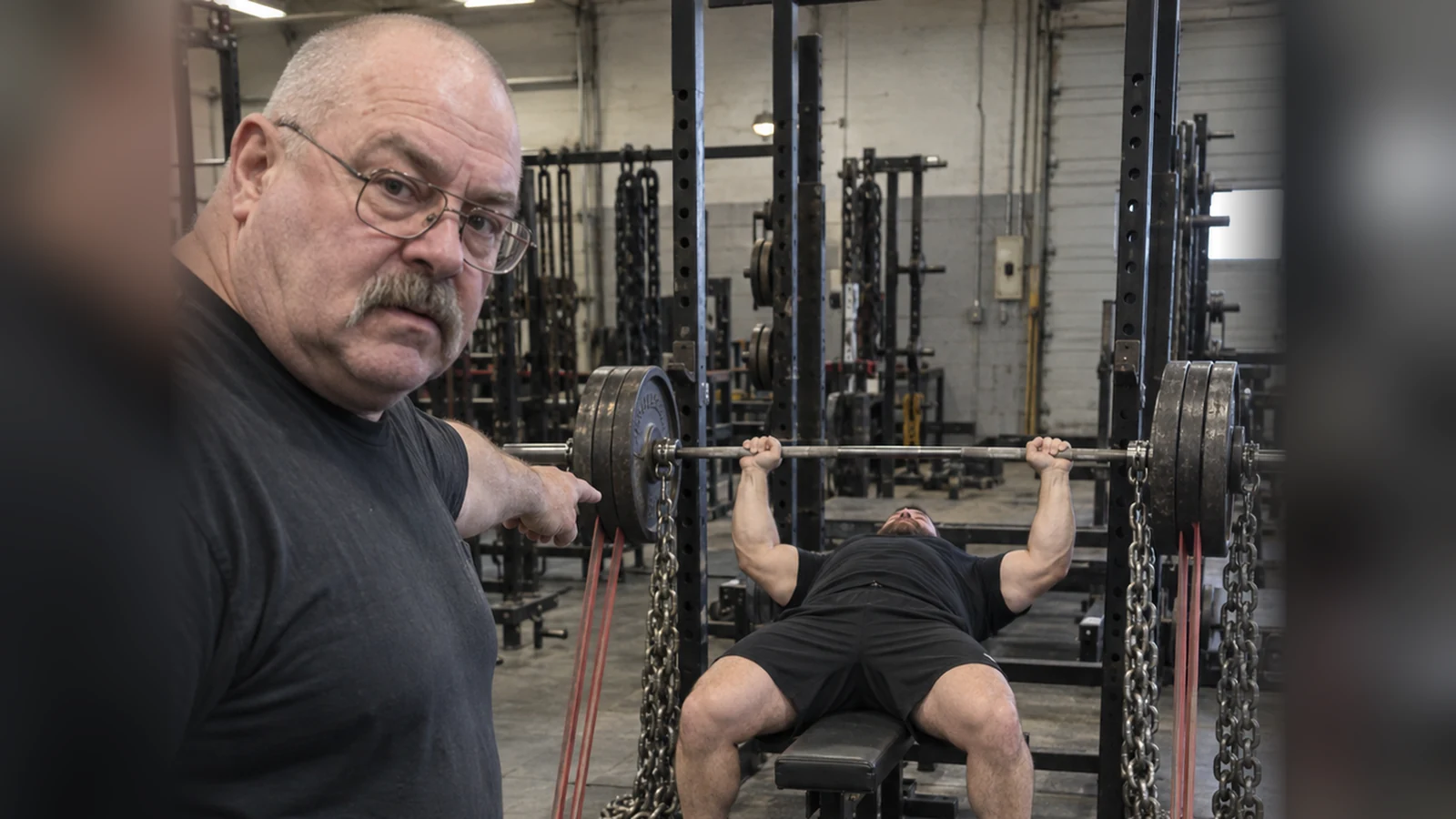

Accommodating resistance changes the load you feel through a lift’s range of motion. A barbell with chains usually gets heavier as links leave the floor; a barbell with bands anchored below it faces more band tension as the bands stretch.
Louie Simmons made bands and chains familiar in powerlifting through Westside Barbell. The idea is easy to describe, but the amount of added resistance depends on the actual setup, so a band color or a number printed on a package is not a substitute for measuring that setup.
How do bands and chains change a lift?
| Tool | Near the bottom of a squat or press | Near the top | Setup issue to check |
|---|---|---|---|
| Plain barbell | Plate load is the same external weight. | Plate load is still the same. | The joint leverage and difficulty can still change through the movement. |
| Chains hanging from the bar | More chain rests on the floor, so less chain weight is on the bar. | More links are suspended, increasing weight on the bar. | The change depends on chain length, placement and how much remains grounded. |
| Bands anchored below the bar | Shorter stretch generally means lower band tension. | Greater stretch generally means higher downward tension. | Anchor position, symmetry, wear and measured tension matter. |
This is a conceptual diagram in words, not a calibrated loading chart. A band can still pull substantially at the bottom, and a chain can contribute weight there if it is not fully grounded.
In his 2016 “Chains and Bands” article, Simmons described how he adjusted chain height so links lay on the floor during parts of a bench press. His examples were drawn from experienced lifters, including athletes with exceptionally strong benches, and are not beginner loading prescriptions.
What do studies say about strength, power and muscle?
| Review | Population and comparison | Finding | What to avoid claiming |
|---|---|---|---|
| Andersen et al., 2022 | 17 studies, 491 healthy adults; variable versus traditional resistance training. | No statistically significant pooled difference in maximal upper- or lower-body strength or muscle power. | That bands and chains reliably outperform plates for every lifter. |
| Bao et al., 2026 | 27 trials, 694 participants across several lower-body programming methods; network analysis. | Variable resistance ranked favorably for back-squat one-repetition maximum versus fixed percentage-based programming; its counter-movement-jump advantage was not clear. | That a network ranking proves every band or chain protocol is superior. |
| Fuentes-García et al., 2024 | 12 studies comparing variable and conventional training for muscle size, mostly short or medium programs in untrained people. | Similar hypertrophy, without a significant advantage for variable loading. | That accommodating resistance is a shortcut to more muscle. |
The 2022 direct-comparison review and 2026 network review answer different questions with different study sets and comparators. The newer analysis includes indirect comparisons among several methods and even shows many individual band-versus-standard trials with no clear between-group difference, so the results should not be flattened into “bands beat weights.”
Neither review tests the full Westside system as practiced by Simmons. None establishes that bands or chains prevent injury, and a squat-strength result does not automatically apply to bench pressing or other lifts.
What would a sensible setup check involve?
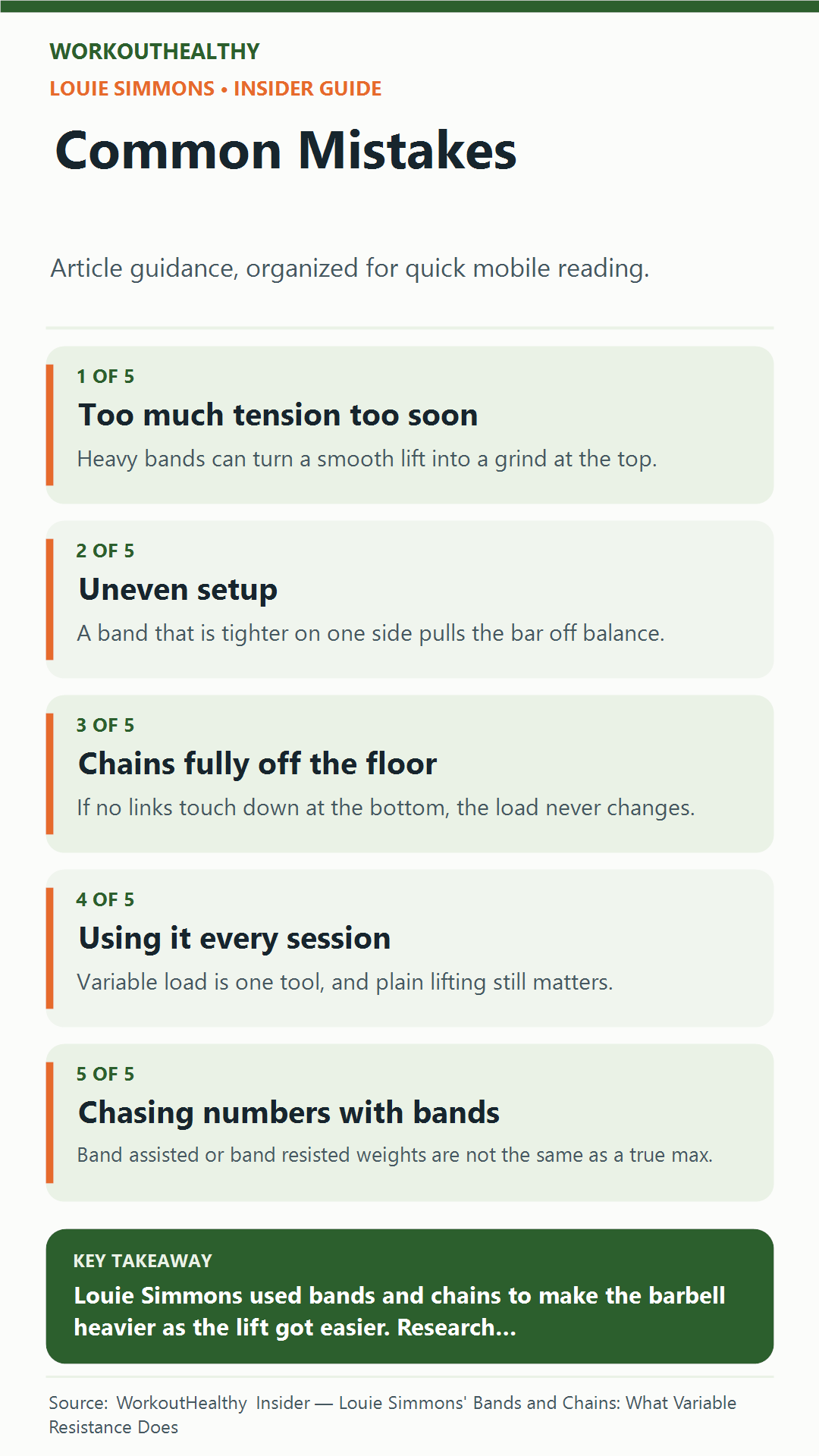
An experienced lifter and qualified coach can first identify the lift’s goal and compare it with ordinary barbell training. If they choose chains, they can confirm both sides hang evenly and that the intended portion rests on the floor in the lower position.
For bands, they can inspect wear, use secure matching anchors and measure tension at the relevant bar positions. They can then confirm that the combined bar, plate and variable load remains controllable throughout the movement.
Those are checks, not a step-by-step heavy-lifting tutorial or a fixed percentage prescription. If the equipment, anchor or available space is uncertain, using a plain barbell and standard rack is the simpler option.
Who is this method for?
Accommodating resistance is an optional tool for lifters who already control the underlying squat or press and can set up specialized equipment consistently. Beginners can build strength with ordinary resistance training and do not need chains or bands attached to a bar.
Anyone managing pain or returning from injury should avoid treating variable loading as rehabilitation advice. A clinician and qualified coach can help decide whether it belongs in that person’s training at all.
Sources
- Simmons. Chains and Bands, Westside Barbell, 2016.
- Andersen et al. Variable versus traditional resistance training meta-analysis, 2022.
- Bao et al. Lower-body training methods network meta-analysis, 2026.
- Fuentes-García et al. Variable resistance and hypertrophy review, 2024.
This article is general fitness information, not personal medical advice. Ask an appropriate professional about injury, pain or equipment setup before changing your training.