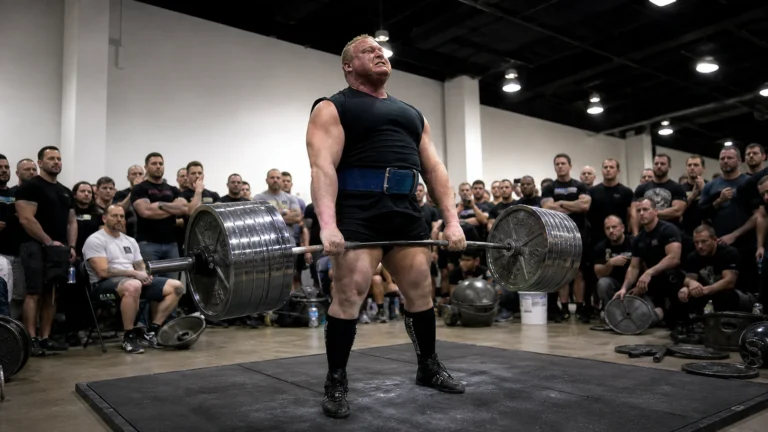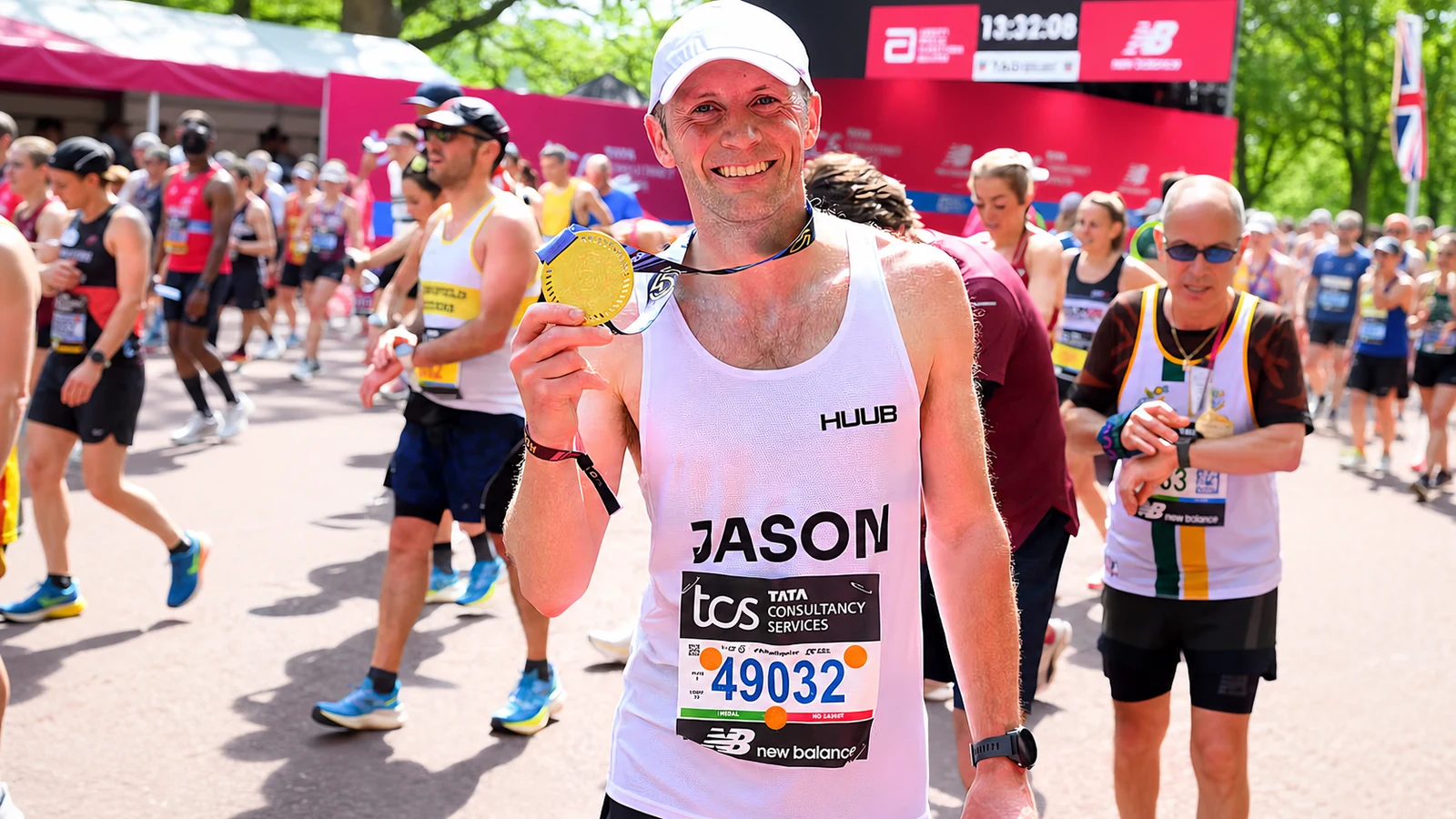

Jason Kenny is Britain’s most decorated Olympian, with seven gold medals and two silver medals won as a track sprint cyclist.
After retiring from competitive cycling in 2022, he took on the 2025 London Marathon, a physical challenge that sits about as far from his old event as any could.
Kenny reportedly used the race to support cancer related charity fundraising, adding a cause to a personal athletic curiosity.
His decision surprised plenty of longtime cycling fans, and it is easy to see why.
Track sprint cycling and marathon running ask completely different things from the human body.
One is built on short, explosive bursts of maximum power.
The other is built on sustained aerobic effort stretched across hours.
Making that switch, even for one of the most decorated athletes in British sporting history, is a genuine test of adaptability.
This article looks at why elite fitness in one sport does not automatically transfer to another, using the specific example of a track sprint specialist taking on a marathon.
What Track Sprint Cycling Actually Demands
Kenny built his career in the individual sprint, team sprint, and keirin, events where a race can be decided in a matter of seconds of maximum effort.
A review of track cycling physiology describes the different events on the track as demanding very different physical qualities, with sprint events relying almost entirely on short, explosive, anaerobic power output (Craig & Norton, 2001).
A track sprinter trains to produce enormous force in a very short window, often just seconds long, then recover before the next effort.
That kind of training builds massive leg power, fast-twitch muscle development, and an extremely well developed anaerobic energy system.
It does not require the rider to sustain a steady, moderate effort for hours at a time.
In fact, a track sprinter’s training is often close to the opposite of that.
Explosive training like this shares some ground with other power-focused exercises.
See our look at whether box jumps build muscle for a related example of training built around short, powerful effort.
What a Marathon Demands Instead
A marathon asks for almost none of the qualities that make a great track sprinter great.
Research on long-distance running performance points to three main physiological factors that determine how well someone runs 26.2 miles: their aerobic capacity, the pace they can sustain at their lactate threshold, and their running economy, meaning how efficiently their body uses oxygen at a given pace (Midgley, McNaughton, & Jones, 2007).
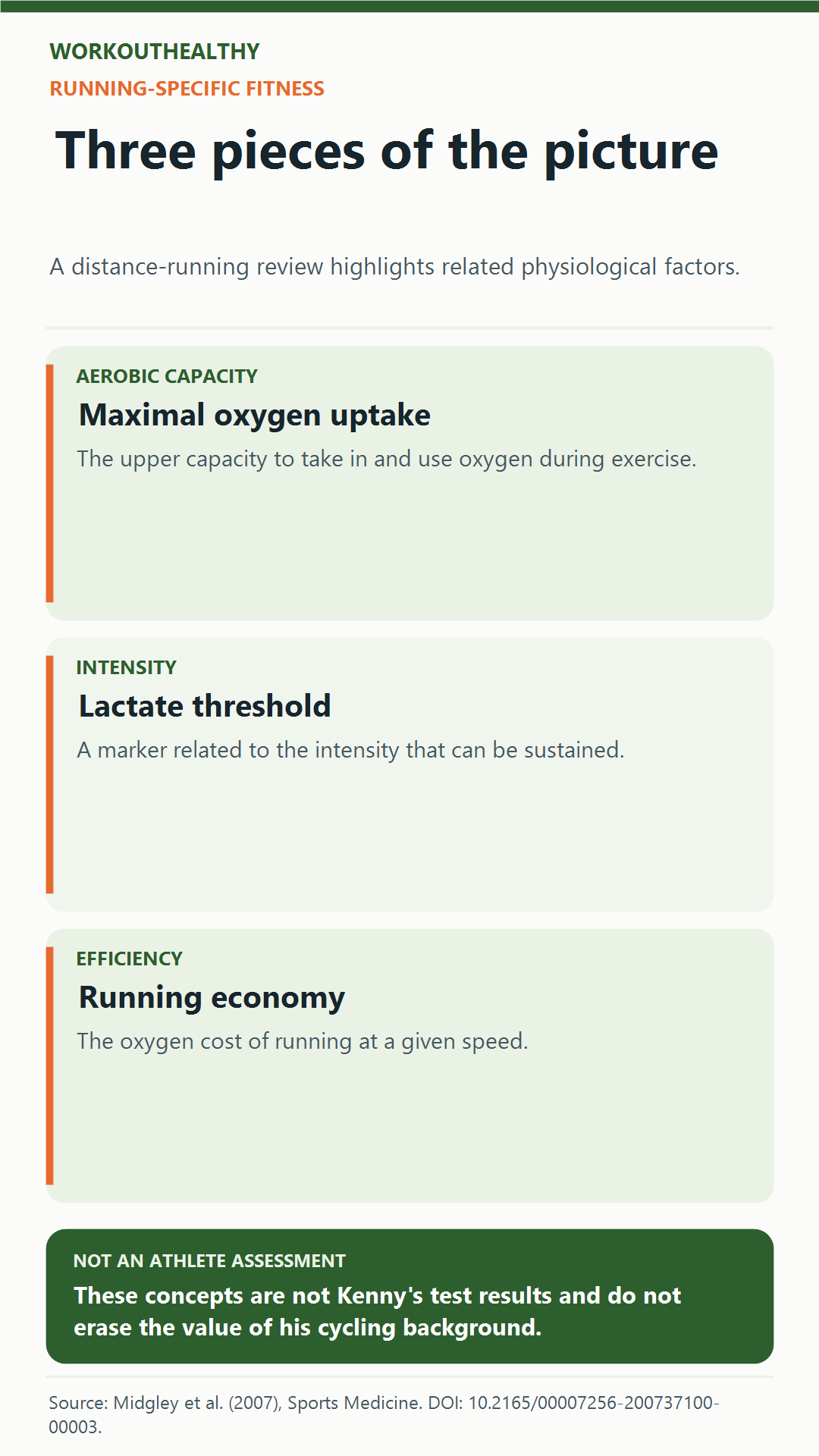
None of those three factors are built by repeated ten-second maximal sprints.
They are built by many hours of steady, moderate-intensity aerobic training, done consistently over weeks and months.
A marathon runner’s muscles, heart, and energy systems adapt to a completely different rhythm of demand than a track sprinter’s do.
Where a sprinter trains to be explosive for a few seconds, a marathoner trains to be efficient for several hours.
Those two training worlds barely overlap, which is exactly why a switch this dramatic takes real, dedicated preparation rather than simply showing up on race day.
The running versus lifting debate touches on this same tension.
See how WorkoutHealthy readers weighed in on weightlifting versus running for a related discussion.
Fast-Twitch Versus Slow-Twitch: Why Muscle Type Matters
Human muscle contains a mix of fiber types, generally grouped into fast-twitch fibers, built for quick, powerful contractions, and slow-twitch fibers, built for sustained, efficient effort over long periods.
Athletes in explosive sports like track sprinting tend to have a higher proportion of fast-twitch fibers, whether from genetics, years of sprint-specific training, or both.
Endurance athletes tend to lean the other way, with a higher proportion of slow-twitch fibers that resist fatigue over long efforts.
This does not mean a sprinter’s muscles cannot adapt at all toward endurance.
Training does shift some of this balance over time.
But it does mean a lifetime of sprint-specific training builds a body that is, at least at the start, working against the grain of what a marathon demands.
The Trade-Off Between Power and Endurance
Building serious aerobic endurance and maintaining peak explosive power are, to some extent, competing goals inside the same body.
This is sometimes described as an interference effect, where high volumes of endurance training can blunt some of the strength and power adaptations an athlete has built through years of explosive training.
A cyclist like Kenny spent his entire competitive career optimizing his body for maximum short-burst power output, down to small details in his training that most people never think about.
Shifting a large share of training time toward long, steady aerobic work works against some of those very specific adaptations, at least temporarily.
This does not mean sprint power disappears the moment someone starts marathon training.
It does mean that the two goals pull in somewhat different directions, and an athlete cannot fully optimize for both extremes of the power and endurance spectrum at the same time.
For a retired competitive cyclist with no more races to sprint for, that trade-off is much less of a concern than it would be for someone still competing at an elite level in their original sport.
Why Elite Athletes Still Struggle With the Switch
It might seem like elite-level fitness in any sport should make a new physical challenge easier.
In some ways it does.
Elite athletes generally have excellent body awareness, strong training discipline, and a high pain tolerance built from years of competition.
Those qualities genuinely help.
What elite fitness in one sport does not hand you automatically is the specific physiological adaptation the new challenge requires.
A world class sprinter still has to build an aerobic base largely from scratch if their sport never asked for one.
That process takes time, regardless of how many gold medals someone has already won in a different discipline.
What This Evidence Does Not Prove
This research describes general physiological patterns across athletes, not a guarantee about Kenny’s individual experience.
Many elite athletes who switch sports do train specifically for the new demand well in advance, which can meaningfully close the gap described here.
Cycling and running are not entirely unrelated either, since track sprinting still involves some baseline cardiovascular fitness that likely gave Kenny a head start compared to someone who was sedentary before training for a marathon.
This article is describing a well documented pattern in exercise science, not making a specific claim about how difficult Kenny personally found his marathon training.
Common Mistakes When Switching From an Explosive Sport to Endurance
Assuming raw athleticism will carry someone through marathon training without building a real aerobic base is one of the most common mistakes.
Trying to run every training session at a hard effort, out of habit from a sport built around maximal output, often backfires in endurance training, where most volume needs to stay easy.
Underestimating how long aerobic adaptation actually takes is another common error, since meaningful changes in aerobic capacity typically unfold over months, not weeks.
Ignoring the very different injury risks of endurance training, like repetitive stress on joints and tendons from high mileage, can catch explosive-sport athletes off guard, since their old sport rarely involved that kind of repetitive load.
Skipping a structured, gradual buildup in favor of relying on general athleticism is one of the more reliable ways any athlete, elite or recreational, ends up injured before race day.
How to Train When Switching From Power to Endurance
Start by building your aerobic base with weeks of easy, low intensity training before adding any harder running.
Increase your weekly training distance gradually, using a rough guideline of no more than about 10 percent growth per week to limit injury risk.
Keep some of your existing power and strength training in your routine, since research suggests it can support running economy rather than working against endurance goals (Rønnestad & Mujika, 2014).
Pay close attention to new types of soreness or joint discomfort, since endurance training stresses the body differently than explosive, short-duration sports do.
Give your body real recovery time between hard efforts, since the aerobic adaptations you are chasing happen during rest, not just during training sessions.
Be patient with the process, since building a genuine aerobic base after years in an explosive sport is a matter of months, not a quick adjustment.
Consider working with a running coach if you are new to endurance training, even if you are already an elite athlete in another discipline, since the specific demands are different enough to benefit from expert guidance.

The Bottom Line
Jason Kenny’s move from the velodrome to the marathon course is a striking example of how specific athletic fitness really is.
Seven Olympic gold medals do not automatically translate into marathon readiness, because a marathon and a track sprint ask the body to do almost opposite things.
Elite athletes bring real advantages to a new challenge, including discipline and body awareness, but they still have to build the specific physical adaptation the new sport demands.
That is true for a decorated Olympian, and it is just as true for anyone else considering a similar jump into an unfamiliar kind of fitness.
The gap between two sports is not a weakness in either one.
It is simply proof that the human body adapts precisely to what it is repeatedly asked to do, and building a new kind of fitness always takes real, dedicated time, no matter how impressive the trophy case already is.
References
- Craig, N. P., & Norton, K. I. (2001). Characteristics of track cycling. Sports Medicine, 31(7), 457-468. https://doi.org/10.2165/00007256-200131070-00001
- Midgley, A. W., McNaughton, L. R., & Jones, A. M. (2007). Training to enhance the physiological determinants of long-distance running performance: can valid recommendations be given to runners and coaches based on current scientific knowledge? Sports Medicine, 37(10), 857-880. https://doi.org/10.2165/00007256-200737100-00003
- Rønnestad, B. R., & Mujika, I. (2014). Optimizing strength training for running and cycling endurance performance: A review. Scandinavian Journal of Medicine & Science in Sports, 24(4), 603-612. https://doi.org/10.1111/sms.12104
- Runner’s World. (2025). Celebrities running the 2025 London Marathon. https://www.runnersworld.com/races-places/g64624598/celebrities-london-marathon-2025/
This article is for general educational purposes and is not a substitute for professional medical or coaching advice. Talk with a doctor before beginning a new, intense endurance training program, especially if you have an existing health condition or have been inactive for a long period.