
Bodyweight exercises can support fat loss, but they cannot reliably remove belly fat from one chosen spot. If you are new to home exercise, a short routine you can repeat comfortably may be more useful than a fast circuit you abandon after one session.
The “Lose Belly Fat Fast” title is from Vinod Weight Loss. Its title and description market belly-fat loss; neither demonstrates a predictable result from this editorial routine.
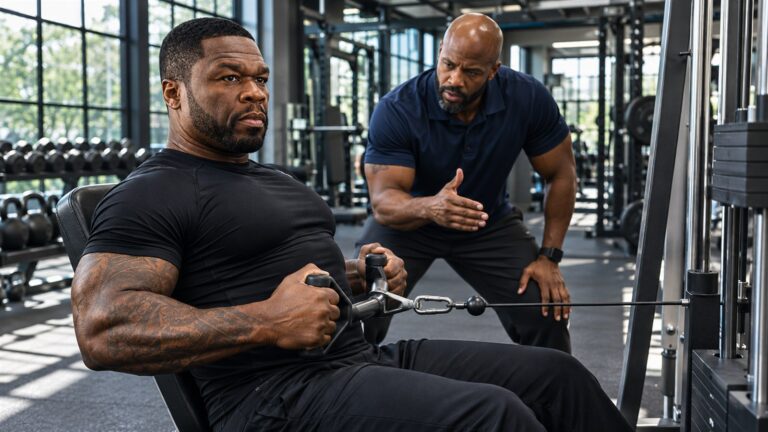
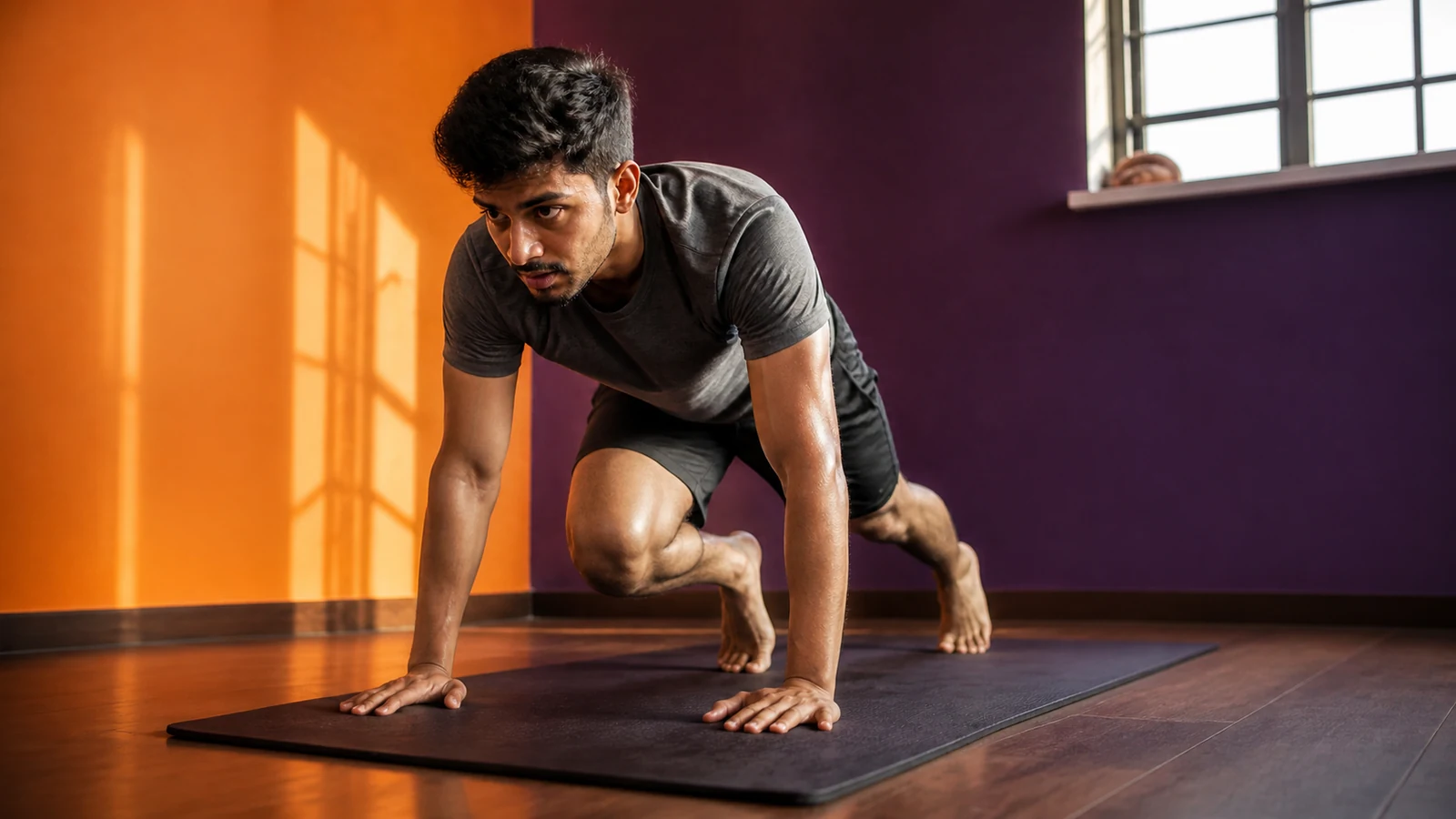
Image context: The photographs are illustrations, not trial participants or proof of fat loss. The featured floor pose is not an instruction in the standing circuit below.
A first-week bodyweight plan with no jumping
This is an editorial starting example for adults who can exercise comfortably, not a tested fat-loss protocol. All five movements can be done in a small space without a gym membership, weights, jumping, or getting on the floor.
| Day | Example | What to notice |
|---|---|---|
| Monday | Try one round of the five-move circuit. | Find movements you can control and note where you need more rest. |
| Tuesday | Easy walking or other enjoyable movement, if it feels good. | There is no required distance or speed. |
| Wednesday | Rest or repeat easy movement. | Recovery is part of building a habit. |
| Thursday | Repeat the circuit; add a second round only if the first feels manageable. | Keep the same form rather than racing the clock. |
| Friday through Sunday | Rest, walk, or repeat the circuit once on a nonconsecutive day. | Choose what you can recover from and repeat next week. |
Begin with three minutes of easy marching and arm movements, then try about 30 seconds of each move followed by 30 seconds to rest or switch positions. Five moves make a five-minute round; one or two rounds plus an easy cool-down make a short first session.
| Move | How to do it | Gentler option |
|---|---|---|
| March in place | Step one foot at a time at a pace that lets you talk. | Step slowly while holding a stable support, or march seated. |
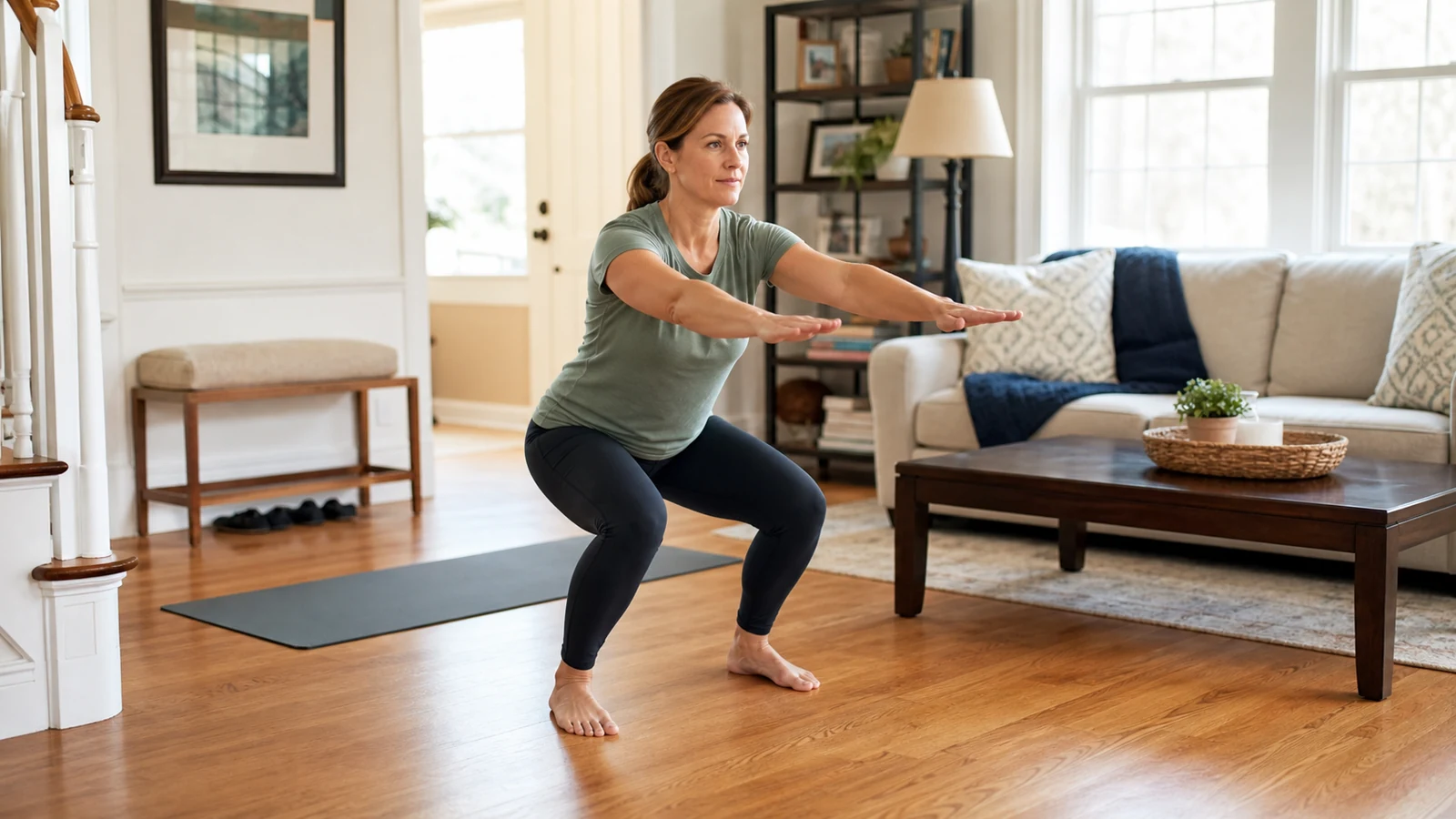
| Shallow squat | Stand with feet comfortable apart, bend hips and knees a little, then stand tall. | Use a sturdy chair for sit-to-stand, or make the bend smaller. |
| Wall push-up | Put hands on a wall, step back a comfortable distance, bend elbows, and press away. | Stand closer to the wall to reduce the challenge. |
| Hip hinge | Keep knees soft, move hips back with a long torso, then stand upright. | Use a smaller range and rest hands on hips for a movement cue. |
| Side step | Step to one side and back, then alternate, keeping the steps controlled. | Make each step smaller or hold a stable support. |
If 30 seconds is too long, work for less time and take a longer rest. Stop for chest pain, faintness, or sharp pain, and seek appropriate medical advice rather than pushing through it.
How to make the circuit useful after week one
Repeat a manageable version before making it harder. When movement and recovery feel steady, add a little time to one movement, add a second round, or choose a slightly more demanding version; change only one part at a time.
This circuit emphasizes leg, pushing, and easy aerobic movements. Without a bar, band, or weight, it does not provide much pulling resistance for the upper back, so it is not a complete strength program by itself.
Walking, dancing, cycling, and other activities can also be part of a broader routine. The CDC recommends both aerobic activity and muscle-strengthening work for adults, and advises people who are inactive to start with amounts they can manage.
If ongoing neck, back, or joint pain limits ordinary movement, ask a clinician or physical therapist for individual guidance. The routine above is a starting idea, not an assessment or treatment for pain.
Why the workout cannot promise belly-fat loss
These studies compared particular training conditions, not this first-week circuit. Their outcomes cannot predict an individual’s fat-loss result.
| Study | What it measured | Finding and limit |
|---|---|---|
| Kostek et al., 2007 | One-arm resistance training in 104 adults; regional subcutaneous fat measured by skinfold and MRI. | Male skinfolds suggested local loss; MRI found no trained-arm advantage overall or by sex. Mixed measures do not establish reliable spot reduction. |
| Brobakken et al., 2023 | Sixteen men with overweight, ten weeks: abdominal endurance plus running versus running alone. | A regional trunk-fat difference was reported. This specialized protocol did not test the five-move circuit. |
| Lafontant et al., 2025 | 36 studies involving 1,564 adults; 31 pooled. Aerobic, resistance and combined training were compared. | Some fat-mass comparisons differed; work-matched comparisons found no significant body-composition differences. These were not tests of this video or bodyweight-only first week. |
Read the population, comparison and outcome together before choosing a claim. Keep a research result separate from an editorial exercise example.
What about food and progress?
Food choices influence body composition, but a generic home-workout article cannot set a suitable eating target for an individual. If changing body composition is important to you, a registered dietitian can help you make decisions that support health and activity without relying on a crash plan.
For the first week, a simple log of completed sessions, comfortable movements, and recovery is enough. You can later decide which measures, if any, are useful; a changing waist, mirror image, or scale number alone does not show what caused the change.
A routine that helps you practice regularly may still be valuable even when its fat-loss effect is uncertain. You can build a stronger plan over time without starting with high knees, burpees, or a promise of fast belly-fat loss.
Watch the Original Video
Want more like this? Subscribe to WorkoutHealthy Insider for practical explanations behind popular fitness claims.
References
Kostek et al. (2007), Medicine and Science in Sports and Exercise, regional fat response to unilateral arm training.
Brobakken et al. (2023), Physiological Reports, small abdominal-endurance and treadmill trial.
Lafontant et al. (2025), Journal of the International Society of Sports Nutrition, systematic review and meta-analysis of training modes and fat loss.
CDC, Adding Physical Activity as an Adult, current activity guidance.
This is general fitness information, not medical or nutrition advice. If you have persistent pain, a medical condition, or concerns about eating or activity changes, speak with an appropriate clinician or registered dietitian.