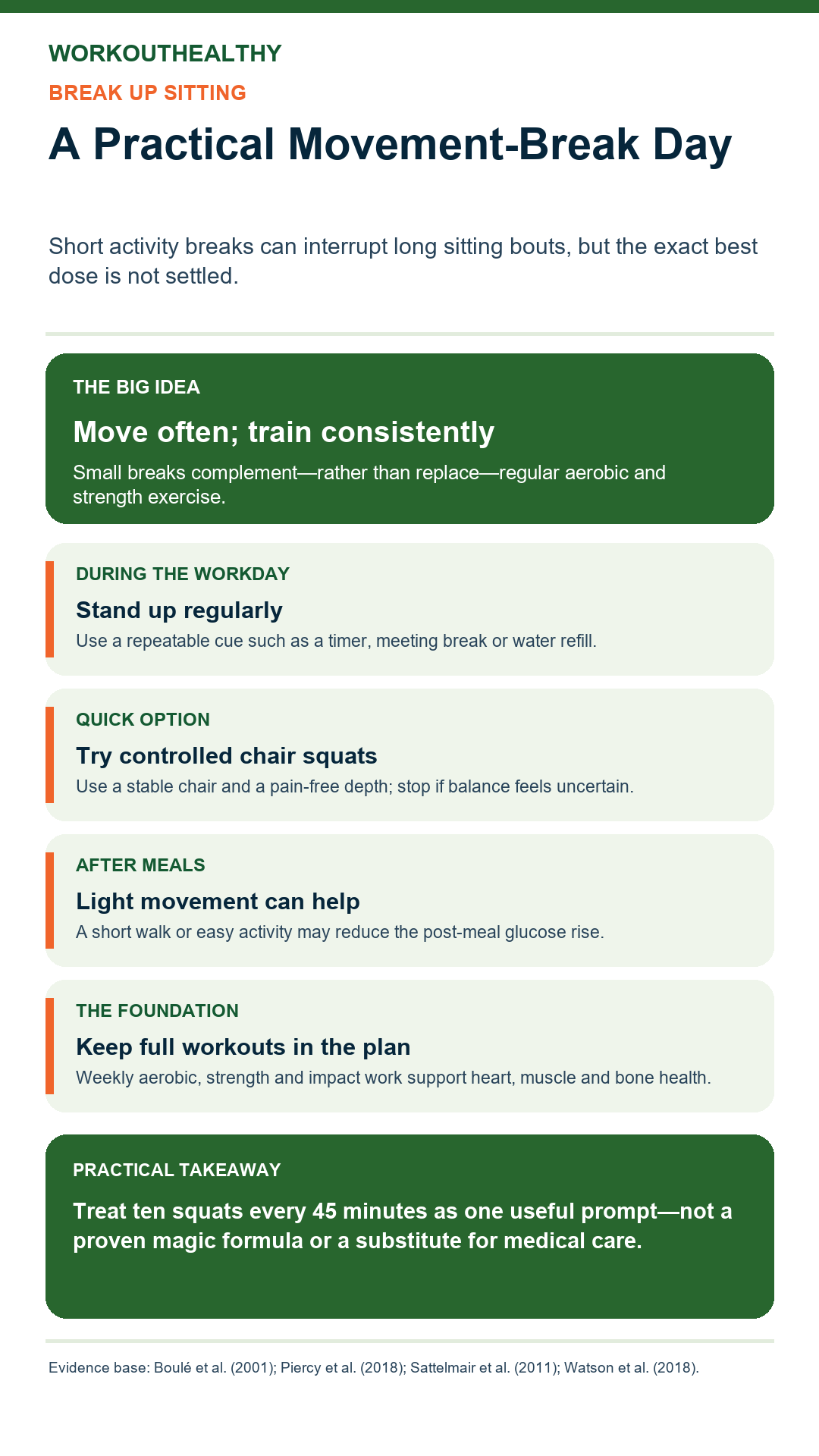
Does doing ten squats every 45 minutes blunt a blood-sugar spike? Research supports the broader idea that some movement breaks can change short-term glucose responses, but the frequently cited squat study did not test ten repetitions. It tested three-minute squatting bouts every 45 minutes in a small group of young men. That difference matters before turning the finding into a daily prescription.
A popular YouTube video also promises that one daily movement routine can support heart health, stronger bones, and blood-sugar control at the same time.
That is a lot to ask from a single exercise plan.
It turns out each piece of that promise has real research behind it.
But heart health, bone strength, and blood sugar control come from three separate fields of exercise science.
Each field has its own studies, its own methods, and its own limits.
This article walks through what the actual research says about all three.
What the Video Claims
The video argues that one daily routine, built around walking, resistance work, and mobility drills, can support the heart, the skeleton, and blood sugar control together.
That framing is not unreasonable on its face.
Each of those three outcomes genuinely does respond to exercise.
The real question is what kind of exercise, at what intensity, and for how long.
That level of detail is hard to fit into one short video.
Peer reviewed research fills in the gaps the video leaves out.
What the Research Shows About Exercise and Heart Health
Cardiovascular exercise and heart disease risk is one of the most studied relationships in medicine.
Researchers have followed large groups of people for years, tracking how much they move and how their hearts hold up.
A widely cited analysis in the journal Circulation pooled results from dozens of earlier studies on physical activity and coronary heart disease (Sattelmair et al., 2011).
It found a clear pattern.
People who moved regularly had meaningfully lower rates of coronary heart disease than people who stayed sedentary.
The benefit did not require extreme training.
Meeting the general activity guideline, about 150 minutes of moderate movement a week, was linked to a real drop in heart disease risk (Sattelmair et al., 2011).
More activity brought more benefit, though the gains got smaller past a certain point.
This kind of graded pattern is common across cardiovascular research.
For a closer look at how much daily walking supports the heart, see our breakdown of how many miles you should walk a day.
Regular aerobic activity conditions the heart muscle itself, not just the blood vessels around it.
It can also lower resting blood pressure, improve cholesterol patterns, and reduce inflammation linked to heart disease.
The heart is a muscle, and like any muscle, it adapts to consistent aerobic training over time.
That conditioning effect is a major reason cardio focused routines appear in every major heart health guideline.
What the Research Shows About Exercise and Bone Density
Bone density responds to a very different kind of stress than the heart does.
Bones need mechanical loading, real physical force, to trigger the cells that build new bone tissue.
Walking alone provides some of that loading, but it is fairly light.
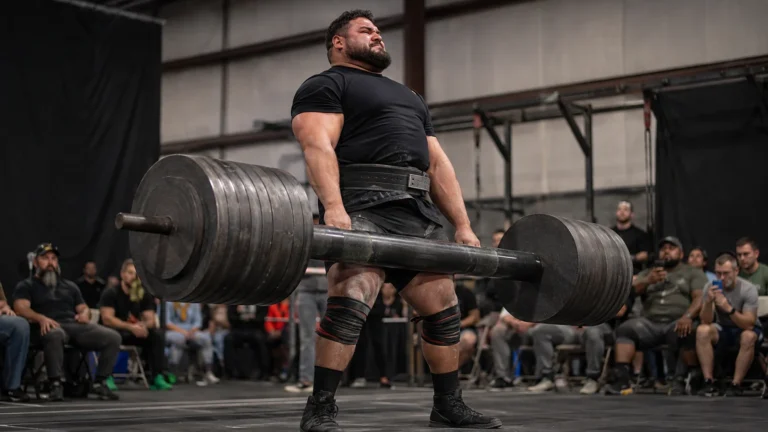
Heavier resistance training and impact based movement provide a stronger stimulus.
A trial published in the Journal of Bone and Mineral Research tested this directly in postmenopausal women with low bone mass (Watson et al., 2018).
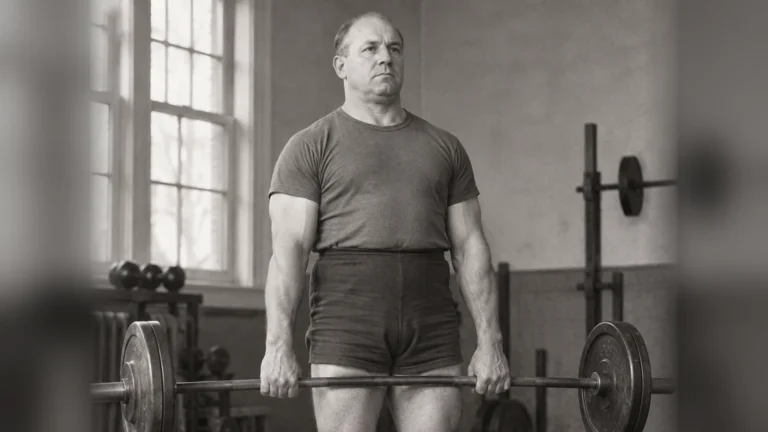
Researchers had one group perform twice weekly sessions of heavy lifting and jumping movements for eight months.
The exercises included heavy deadlifts, overhead presses, back squats, and jumping chin ups.
A separate control group did not follow that program.
After eight months, the training group’s bone density at the lower spine rose by about 2.9 percent (Watson et al., 2018).
The control group’s bone density at that same site dropped by about 1.2 percent over the same period.
Bone density at the hip followed a similar split, holding roughly steady in the training group while declining in the control group.
Researchers also tracked injuries closely, and the heavy lifting program did not cause the fractures some clinicians had feared.
Over eight months, women doing heavy resistance training gained bone density while a comparison group kept losing it.
That result matters because bone loss is usually something clinicians try to slow, not reverse.
Impact based movement works through a similar loading mechanism, which is part of why our piece on whether box jumps build muscle covers ground that overlaps with bone research.
The takeaway is not that walking is useless for bones.
It is that heavier, load bearing exercise appears to do more for bone density specifically.
What the Research Shows About Exercise and Blood Sugar Control
Blood sugar control depends heavily on how well muscle tissue responds to insulin.
Exercise improves that response through more than one pathway.
A widely cited meta-analysis pooled data from multiple controlled trials on structured exercise in adults with type 2 diabetes (Boulé et al., 2001).
The exercise groups in those trials improved their average blood sugar control by a clinically meaningful amount.
That improvement showed up even in trials where body weight did not change much (Boulé et al., 2001).
In other words, the blood sugar benefit did not depend entirely on weight loss.
Muscle contraction itself pulls glucose out of the bloodstream, separate from any effect on body fat.
Both cardio style exercise and resistance training contributed to this effect across the pooled studies.
That helps explain why a combined routine makes physiological sense for blood sugar, even though no single walking session does all the work.
The improved sensitivity from a single workout does not last forever.
Most research suggests the effect fades within roughly one to two days without another session.
That is part of why regular, repeated sessions matter more than one impressive workout.
What the 45-minute squat study actually tested
In a 2024 randomized crossover study, Gao and colleagues enrolled 18 young men with overweight or obesity. Each participant completed several laboratory conditions over an 8.5-hour sitting day. The comparison included uninterrupted sitting, one 30-minute walk, three-minute walking breaks every 45 minutes, and three-minute squatting breaks every 45 minutes. The repeated breaks occurred ten times. “Ten times” described the number of breaks, not ten squat repetitions per break.
During that tightly controlled day, glucose exposure after meals was lower when sitting was interrupted with frequent walking or squatting than with uninterrupted sitting. The study also compared these patterns with one longer walk. It does not establish that ten quick bodyweight squats offer the same effect as three minutes of continuous squatting, that the effect lasts for months, or that people with diabetes should change medication or monitoring based on a social-media summary.
The evidence is not perfectly uniform. A different crossover trial in twelve normal-weight young adults found higher post-meal glucose during three-minute bodyweight-exercise breaks every 30 minutes than during uninterrupted sitting. The exercise mix, participants, and protocol were different, so this is not a direct refutation of Gao’s result. It does show why a single small acute experiment is too narrow to support a universal “ten squats” rule.
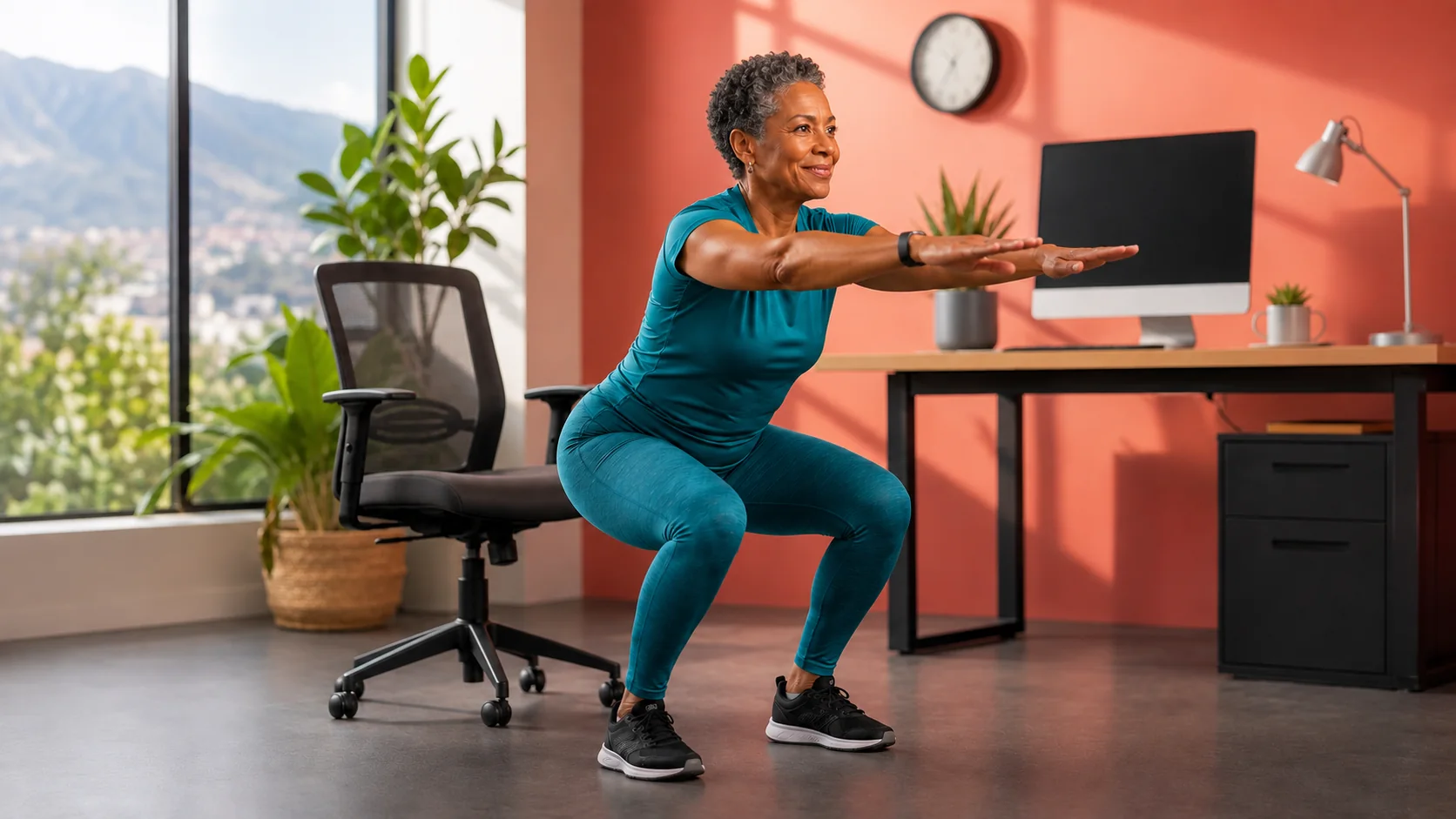
For someone who sits for long periods, standing up and moving regularly is a reasonable practical habit. Chair stands, walking, or other comfortable activity may be options. If you use glucose-lowering medication or have a condition that affects exercise safety, discuss new routines with your clinician; do not assume a movement break will reliably prevent an individual spike.
Why One Routine Can Help All Three at Once
Heart health, bone density, and blood sugar control are separate outcomes, but they are not unrelated.
Walking and other aerobic movement mainly drive the heart benefit.
Heavier resistance and impact training mainly drive the bone benefit.
Muscle contraction, from either kind of exercise, mainly drives the blood sugar benefit.
A routine that includes both aerobic and resistance elements can reasonably touch all three systems.
National physical activity guidelines, updated in 2018, recommend a mix of both for exactly this reason (Piercy et al., 2018).
They call for roughly 150 minutes of moderate aerobic activity a week, plus muscle strengthening work on two or more days.
That is a fairly close match to what the video recommends, even without citing the guideline directly.
Our earlier look at whether lifting weights keeps the brain young covers a similar pattern, one kind of training helping a system beyond its most obvious target.
Watch the video
What This Evidence Does Not Prove
None of this research proves that one specific routine works best for every person.
The bone density trial studied postmenopausal women with already low bone mass, not the general population.
The blood sugar meta-analysis focused on adults already diagnosed with type 2 diabetes.
Results in a healthy 30 year old could look different from results in a 65 year old with osteoporosis.
The heart health research is largely observational, meaning it shows a pattern rather than proof of cause and effect for every person.
None of these studies followed people doing all three types of exercise together in one combined daily plan.
The idea that one routine helps all three systems is a reasonable inference, not a directly tested claim.
Genetics, existing health conditions, diet, and sleep all influence how someone responds to any exercise plan.
Common Mistakes People Make
One common mistake is treating all exercise as interchangeable for every goal.
Walking is excellent for the heart, but it applies relatively little load to bone.
Someone hoping to protect their bones with walking alone may be underestimating what the skeleton needs.
Another mistake is skipping resistance training out of fear of injury, especially among older adults.
The bone density trial mentioned above used supervised, carefully progressed heavy lifting, not random maximum effort attempts.
Jumping into heavy loads without guidance raises real injury risk.
A third mistake is expecting fast results.
The bone density trial ran for eight full months before showing its results.
Blood sugar improvements from exercise also build up gradually, not overnight.
Consistency over months matters more than intensity on any single day.
A fourth mistake is ignoring nutrition while chasing exercise results.
Bone building needs enough calcium, vitamin D, and protein to actually use the mechanical signal from training.
Muscle needs enough protein too, since it is the tissue doing most of the work in blood sugar control.
Who Should Be Extra Cautious
Some people need extra caution before starting a routine like this.
Anyone with diagnosed osteoporosis should have a doctor review any heavy lifting or jumping plan first.
The LIFTMOR trial used close medical supervision and gradual progression, not a home program built from a video (Watson et al., 2018).
People with uncontrolled high blood pressure or known heart disease should get medical clearance before starting vigorous cardio.
Anyone with type 1 or type 2 diabetes should check blood sugar before and after new exercise sessions.
Exercise can drop blood sugar quickly, especially for people using insulin or certain diabetes medications.
Older adults with balance concerns should build general strength before adding impact based movements like jumping.
A physical therapist can help modify any of these exercises to match someone’s actual starting point.
None of this means the plan is unsafe for most healthy adults.
It means the plan should be personalized, not copied exactly from a video.

A Practical Daily Plan Backed by Research
A research grounded version of this routine does not need to be complicated.
Start with daily aerobic movement, walking counts, and aim for roughly 150 minutes a week.
Our guide to daily step counts and mortality risk breaks down how that daily movement target connects to longer term health outcomes.
Add resistance training on two or more days a week, focusing on major muscle groups.
Include some load bearing or impact movement if a doctor confirms it is safe for your joints and bones.
That could mean bodyweight squats, light jumping drills, or supervised heavier lifting depending on fitness level.
Progress gradually, adding small amounts of weight or reps every few weeks rather than jumping straight to maximum effort.
Give the plan real time, think months, not days, before judging whether it is working.
Track simple markers over time, like resting heart rate, strength on key lifts, or step count trends.
A DEXA scan can establish a real bone density baseline for anyone concerned about osteoporosis risk.
Anyone with osteoporosis, heart disease, or diabetes should build this plan together with a doctor or physical therapist first.
Want more like this? Subscribe to WorkoutHealthy Insider for practical explanations behind popular fitness claims.

References
Gao, Y., Li, Q.-Y., Finni, T., & Pesola, A. J. (2024). Enhanced muscle activity during interrupted sitting improves glycemic control in overweight and obese men. Scandinavian Journal of Medicine & Science in Sports, 34(4), e14628. https://doi.org/10.1111/sms.14628.
Charlett, O. P., Morari, V., & Bailey, D. P. (2021). Impaired postprandial glucose and no improvement in other cardiometabolic responses or cognitive function by breaking up sitting with bodyweight resistance exercises: A randomised crossover trial. Journal of Sports Sciences, 39(7), 792–800. https://doi.org/10.1080/02640414.2020.1847478.
Boulé, N. G., Haddad, E., Kenny, G. P., Wells, G. A., & Sigal, R. J. (2001). Effects of exercise on glycemic control and body mass in type 2 diabetes mellitus: A meta-analysis of controlled clinical trials. JAMA, 286(10), 1218 to 1227. https://doi.org/10.1001/jama.286.10.1218
Piercy, K. L., Troiano, R. P., Ballard, R. M., Carlson, S. A., Fulton, J. E., Galuska, D. A., George, S. M., & Olson, R. D. (2018). The physical activity guidelines for Americans. JAMA, 320(19), 2020 to 2028. https://doi.org/10.1001/jama.2018.14854
Sattelmair, J., Pertman, J., Ding, E. L., Kohl, H. W., III, Haskell, W., & Lee, I. M. (2011). Dose response between physical activity and risk of coronary heart disease: A meta-analysis. Circulation, 124(7), 789 to 795. https://doi.org/10.1161/CIRCULATIONAHA.110.010710
Watson, S. L., Weeks, B. K., Weis, L. J., Harding, A. T., Horan, S. A., & Beck, B. R. (2018). High-intensity resistance and impact training improves bone mineral density and physical function in postmenopausal women with osteopenia and osteoporosis: The LIFTMOR randomized controlled trial. Journal of Bone and Mineral Research, 33(2), 211 to 220. https://doi.org/10.1002/jbmr.3284
This article is for general information only and is not medical advice. If you have an injury, ongoing pain, or a medical condition, talk to a doctor or physical therapist before you change how you train or eat.