
Bruce Lee’s estate presents the water metaphor as a way to discuss adaptability.
These studies test methods, not a philosophy.
Use the distinction to read the idea, compare the research and make a clear record of a proposed change.
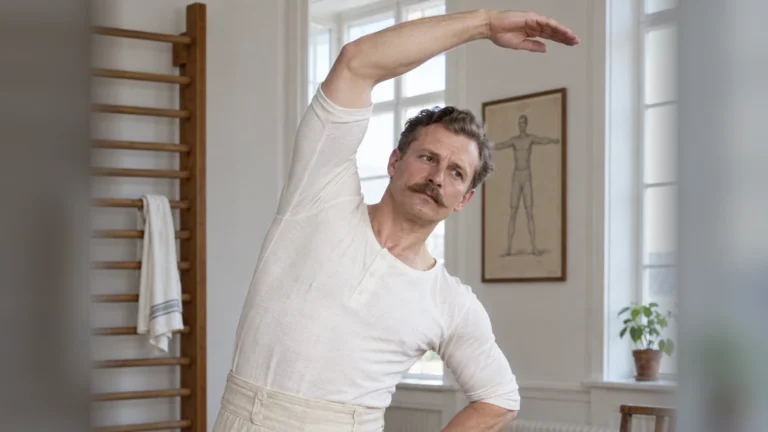
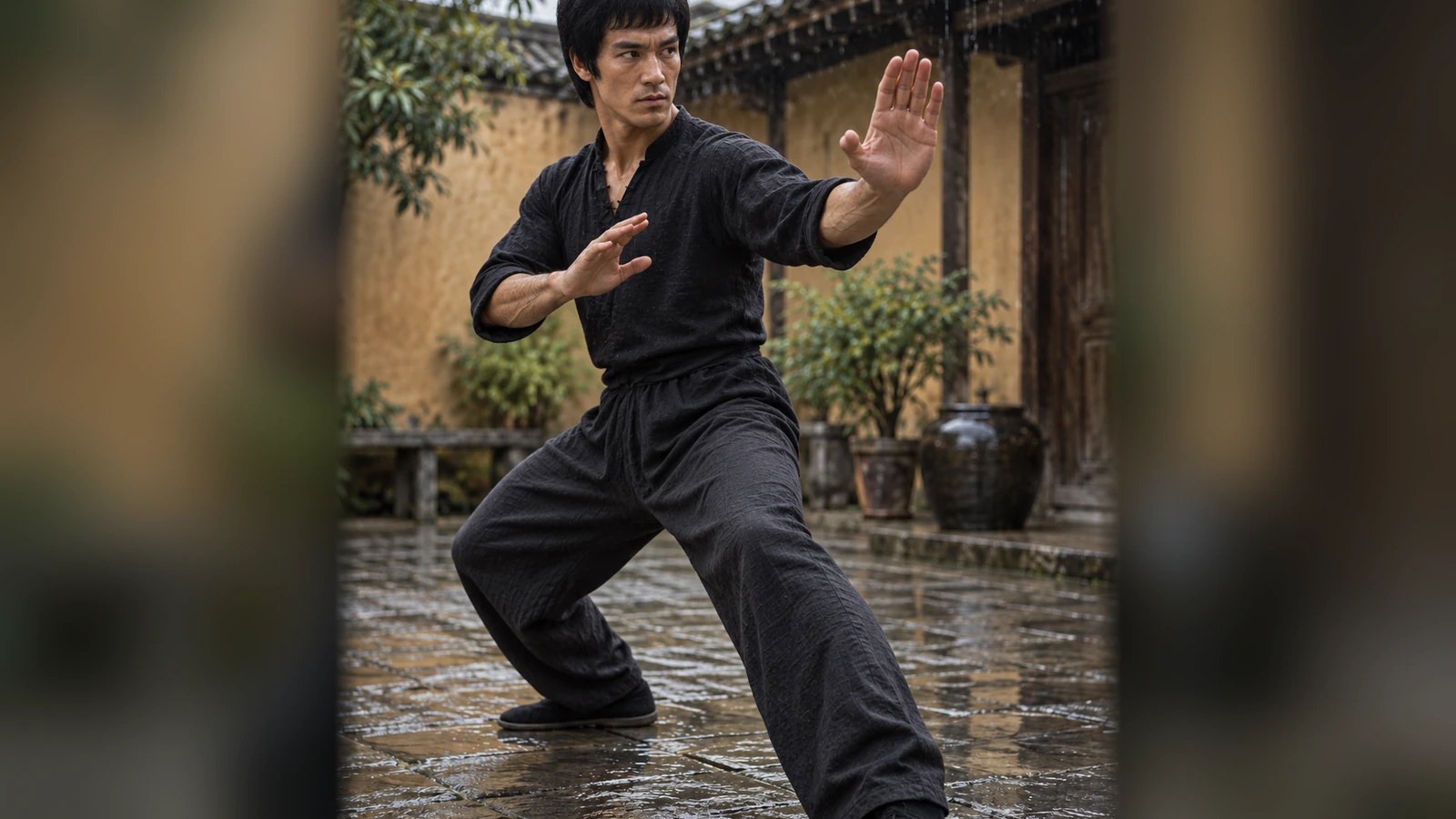
Image context: The featured scene does not establish the person’s identity, a demonstrated technique or participation in any study.
Where the Phrase Is Documented
The estate’s written podcast page reproduces the water passage and presents Shannon Lee’s discussion. Its written text is distinct from the unreviewed episode audio.
The Bruce Lee Foundation’s Google Arts & Culture collection lists a 1971 Pierre Berton Show item discussing the Longstreet appearance. That metadata does not verify an exact interview day or the claim that this was the only English-language interview.
Read the Idea in Context
Water changes shape with its surroundings; the estate uses that image to explore responsiveness. This is a philosophical interpretation, rather than a measured exercise effect.
Meaning and Training Applications
An editorial training application is to ask what should stay consistent, what might change and what result will be checked. The record below is a planning aid, not a programme tested by Lee or by these studies.
Name the reason for a change before choosing a response. An explanation is more useful when it records the actual constraint.
One Strength-Training Comparison
Mann’s 2010 abstract compares autoregulatory progressive resistance exercise (APRE; n=12) with linear periodization (n=11) in 23 Division I football players. The six-week preseason groups came from two separate years.
Reported APRE advantages concerned bench 1RM, estimated squat 1RM and 225-pound bench repetitions. Here 1RM means one-repetition maximum; squat was estimated, not directly tested.
The separate-year study does not isolate the metaphor’s effects. Only the abstract was reviewed.
What the Motor-Learning Study Tested
The historical APA index abstract for Shea and Morgan’s 1979 study describes 72 college students learning three laboratory motor tasks. It separates acquisition, retention after 10 minutes or 10 days, and transfer.
That laboratory scope does not establish improved fighting ability or a universal rule to change exercise order, stance or tempo. The original full paper was not reviewed.
Keep Comparisons Attached
Neither study tests the metaphor. Keep each outcome’s population, comparison and measurement attached.
A Keep, Change and Measure Record
| Field | Question to record |
|---|---|
| Keep | Which goal or task still matters? |
| Change | What specific constraint or reason prompted a change? |
| Measure | What comparable observation will you record? |
| Review | What would lead you to keep or reconsider the change? |
Fictional scheduling example: Keep a planned practice session; change its time because the usual slot is unavailable; record whether it happened. This example supplies no exercise selection, load or safety score.
For the separate question of choosing a goal after a fixed-length programme, see what to do after a workout programme ends.
Who Should Be Careful
This record cannot assess injury. Seek individual advice when pain or a medical condition affects training.
Use the Meaning Without Inventing an Outcome
Keep the philosophical idea and the study result in separate parts of your notes. Record a reason for a change and the observation you will compare, without treating the metaphor as proof.
References
Bruce Lee. (2016). [Episode 2 written page].
Bruce Lee Foundation. (1971 collection item). Pierre Berton Show / Longstreet discussion. Google Arts & Culture collection metadata.
Mann, J. B., et al. (2010). The effect of autoregulatory progressive resistance exercise vs. linear periodization on strength improvement in college athletes. PubMed abstract.
Shea, J. B., & Morgan, R. L. (1979). Contextual interference effects on the acquisition, retention, and transfer of a motor skill. Journal of Experimental Psychology: Human Learning and Memory, 5(2), 179 to 187. Publication record.
The motor-learning summary uses the earlier official index abstract. Direct publisher access was unavailable; no full-manuscript or archival-video reading is implied.
This is fitness education, not medical advice. Ask a clinician about training affected by injury, persistent pain or a medical condition.