
Beyoncé’s 2018 Coachella performance looked effortless from the audience. Her account of the months before it does not. After a difficult twin pregnancy and an emergency cesarean birth in June 2017, she spent time healing before beginning preparations for the April 2018 shows.
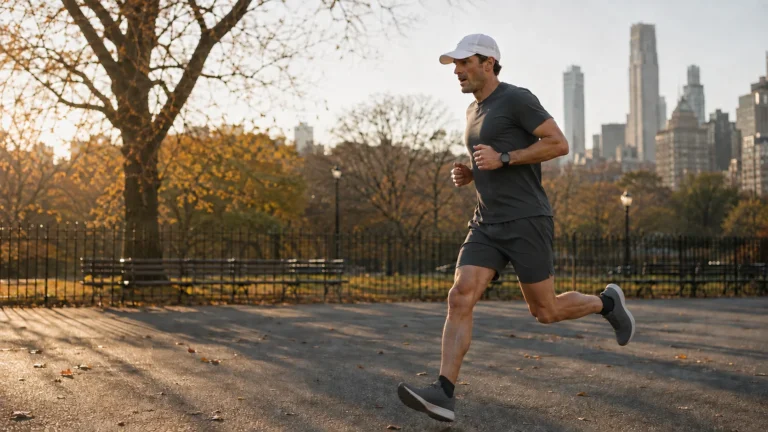
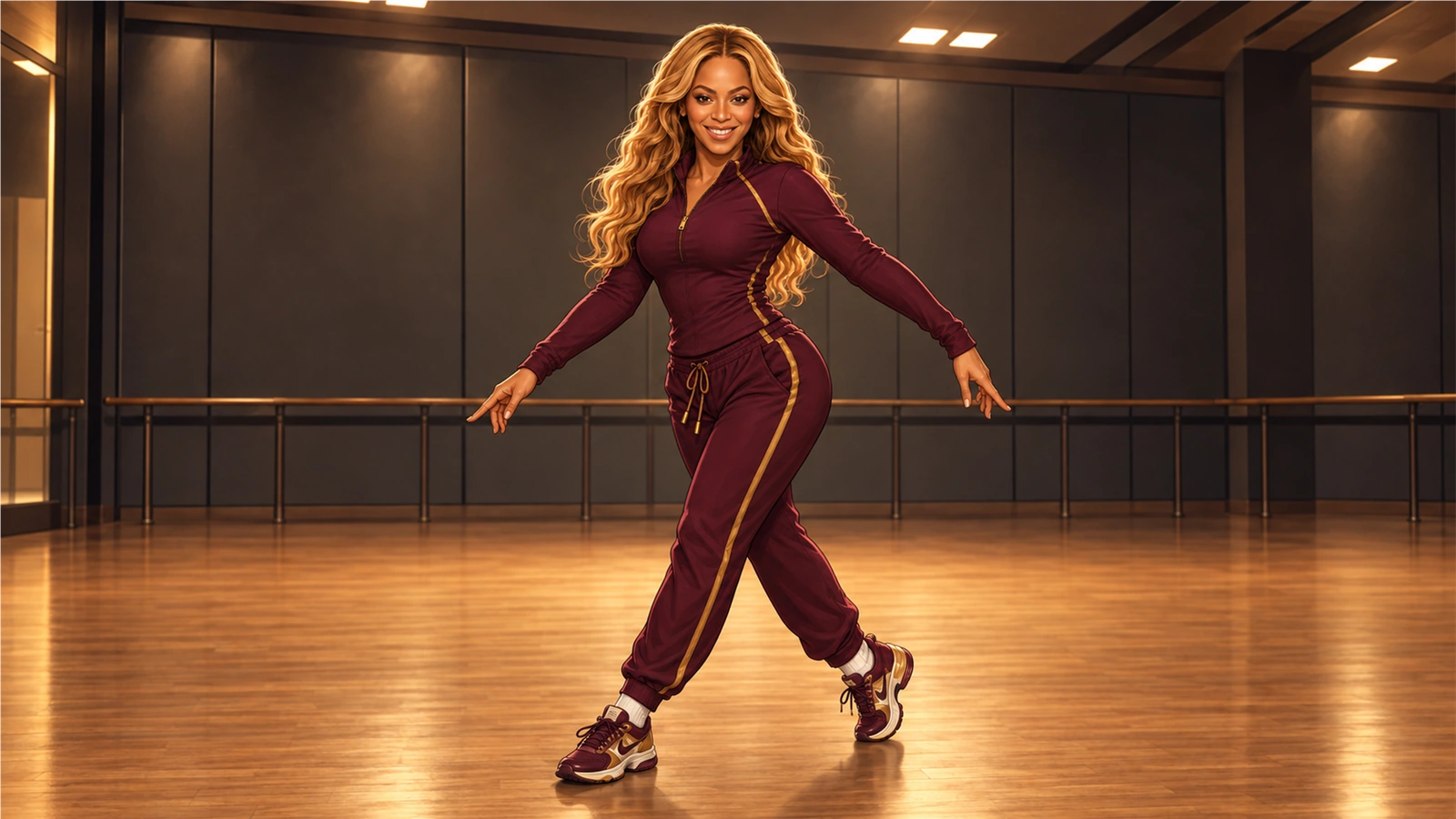
Image note: The featured image is editorial artwork, not a photograph or documentary image of Beyoncé or her actual rehearsal.
In a first-person Vogue essay, she described a changed core, bed rest, a stay in the neonatal intensive care unit for her twins, and a decision to approach her postpartum body more patiently than she had after her first child. The later documentary HOMECOMING shows how demanding the return to performance became.
Those two accounts support the scheduled post’s broad point: a high-profile comeback required real recovery and extensive preparation. They do not make Beyoncé’s diet or rehearsal schedule a safe template for someone else after childbirth. The most useful lesson is how much context a polished stage performance can conceal.
The timeline: birth, recovery, then rehearsal
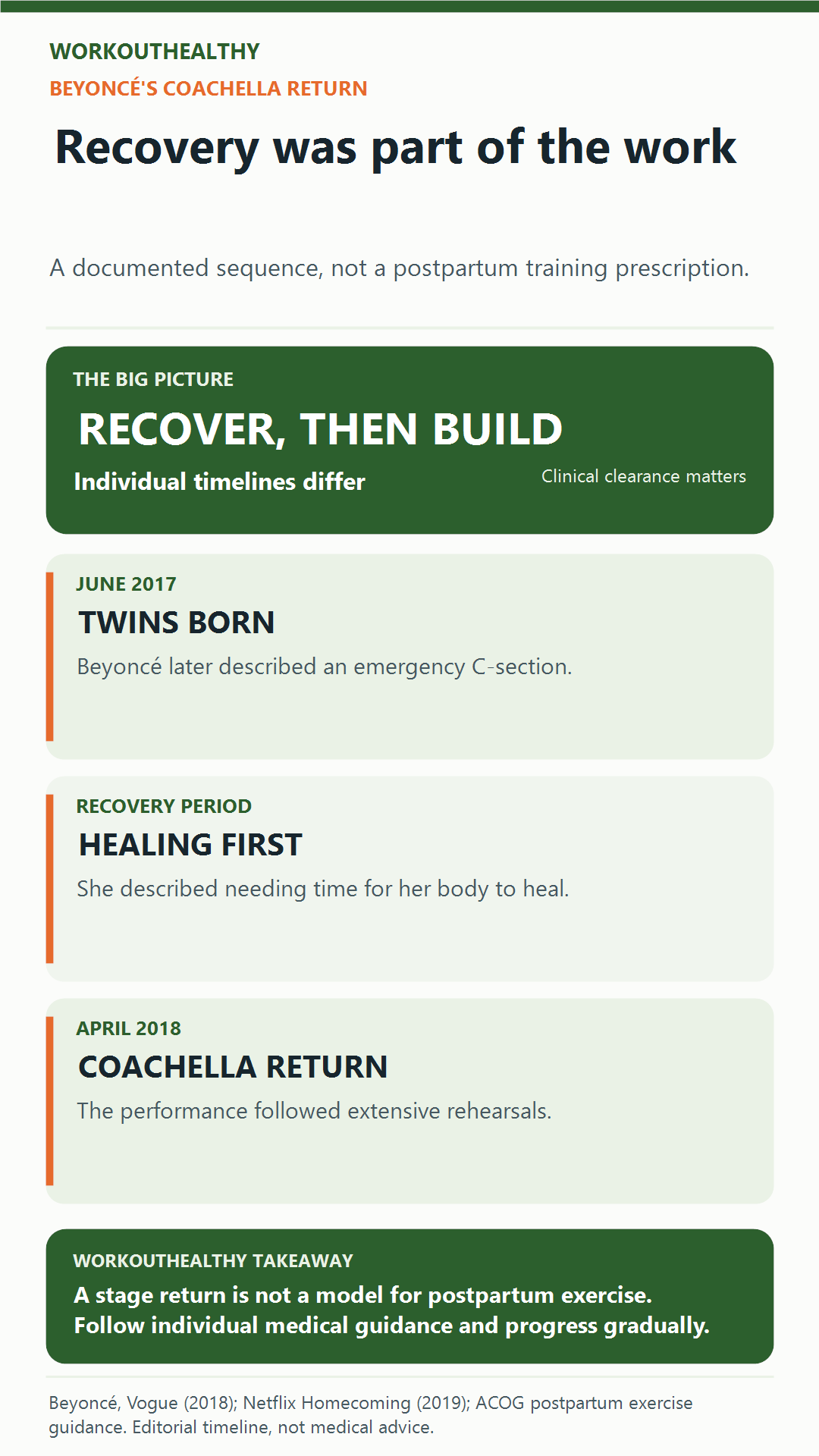
Beyoncé gave birth to twins Rumi and Sir in June 2017. Her Vogue account says she had spent more than a month on bed rest, developed toxemia, and required an emergency C-section. She wrote that the babies spent many weeks in the NICU. These were serious complications, not simply the ordinary fatigue of a busy tour schedule.
She also described needing time for surgical recovery. Her core felt different after the birth, but that personal description does not identify a specific abdominal condition or a diagnosis. It is important not to turn her words into a claim about diastasis recti, pelvic-floor injury, or a particular rehabilitation protocol that she did not disclose.
In the same essay, she said she began preparing for Coachella after about six months. The festival performances came the following April, roughly ten months after the twins’ birth. The gap matters: the return did not begin with immediate high-intensity rehearsals days after surgery.
The 2017 Coachella headline slot had been postponed because of the pregnancy. The eventual 2018 show was more than a fitness deadline. Netflix describes it as a large-scale performance built around Beyoncé’s creative vision and tributes to historically Black colleges and universities. Dance, music, staging, and a large ensemble all had to come together.
What is documented about the preparation?
Netflix’s film description confirms that HOMECOMING interweaves concert footage with candid preparation and interviews. Beyoncé’s own Vogue essay gives a narrower, firsthand account of how she approached the post-pregnancy period. Taken together, they show a long creative and physical process, not one quick exercise hack.
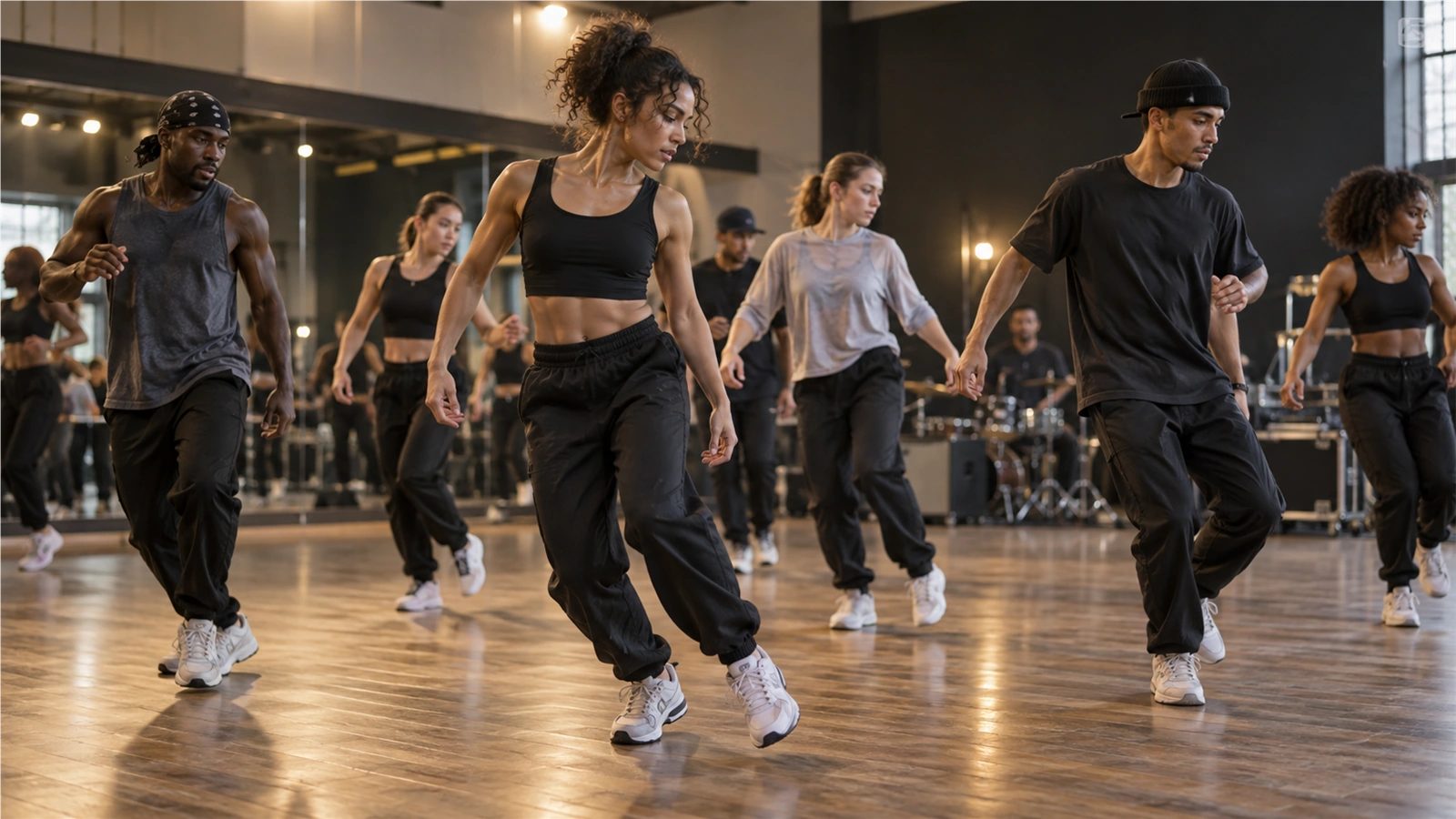
Contemporaneous reporting on the documentary describes intense dance rehearsals and additional conditioning. Dance rehearsals can be physically demanding: repeated choreography asks for coordination, balance, muscular endurance, and cardiovascular effort. That is a general description of the task, not a measurement of Beyoncé’s individual training load.
Her exact weekly exercise program, sets, heart-rate zones, and progression were not published in the sources reviewed for this article. The claim that she followed a particular “core strength from scratch” plan is therefore more specific than the public record supports. She said her core felt different and that she had to rebuild herself for the show; that is not the same as publishing a clinical core-rehab protocol.
The scale of her support also matters. A performer preparing an elaborate concert has access to time, production staff, choreography teams, and other resources many new parents do not. Comparing a household’s postpartum schedule to a professional production misses the conditions under which the work happened.
The restrictive diet was part of her story, not advice
Beyoncé wrote in Vogue that she temporarily ate vegan food and gave up coffee, alcohol, and fruit drinks while preparing. Accounts of HOMECOMING describe an even stricter period of dietary restriction. It is fair to report that history; it is not fair to present the restriction as a proven requirement for regaining strength or safely returning to exercise.
The distinction is especially important after pregnancy, when food intake can affect healing, energy, and, for some people, breastfeeding. A diet built for a celebrity’s deadline is not an individualized nutrition plan. Neither the Vogue essay nor the film provides evidence that one particular food rule caused the quality of the Coachella performance.
In a Vogue report on the documentary, Beyoncé is described as reflecting that she pushed herself further than she would want to again. That retrospective is part of the story. Leaving it out turns a difficult experience into a glamorous instruction manual.
Readers do not need to imitate a temporary elimination plan to take the performance seriously. Adequate food, rest, and medical care are not signs of lesser commitment. If eating or exercise becomes rigid or distressing, professional support is more appropriate than copying a celebrity documentary.
Why dance rehearsals are not a postpartum prescription
A long rehearsal can include repeated high-effort dance passages, standing, transitions, and performance practice. It can build specific stamina for a show. It can also create a large recovery demand. The fact that Beyoncé ultimately performed at a very high level does not establish when someone else should resume vigorous exercise after delivery.
The American College of Obstetricians and Gynecologists advises people who had a cesarean birth or pregnancy complications to ask their obstetric clinician when it is safe to exercise again. Its general guidance is to add activity gradually and stop when pain occurs. A person who was vigorous before pregnancy may eventually work back toward vigorous activity, but the timing depends on their own recovery.
The CDC’s postpartum guidance describes a target of 150 minutes of moderate-intensity aerobic activity per week for generally healthy people, which can be broken into smaller sessions. That is a broad population guideline, not a minimum that someone must meet while recovering from a complicated surgery.
Beyoncé’s experience sits outside any simple “six-week bounce back” narrative. She described a medically complex birth, months of healing, and a professional return with an unusually demanding goal. Those details are why her story should prompt more patience, not less.
What the caption gets right, and what needs a limit
The caption is right that the Coachella preparation involved a strict diet and extensive rehearsals, and that Beyoncé has spoken candidly about the difficulty. Her Vogue essay and the documentary support those broad elements.
It is less precise to say she rebuilt core strength “from scratch.” That phrase can suggest a documented rehabilitation plan or a measurable baseline that the available sources do not provide. The stronger wording is that she reported her core felt different after an emergency C-section and that returning to performance took time and effort.
It is also easy to read a stage comeback as evidence that the extreme schedule was healthy or necessary. Her later reflection complicates that conclusion. Success on stage shows she completed a demanding performance; it does not prove that every part of the preparation was wise, sustainable, or replicable.
Finally, the performance was cultural work as well as physical work. HOMECOMING documents her intent to celebrate Black college traditions. Reducing the whole project to a body transformation misses the artistic goal that shaped the rehearsals.
Five grounded lessons for a return to movement
These are WorkoutHealthy editorial takeaways from the sources, not Beyoncé’s prescribed postpartum program:
- Separate healing from training for a deadline. Recovery after a complicated birth deserves its own timeline. Ask a clinician about restrictions and symptoms before adding strenuous work.
- Build the activity you actually need. A dancer rehearses dance. Someone returning to a walk, a class, or lifting can start with a small, repeatable version of that activity rather than copying a concert schedule.
- Increase demand gradually. Add duration, frequency, or intensity one step at a time when recovery is going well. Persistent pain or worsening symptoms call for reassessment, not more grit.
- Count food and rest as support. Movement requires energy, especially amid disrupted sleep and caregiving. Avoid treating restrictive eating as the price of fitness.
- Respect different resources and bodies. Access to help, time, childcare, and medical care changes what is feasible. A celebrity’s return is not a fair benchmark for a new parent’s worth.
Someone whose delivery and recovery were uncomplicated may resume movement on a very different schedule from someone who had surgery or a medical complication. The right comparison is with your own recent capacity and clinical guidance, not a concert film.
The bottom line
Beyoncé’s Coachella return was extraordinary partly because it followed a difficult twin pregnancy, emergency C-section, months of healing, and extensive creative preparation. She described changes in her body and a temporary restrictive diet, while later acknowledging how hard she had pushed herself.
Her story does not support a universal postpartum workout or diet. It supports a more honest view of recovery: a polished final performance can sit on top of time, support, uncertainty, and effort that an audience never sees. For most people, the practical goal is not to rehearse like Beyoncé. It is to return to movement safely, with enough flexibility and support to keep going.
References
- Beyoncé. Beyoncé in Her Own Words: Her Life, Her Body, Her Heritage. Vogue, August 6, 2018.
- Netflix Tudum. Beyoncé’s HOMECOMING Documentary: Everything You Need to Know. August 17, 2023.
- Netflix Media Center. HOMECOMING: A film by Beyoncé. Accessed October 2026.
- Rennert J. Beyoncé’s Documentary Reveals the Very Valuable Lesson She Learned During Post-Partum Recovery. Vogue, April 17, 2019.
- American College of Obstetricians and Gynecologists. Exercise After Pregnancy. Accessed October 2026.
- Centers for Disease Control and Prevention. Pregnant and Postpartum Activity: An Overview. December 4, 2025.
This article is for general information only and is not medical advice. After a cesarean birth, pregnancy complication, new pain, or concerning symptoms, seek advice from a qualified obstetric clinician before changing exercise or eating habits.