
Beginner powerlifting starts with the squat, bench press, and deadlift, a repeatable training program, and a way to learn the sport’s standards. The 16-week planner below helps you organize those decisions without pretending one calendar can choose everyone’s working weights.
You can use the learning route without entering a competition. The optional meet route adds a rulebook, deadlines, and event preparation to the same planning horizon.
What makes training powerlifting?
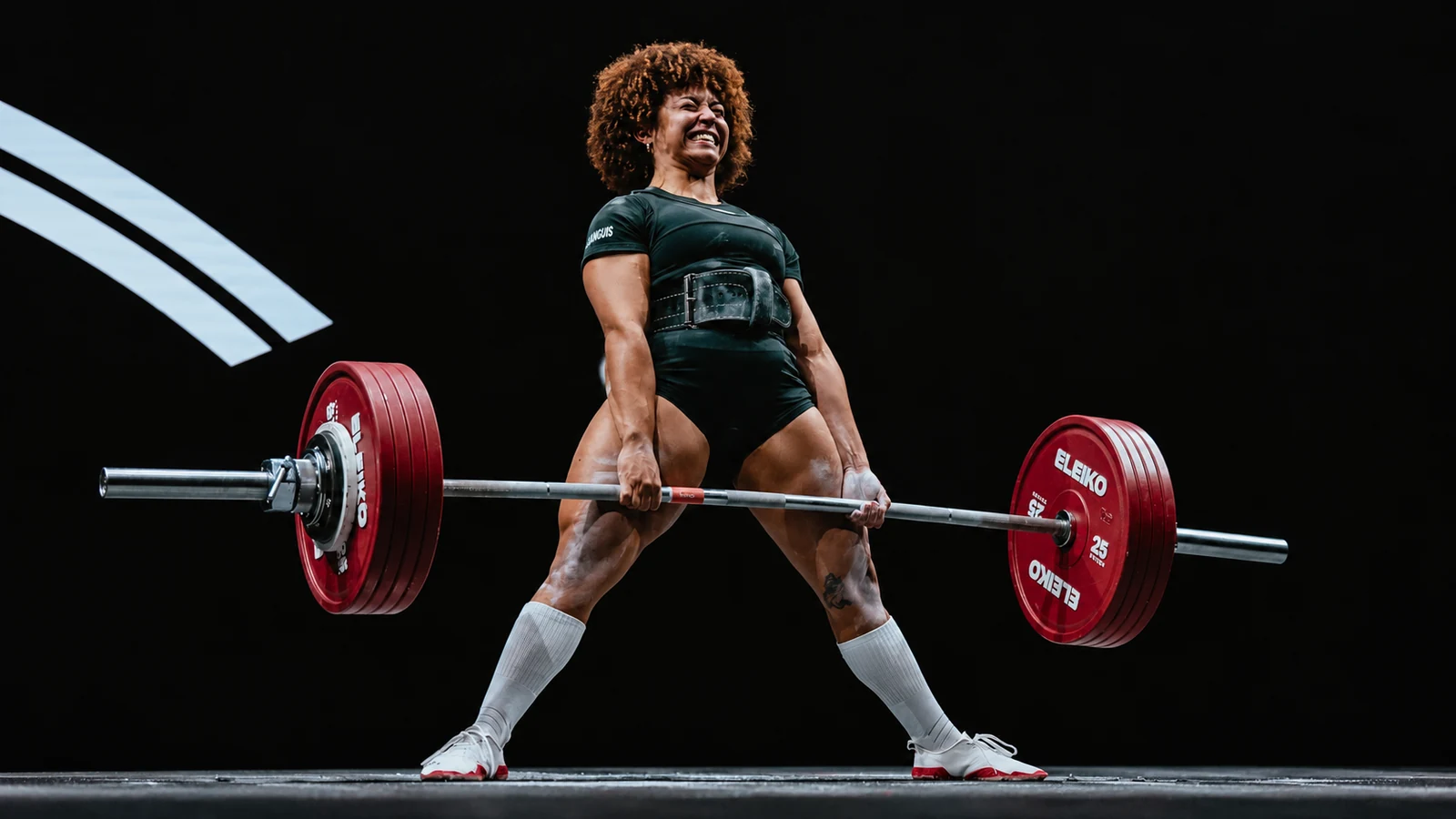
In a full powerlifting competition, the total combines the best valid squat, bench press, and deadlift. Under IPF rules, a lifter receives three attempts at each lift.
Competition standards make the task more specific than moving a bar from one place to another. You can start learning those standards well before deciding whether to enter a meet.
A beginner does not need to copy another lifter’s total, training volume, or competition schedule. The useful starting questions are what you can practice, who can teach it, and which program fits your actual week.
Your first week: get these decisions out of the way
Use this checklist before treating a spreadsheet as a complete training plan. It is a preparation tool, not a prescribed workout.
- Confirm access: Where can you practice the three lifts, and when is the space available?
- Arrange instruction: Who can show you the rack, safeties, bench setup, and appropriate spotting in that gym?
- Choose a program: Keep its starting-load, progression, and missed-session instructions together.
- Block the time: Put the actual sessions into your week, including travel and setup time.
- Open a log: Record the exact lift, completed load, sets, repetitions, and a question for your next coaching conversation.
- Choose the branch: Write either “learn the lifts” or “explore a first meet” at the top of the page.
A gym’s equipment does not become a suitable setup just because a program lists a barbell lift. Ask for help before using unfamiliar safeties or relying on someone who has not agreed to spot.
How to choose a beginner powerlifting program
The best-looking program is not useful if you cannot understand its starting point or fit its sessions into your life. Compare the instructions before comparing the promised results.
| Question | Look for | Clarify if missing |
|---|---|---|
| Can I do the actual schedule? | Days, expected session length, and required equipment. | How the plan handles a week with fewer available sessions. |
| How do I begin? | A clear method for selecting starting loads appropriate to the intended audience. | Whether an unfamiliar maximum test is assumed. |
| What counts as progression? | Instructions that relate the next session to completed work. | What happens after a missed repetition or a large equipment increment. |
| What support does it assume? | Technique instruction, safety arrangements, and a named way to get questions answered. | Which decisions require a coach rather than a spreadsheet. |
| How will I review it? | Fields for completed work and a point for reviewing fit. | What information should trigger a discussion about changing the plan. |
The 2026 ACSM guidance for healthy adults emphasizes regular participation and individual goals rather than a single perfect program. That broad guidance is useful context, but it does not select a powerlifting program or validate the planner on this page.
Keep one program’s instructions intact while you learn what they mean. Mixing a progression rule from one plan with the workload from another creates a new plan, rather than a tested combination of the two.
A 16-week beginner powerlifting learning planner
Each row gives you an organizing task and something concrete to keep. These weeks are an editorial planning example, not phases of a tested training intervention or deadlines for becoming meet-ready.
Your program supplies the workouts, sets, repetitions, and load decisions. If learning or life takes longer, move the planning task rather than using the week number as a reason to rush the lift.
| Week | Learning or planning task | Keep this record |
|---|---|---|
| 1 | Confirm the training space, instruction, and program. | Available sessions and the program’s complete instructions. |
| 2 | Check whether the actual sessions fit the time you allowed. | Planned versus completed sessions, with the reason for any difference. |
| 3 | Ask about one unresolved setup or lift-standard question. | The question and the guidance you received. |
| 4 | Review the first month with the program’s adjustment instructions. | What you will keep, clarify, or discuss changing. |
| 5 | Check that the exercise names and load units in your log are consistent. | A record another coach could understand. |
| 6 | Review one lift with qualified feedback. | The agreed movement standard and how it will be assessed. |
| 7 | Compare completed work with an earlier comparable session. | What changed in the task, load, repetitions, or assistance. |
| 8 | Review whether the schedule remains workable. | Questions about the program’s fit, rather than an automatic program switch. |
| 9 | Decide whether competition interests you. | Either a no-meet learning goal or a possible event to investigate. |
| 10 | For a meet, identify the federation and division. | The relevant rulebook and contact for unanswered questions. |
| 11 | List the lift standards or commands you still need to learn. | A short rule card checked against your event’s rules. |
| 12 | Review the program and optional event timeline with a coach. | Whether to continue learning, extend the horizon, or prepare for that meet. |
| 13 | Resolve equipment, paperwork, and scheduling questions for any planned event. | The organizer’s requirements and deadlines. |
| 14 | Check who will help you on the day if you enter. | Travel, timing, and support arrangements. |
| 15 | Review the actual event plan or your no-meet goal. | Any remaining decision that needs qualified help. |
| 16 | Review the cycle; compete only if your separate preparation is ready. | What you learned and the next useful goal. |
Week four is a review appointment in this planner, not a compulsory deload. Week sixteen is a review point, not a deadline for a maximum attempt or a competition.
Make a rule card for your actual federation
The IPF rulebook gives the following command examples: squat, rack for the squat; start, press, rack for the bench press; and down at the deadlift’s completion. These words are a memory aid, not the full rules for a valid attempt.
Copy the relevant requirements from your own federation into a personal note and have questions checked by a coach or referee. A command card does not replace technique instruction, and another federation may use different procedures.
- Which rulebook and division am I using?
- Which movement and equipment requirements do I need explained?
- Who can check whether my practice matches those requirements?
- What does the organizer need me to submit, and by when?
When a missed week breaks the calendar
Suppose a fictional lifter chooses a three-session program but work travel leaves room for only one session. The useful first record is what actually happened, not a new claim that all the planned work was completed.
Then consult that program’s missed-session instructions and ask its coach or author how to resume if the instructions do not cover your situation. The learning planner can move with you; it does not create a requirement to combine missed workouts.
The same principle applies when a session changes because of a different bar, machine, lift variation, or assistance. Explain the changed task in the log before interpreting the heavier number as a strength gain.
For the record itself, use our workout tracking template. Keep a separate list of questions so the coach can see the difference between what you completed and what you are unsure how to do.
Build a first-meet file if you choose to compete
A possible event needs its own preparation plan. The sixteen-week calendar does not establish that a particular lifter is ready for it.
- Event details: federation, division, location, date, entry requirements, and organizer contact.
- Rules: the version relevant to the event and any published event instructions.
- Logistics: travel, food and drink you already tolerate, arrival timing, and someone who knows where you need to be.
- Unresolved decisions: questions about equipment, procedures, and how your training should lead into the event.
- Qualified support: who will help with warm-ups, attempts, and changes on the day.
Keep attempt selection and the final training lead-in with an appropriate coach. A generic percentage of your best gym lift cannot account for whether that lift met the rules or how your preparation has gone.
Choosing to keep learning without a meet is also a complete outcome. You can review attendance, your understanding of the lifts, and the quality of your records without forcing a maximum test.
A useful first cycle produces better decisions
Beginner powerlifting involves learning a sport as well as lifting weights. A workable program, clear instruction, and an honest record give you something to review when the next decision arrives.
Use sixteen weeks as a planning horizon if it helps you stay organized. Let your actual training and qualified guidance determine the lifting decisions inside that horizon.
Get the next evidence check.
Five practical fitness stories worth your time, every Friday.
One email a week. No product pitches. Unsubscribe in one click.
Sources and limits
- International Powerlifting Federation technical rules: the source for the limited competition examples, not a training program.
- American College of Sports Medicine, 2026 resistance-training guidance: evidence context for healthy adults, not a test of this sixteen-week planner.
Fitness disclaimer: This is general exercise information, not an individual training or medical plan. If an injury, ongoing pain, or a medical condition affects your training, ask a qualified clinician before changing your exercise.