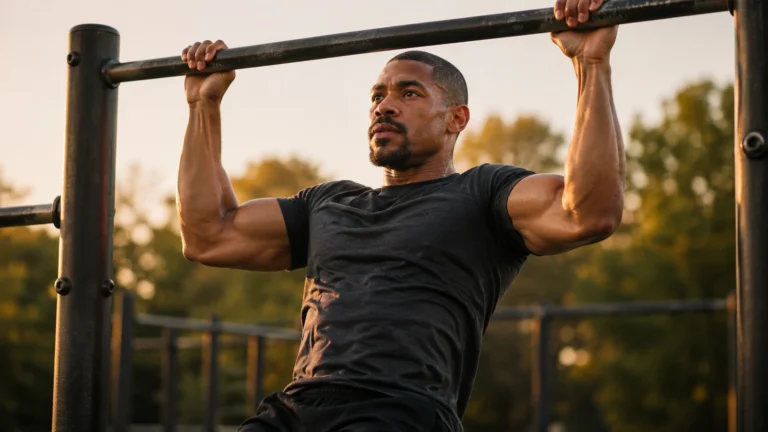
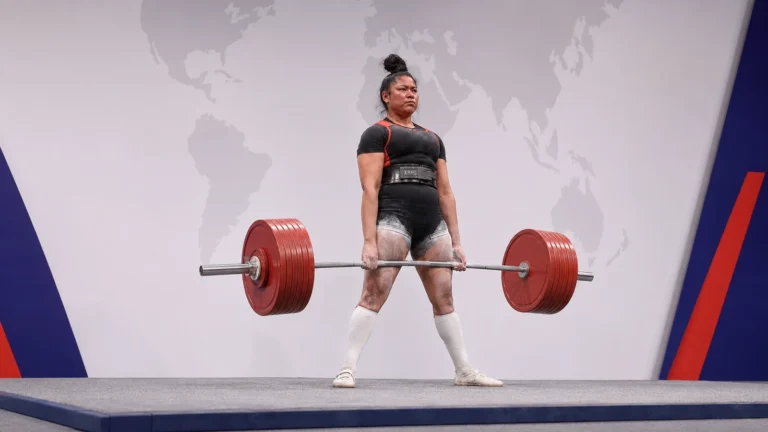
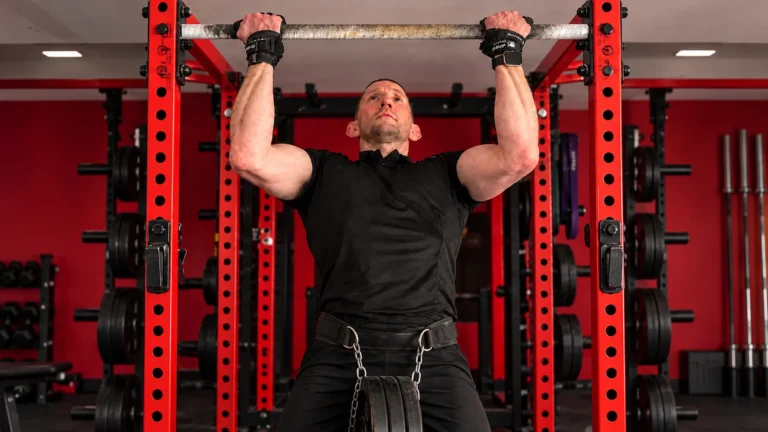
Single set training can build strength and some muscle. One challenging working set per exercise is a practical starting point when time is limited, but it is not a proven maximum-growth dose for every lifter.
Arthur Jones made brief, high-effort training famous through Nautilus. Modern studies give the idea a clearer boundary: one set can work, additional recoverable sets often help muscle growth, and going to failure is optional rather than a requirement for every workout.
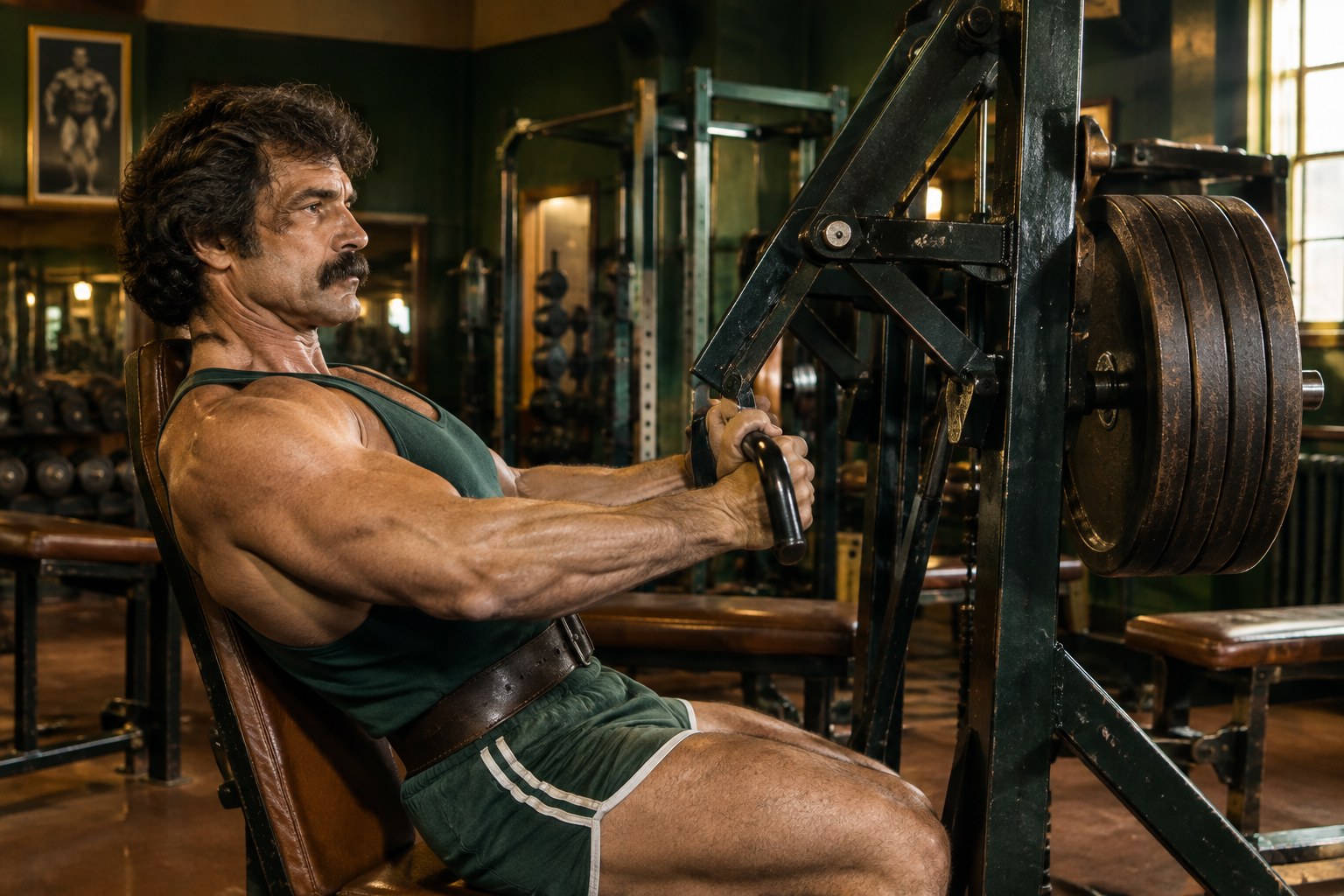
What is single set training?
A single-set routine gives each chosen exercise one challenging working set in a session. Warm-up repetitions and light preparation sets still have a purpose, but they do not replace the working set.
“One set per exercise” also differs from “one set per muscle per week.” A row and a pulldown, for example, each contribute work to some of the same muscles, and repeating the session increases weekly exposure.
The final repetitions should be demanding while technique remains repeatable. Stopping with roughly one or two good repetitions left is one workable starting point, although estimating that margin takes practice.
What the single-set evidence can and cannot say
| Evidence | Actual comparison | Finding | Boundary |
|---|---|---|---|
| Carpinelli and Otto, 1998 | Review of older one-versus-multiple-set reports | Many short studies did not detect a significant difference. | A nonsignificant result is not proof that all doses are equivalent. |
| Schoenfeld et al., 2019 | One, three, or five sets per exercise across eight weeks in 34 trained men | All groups improved strength; higher-volume conditions produced more growth at several measured sites. | Eight weeks in trained men does not define everyone’s ideal set count. |
| Hermann et al., 2025 | One set to failure versus one set stopped about two reps before failure in 42 trained adults | Both groups improved many outcomes; some size measures modestly favored failure. | It did not compare one set with several sets. |
| ACSM, 2026 | Overview of 137 resistance-training reviews | Higher weekly set volume enhanced hypertrophy on average. | A group-level volume pattern is not an exact personal prescription. |
The 2019 comparison is particularly useful because it directly included one-, three-, and five-set groups. One set was not wasted effort: the trained participants gained strength, but higher-volume groups gained more size at several sites.
ACSM’s 2026 position stand places the muscle-growth signal around higher weekly volumes, including roughly ten sets per muscle group. Treat that as a research summary to individualize, not a demand that every beginner jump to ten hard sets.
What Arthur Jones argued, and where the 1998 review fits
Jones’s Nautilus Bulletin promoted brief, controlled, high-effort workouts at a time when long sessions were common in bodybuilding culture. His durable contribution was making lifters ask whether extra sets were producing extra progress.
The 1998 Carpinelli and Otto review argued that many studies lasting four to 25 weeks found no statistically significant difference between single and multiple sets. Its historical context matters because the direct evidence and methods available then were narrower than those available now.
A study that fails to detect a difference may be too small or short to distinguish the programs. That is why “no significant difference” should not be translated into “one set and five sets grow exactly the same amount.”
Jones also favored high effort, often to momentary failure. His approach can be an efficient option, but the exercise, available recovery, and goal determine whether one set is enough for the next training block.
A one-set full-body starting plan
This is an editorial example for adults who can perform the movements with control, not the protocol of a cited trial. Use two nonconsecutive days per week as a starting schedule and warm up as needed before the working sets.
| Movement | One working set | Simple option |
|---|---|---|
| Leg press or squat variation | About 6 to 12 controlled reps | Choose the version you can repeat consistently. |
| Chest press or push-up | About 6 to 12 reps | Use a machine or stable incline if needed. |
| Row | About 8 to 12 reps | Keep the same torso position each session. |
| Hip hinge or leg curl | About 8 to 12 reps | Use a machine if the hinge is unfamiliar. |
| Overhead press | About 6 to 12 reps | Use a comfortable range. |
| Pulldown or assisted pull-up | About 6 to 12 reps | Record the assistance or load. |
| Calf raise or loaded carry | One controlled set | Keep the same setup when comparing sessions. |
Start with loads that allow technically consistent repetitions and stop before form breaks down. Anyone with pain, a recent injury, or a medical condition should get individual guidance rather than treating this table as rehabilitation advice.
Keep the exercise menu stable long enough to see a trend. Our training-log guide
An example eight-week progress log
Here is one illustrative leg-press record, not a load recommendation. “RIR” means the lifter’s estimate of how many clean repetitions were left when the set stopped.
| Week | Load | Completed reps | Estimated RIR | Recovery note |
|---|---|---|---|---|
| 1 | 80 lb | 8 | 2 | Ready next session |
| 2 | 80 lb | 9 | 2 | Ready next session |
| 3 | 80 lb | 10 | 2 | Ready next session |
| 4 | 80 lb | 11 | 2 | Ready next session |
| 5 | 80 lb | 12 | 2 | Ready next session |
| 6 | 90 lb | 8 | 2 | Ready next session |
| 7 | 90 lb | 8 | 2 | Ready next session |
| 8 | 90 lb | 8 | 2 | Ready next session |
Weeks one through five show more repetitions at the same load, then week six begins a heavier set. Weeks seven and eight show a short stall in this one exercise despite similar effort and recovery.
That log supports a small training decision, not a verdict about muscle size. It does not prove that adding a set is necessary, and normal week-to-week variation can obscure progress.
Keep one set, change a variable, or add a set?
- Keep one set while repetitions, load, technique, or tolerance are improving.
- Check the comparison after two similar stalled sessions: use the same range, machine setup, rest, and effort estimate.
- Fix the limiting factor if sleep, symptoms, or technique changed; an extra set may only add fatigue.
- Consider a second working set for that movement when the stall persists and recovery is good, then monitor the next two to four sessions.
Adding a set to every exercise at once makes it hard to tell what helped. A single adjustment preserves the time-efficient spirit of the plan while acknowledging that some muscles and goals need more weekly work.
Does single set training require failure?
No. The 2025 Hermann trial put both groups on one set of nine exercises twice weekly for eight weeks, then compared sets taken to failure with sets stopped at about two repetitions in reserve.
Both groups improved several outcomes, and some muscle-thickness estimates modestly favored failure. Because both groups trained with one set, the study answers an effort question rather than a one-versus-many-set question.
Failure can be an occasional effort check on a suitable exercise, especially with a machine and controlled setup. On movements where technique changes abruptly, leaving a repetition or two in reserve may be more practical.
Who benefits from the low-volume option?
Beginners and busy adults may prefer a brief repeatable routine, while experienced lifters can use it as a reduced-volume block. The 2025 Hermann participants were already trained, so their eight-week result does not establish a lifelong maintenance plan or a universal growth ceiling.
Someone pursuing maximal bodybuilding growth may need more weekly work than this example provides. Someone returning after a break may first need a tolerable routine and a clear record of progress.
Bottom line
Single set training is a credible, time-efficient way to start or maintain a strength habit. Its effectiveness depends on the exercise menu, effort, repeatability, and weekly exposure.
The evidence does not support either rigid rule that one set is always enough or that three sets are mandatory. Begin with a manageable dose, log the response, and add work deliberately when progress and recovery justify it.
This article provides general fitness information and is not medical advice. Consult a qualified professional for exercise changes when you have pain, an injury, or a medical condition.
Sources
- Arthur Jones, Nautilus Bulletin No. 1.
- Carpinelli and Otto (1998), single versus multiple sets review.
- Schoenfeld et al. (2019), one-, three-, and five-set randomized trial.
- Hermann et al. (2025), one-set failure versus two-RIR trial.
- American College of Sports Medicine (2026), resistance-training position stand.