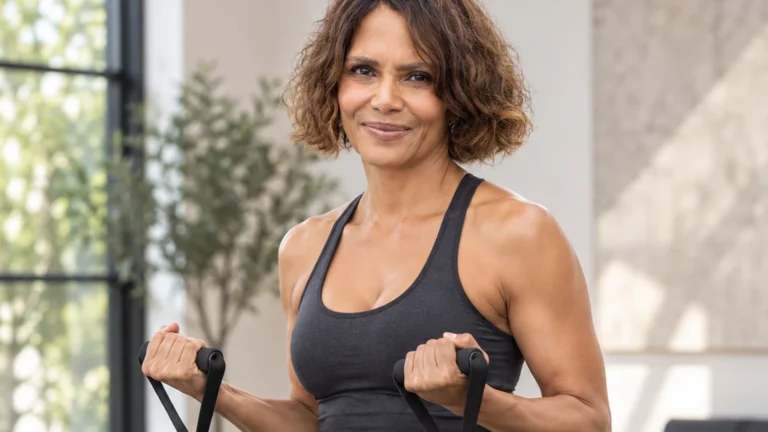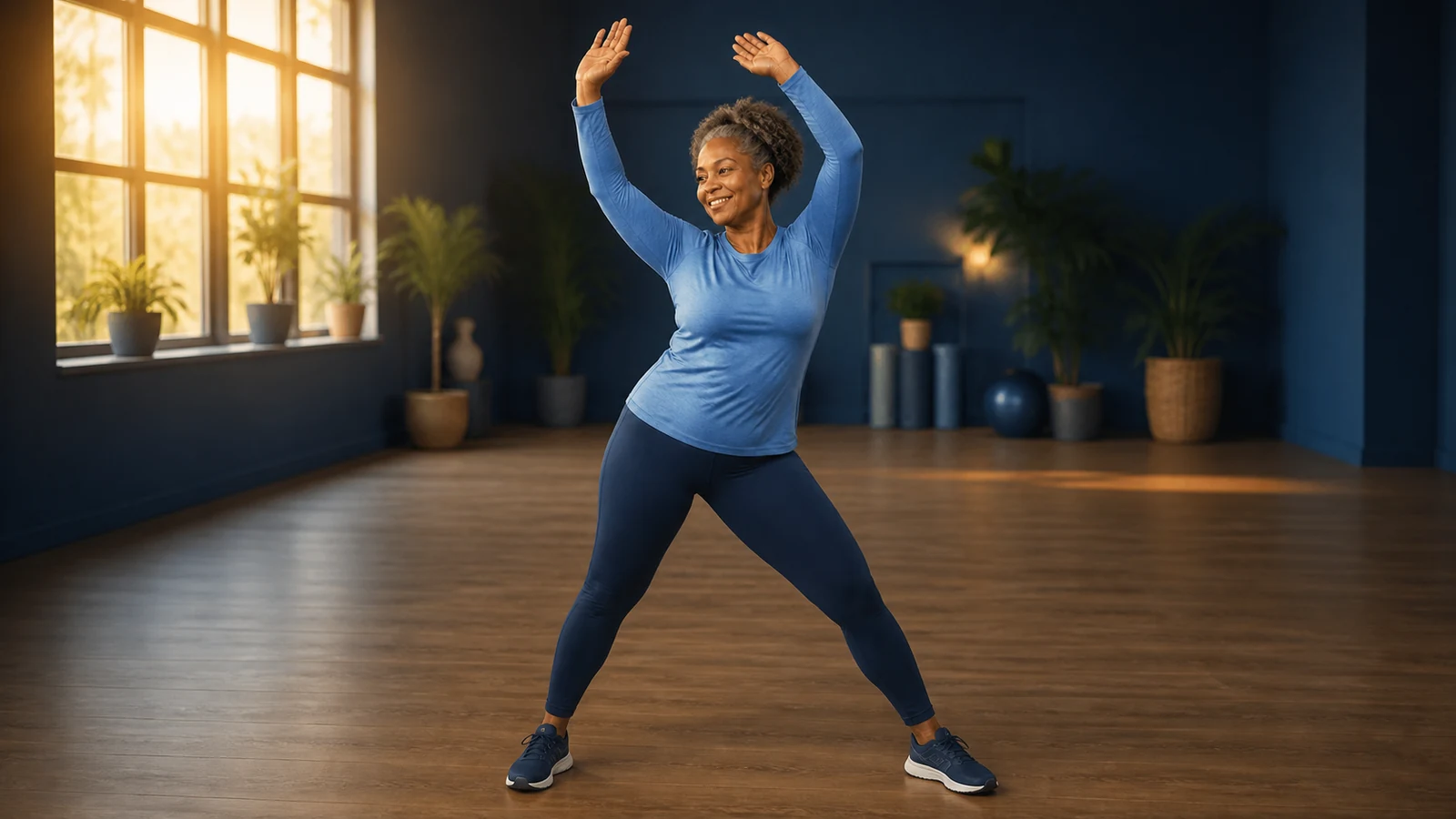

A YouTube video called “Boost Your Heart Health & Energy” promises a gentle way into cardio training.
It targets two groups that often feel left out of typical workout content: beginners and older adults.
The pitch is a functional fitness circuit built around everyday movement patterns, not sprints or jumping.
That kind of claim deserves a look at the actual exercise science, not just the video’s own framing.
What the Video Claims
The video comes from a YouTube channel called Drew Hopper.
We could not independently verify a relevant clinical license or exercise credential for the video presenter from the sources reviewed. That uncertainty is not proof that the presenter lacks credentials.
That does not automatically make the content wrong.
It does mean the claims in the video need outside evidence, not the creator’s stated authority.
The video itself promises a gentle cardio session built for beginners and seniors.
It combines low impact movement with functional exercise patterns, the kind of moves that mirror daily tasks like standing, reaching, and stepping.
It frames the routine as a way to boost heart health and energy without high impact stress on the joints.
Those are reasonable, specific goals, and they line up with a real area of exercise research.
The rest of this article looks at what that research actually shows, apart from any single video or channel.
What Real Research Shows About Low Impact Cardio for Older Adults
A 2025 study in the Althea Medical Journal tested low impact aerobic exercise in elderly participants.
Researcher Cahyo Setiawan and colleagues worked with 42 older adults over a three month program.
The sessions used low impact aerobic movement, the same general category as the gentle routines shown in beginner cardio videos.
Cardiorespiratory fitness and quality-of-life scores improved from before to after the program. The study had only one group and no non-exercise control, so those changes cannot be attributed to the exercise with the certainty of a randomized comparison.
That combination matters, because a fitness gain that does not change how someone feels day to day is a weaker win.
In a small, uncontrolled three-month program, older adults improved fitness and reported quality of life. That supports further study, not a guarantee from any single gentle video.
This study is not about one video or one workout brand. It is a small, uncontrolled signal that a low-impact aerobic program may be useful for selected older adults; stronger comparisons are needed to estimate its effect.
That is the exact audience the video in question is aiming at.
What Real Research Shows About Functional Training Programs
A large 2026 review in Frontiers in Medicine looked at a wider slice of the evidence.
The researchers synthesized 95 randomized or controlled clinical studies published between 2015 and 2024. They did not run a pooled meta-analysis because the programs and outcomes differed substantially.
The review focused on exercise interventions in adults aged 65 or older.
Most of the programs improved functional fitness, the physical capacity to do everyday tasks safely and independently.
One common test in these trials is the 30 second chair stand.
It counts how many times a person can stand up from a chair in 30 seconds without using their hands.
Across the reviewed trials, that score improved by roughly 20 to 40 percent.
Another test, the Timed Up and Go, measures how fast someone can stand up, walk a short distance, turn around, and sit back down.
That time dropped by about 1.0 to 2.5 seconds on average.
For someone at risk of a fall, that is a meaningful change, not a small statistical footnote.
Programs that combined more than one type of training, mixing light resistance work with aerobic movement, tended to produce the best results.
A gentle circuit that blends standing cardio with functional movement patterns fits that multicomponent description closely.
Programs lasting more than 12 weeks with strong attendance produced the biggest gains in the review.
That says something important: consistency over time mattered more than any single hard session.
Where Qigong-Inspired Movement and Breathwork Fit
The Facebook caption also describes Qigong, yoga-inspired mobility, and breathwork. These are different components of a gentle session, not interchangeable names for aerobic training. We could not verify every movement or breathing cue in the linked video, so the evidence below concerns broader methods, not that exact 12-minute sequence.
Qigong commonly combines slow coordinated movement, attention, and breathing. A 2019 review of trials in older adults found improvement in some physical-ability measures, but results for balance, depression, and daily function were not consistently significant; the authors noted the limited number and quality of trials. That supports trying a suitable low-impact movement practice, not promising that a few minutes will prevent heart disease.
A separate review of randomized breathing-exercise trials found average reductions in blood pressure and heart rate over repeated practice. The protocols varied and were studied over time; they do not show that deeper breathing during one video produces a lasting cardiovascular change. Breathwork can help set a comfortable pace and attention to breathing, while regular movement supplies the larger training dose.
For someone with a heart or lung condition, dizziness, or symptoms during exercise, gentle branding is not a substitute for individual medical advice. Do not force slow breathing, hold the breath, or use this routine instead of prescribed treatment.
The Mechanism
It helps to understand why a slow, low impact routine can still train the heart.
Any movement that raises your heart rate above its resting level asks your cardiovascular system to work harder.
Your heart pumps more blood with every beat, and your blood vessels widen to move that blood toward working muscles.
Do that regularly enough, and the heart adapts over weeks and months.
It becomes more efficient at moving blood, even when you are just sitting still.
A 2020 study in BMJ Open Sport & Exercise Medicine tested this idea directly in sedentary older adults.
Researcher Karani Magutah and colleagues had 53 participants complete short exercise bouts of 5 to 10 minutes.
The short-bout groups performed three 5-to-10-minute sessions daily; the comparison groups performed 30-to-60-minute sessions three to five days per week. Both approaches were moderate intensity and lasted 24 weeks.
Among participants whose systolic pressure remained at least 120 mm Hg, reported group means fell from roughly 143–152 to 128–132 mm Hg. Those subgroup figures should not be presented as the average change for everyone in the trial.
Maximal oxygen consumption, a direct lab measure of cardiovascular fitness, rose as well.
Men in the short bout group improved from about 26.1 to 32.0 milliliters of oxygen per kilogram of body weight per minute.
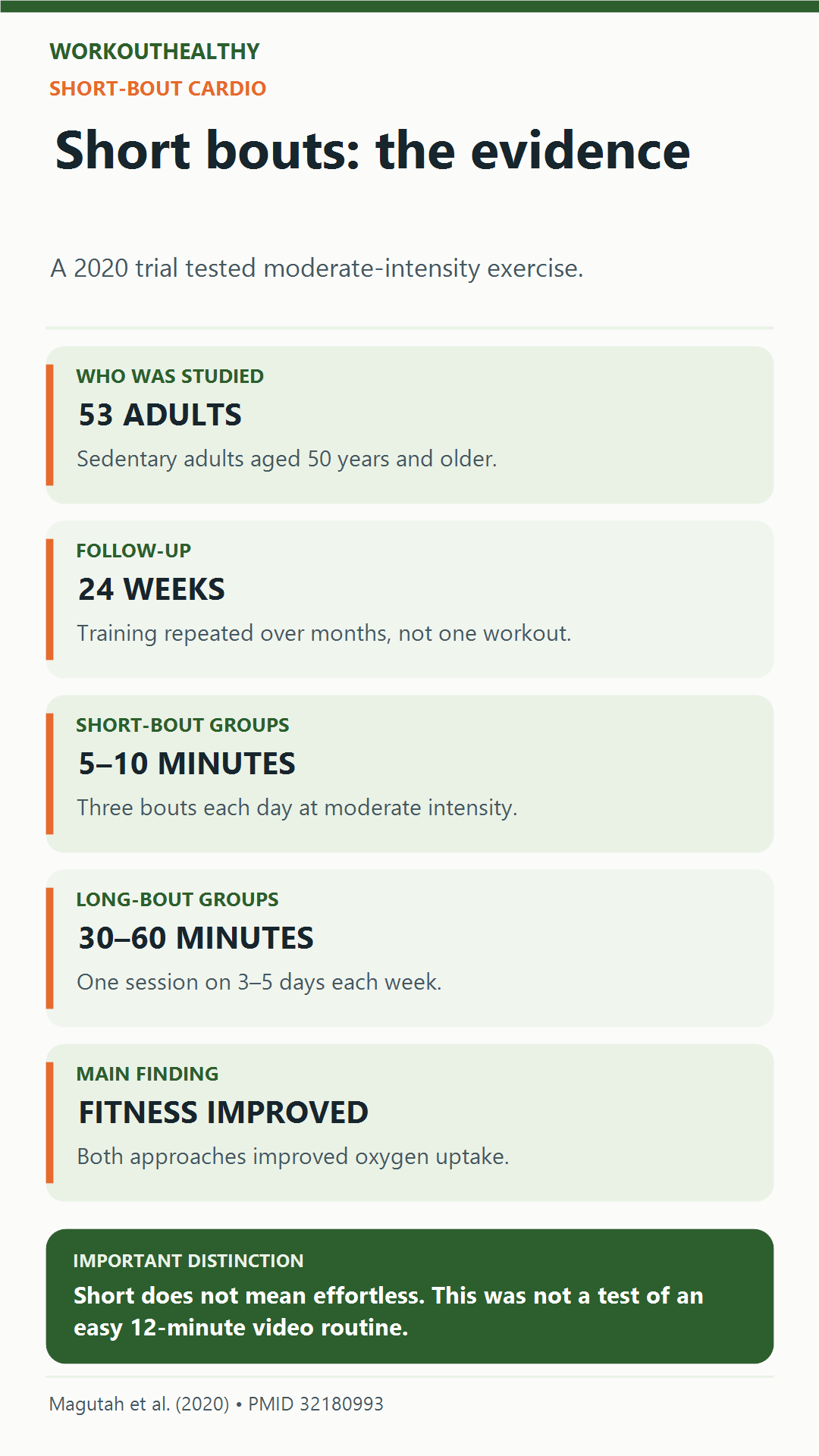
That is a measurable gain in the short-bout group, but these were repeated moderate-intensity sessions—not one easy 12-minute routine.
Repeated short bouts of moderate-intensity exercise improved fitness and blood-pressure measures in sedentary adults aged 50 or older. The result does not establish an equal benefit from one easy video.
The lesson is not that intensity never matters.
Harder training can still produce faster gains in younger, healthier people who tolerate it well.
For a deconditioned beginner or an older adult, the bigger obstacle is usually starting and sticking with a routine, not finding its hardest possible version.
Functional movement patterns, like standing marches, gentle squats, or arm reaches, layer balance and coordination training onto that same cardiovascular stimulus.
That is a different demand than something like box jumps.
Box jumps call for explosive power and landing forces well beyond what a true beginner’s joints are ready for.
A gentle circuit and an explosive one can both be real exercise, but they are not interchangeable for a first time exerciser.
Watch the video
What This Evidence Does Not Prove
None of the research above tested the specific video in question.
No study measured that exact routine, that channel, or that instructor’s cueing.
The studies used supervised settings, with researchers tracking attendance, form, and progress over weeks or months.
A video watched alone at home does not come with that same structure or accountability.
The functional fitness review covered adults over 65, not every beginner of every age.
A younger, deconditioned adult may respond somewhat differently than the older participants in these trials.
These studies also do not prove that any single 10 or 20 minute session produces lasting change on its own.
The benefits described came from programs sustained over 12 to 24 weeks, not from one workout.
General averages from a study group do not guarantee an individual result either.
Health status, medications, and starting fitness level all shape how any one person responds.
Common Mistakes
The biggest mistake beginners make is assuming gentle exercise does not count unless it leaves them sore or breathless.
The research above says otherwise, since consistent low impact work produced measurable gains without that kind of intensity.
Another mistake is skipping variety and repeating the exact same motion for an entire session.
The functional training research favors programs that mix movement patterns, not a single repeated exercise done on a loop.
A third mistake is treating one workout as a finished result instead of a starting point.
The studies cited here measured change after months of consistent practice, not after a single class.
Some beginners also skip a gradual start. A few easy minutes can help them settle into a comfortable movement range before asking for more effort.
A slow two to three minute warm up of marching in place or gentle arm circles prepares the joints for what comes next.
Finally, some people push through sharp pain because a video makes an exercise look easy.
Sharp or lasting pain is a signal to stop, not a normal part of a beginner routine.
Mild muscle fatigue is expected. Chest pain or dizziness is not.
Who Should Be Extra Careful
Anyone with a diagnosed heart condition should get clearance from a doctor before starting a new cardio routine, gentle or not.
People recovering from a recent surgery need a program built around their specific recovery timeline, not a general video.
Misty Copeland’s hip replacement recovery shows how much structured, professionally guided rehab work goes into returning to movement after major joint surgery.
That kind of individualized supervision matters more than any single video can offer.
People with balance problems or a recent fall should ask a doctor about a program that includes a physical therapist, not a video alone.
People managing diabetes, especially with any nerve damage in the feet, should check with a doctor about safe exercise intensity and foot care first.
None of this means older adults cannot train hard or make real, visible progress.
Edith Connor holds the Guinness World Record for oldest female bodybuilder, proof that age alone does not cap what a body can do.
The real point is matching the program to the person, with medical guidance whenever a real risk factor is in play.
A Practical Takeaway
If you are new to exercise, or returning after a long break, a gentle functional cardio circuit is a reasonable place to start.
Think in terms of a repeatable program lasting weeks to months. The cited studies measured changes after sustained participation, not after one session.
Aim for sessions most days of the week rather than one long weekly session.
Short, daily bouts produced real cardiovascular change in the research cited above.
Mix in functional movement patterns, like standing marches, sit to stand reps, and gentle reaches, rather than repeating one motion.
Track a simple marker over time, like how many times you can stand from a chair in 30 seconds without using your hands.
Walking can work just as well as a structured circuit for many beginners.
Our guide on how many miles you should walk a day covers a similar low intensity path to the same cardiovascular benefit.
Daily step count also predicts long term health outcomes.
Our breakdown of daily steps and mortality risk covers what that research actually found, separate from any single video’s claims.
Progress by adding a few more minutes or a bit more range of motion every couple of weeks.
Do not chase soreness or suddenly train harder just because progress feels slow.
Consistency over months is what the evidence links to real functional and cardiovascular gains, not any single dramatic session.
Want more like this? Subscribe to WorkoutHealthy Insider for practical explanations behind popular fitness claims.
References
Chang, P.-S., Knobf, T., Oh, B., & Funk, M. (2019). Physical and psychological health outcomes of Qigong exercise in older adults: A systematic review and meta-analysis. American Journal of Chinese Medicine, 47(2), 301–322. PubMed 30827152.
Garg, P., et al. (2024). Effect of breathing exercises on blood pressure and heart rate: A systematic review and meta-analysis. International Journal of Cardiology Cardiovascular Risk and Prevention, 20, 200232. PubMed 38179185.
Chen, C., Freire, C., Fu, Z., Teixeira, I., Adegas, M., Gomes, R., Rabaçal, R., Silva, S., Malheiro, A., Leite, L. B., Reis, A., Monteiro, A. M., Yang, J., Yao, X., & Forte, P. (2026). Impact of physical exercise interventions on functional fitness in older adults. Frontiers in Medicine, 12, 1732129. https://doi.org/10.3389/fmed.2025.1732129
Magutah, K., Thairu, K., & Patel, N. (2020). Effect of short moderate intensity exercise bouts on cardiovascular function and maximal oxygen consumption in sedentary older adults. BMJ Open Sport & Exercise Medicine, 6(1), e000672. https://doi.org/10.1136/bmjsem-2019-000672
Setiawan, C., Ramadhani, A. N., & Rahayu, U. B. (2025). Effectiveness of low-impact aerobic exercise to improve cardiorespiratory fitness and quality of life in elderly. Althea Medical Journal, 12(1), 44 to 50. https://doi.org/10.15850/amj.v12n1.3756
This article is for general information only and is not medical advice. If you have an injury, ongoing pain, or a medical condition, talk to a doctor or physical therapist before you change how you train or eat.