

Image context: The treadmill scene and colored energy illustration are editorial concepts. They are not identified participants, measured energy images or study data.
Exercise compensation can refer to different questions about energy use and weight change. Name the outcome and comparison before treating two reports as a disagreement.
Study
Higher movement accompanied higher daily expenditure in weight-stable adults.
It was a two-week cross-sectional observation, not an assigned intervention.
Tracer-based doubly labeled water estimated daily use; breathing tests estimated resting use. Calculated activity was 0.9 × total minus resting, assuming 10% for food processing.
The calculation matters: an estimate derived from other components is not a separately measured compartment. Keep the assumption attached when describing what the researchers tested.
Definitions
Additive: movement adds expenditure; compensation: an offset; constraint: a fixed ceiling.
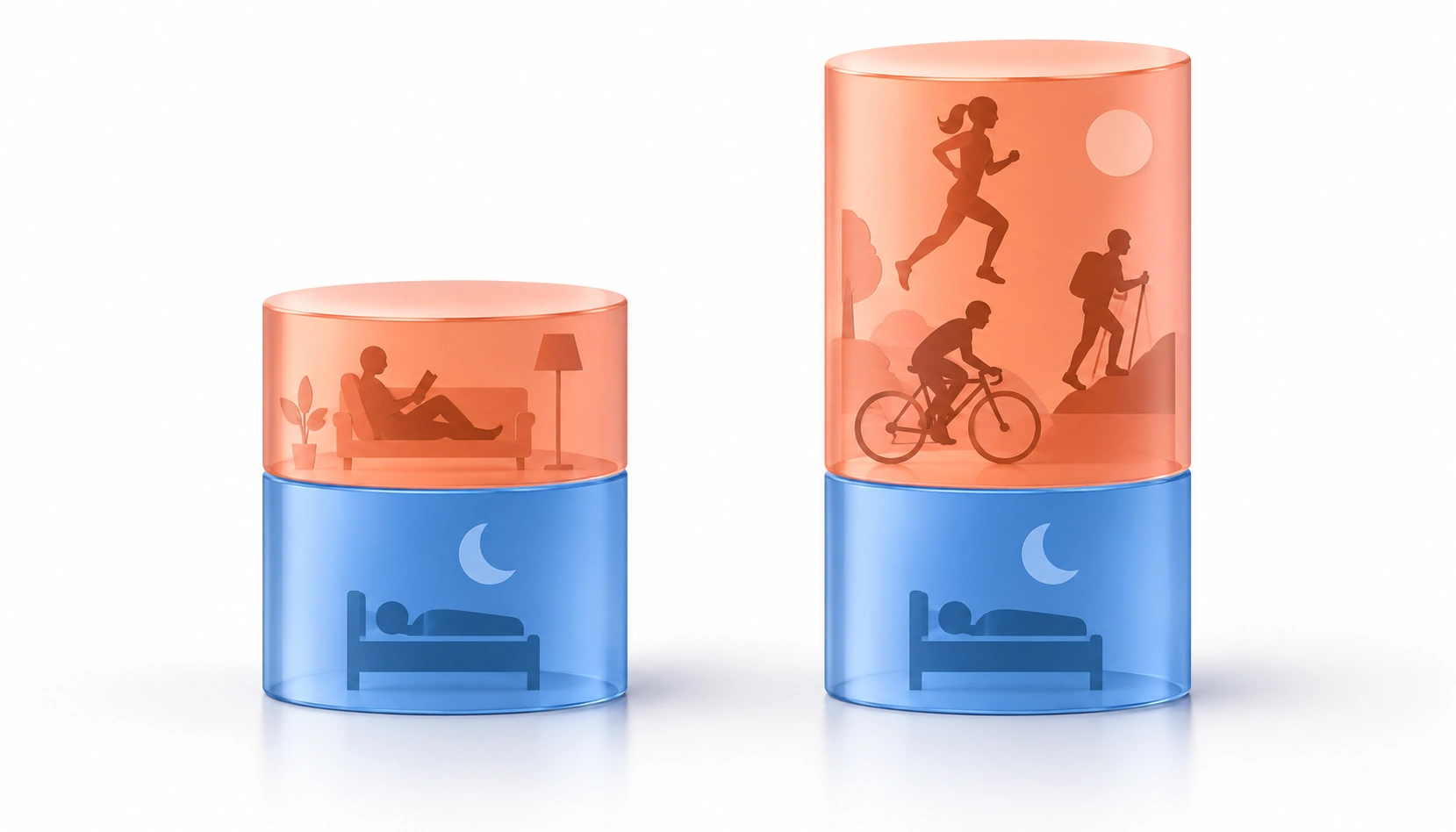
The illustration helps distinguish concepts without supplying a physiological measurement. Its larger orange segment cannot tell you how many calories an added walk would use.
Counts
Enrolled 75; Figure 3 paired analyses: total 73, resting 74.
Attach the analysis count to the result you quote. Do not obtain it by guessing from enrollment or assuming every person had every valid measurement.
A sample relationship does not assign a personal calorie change. If your question concerns adding an activity, identify the additional evidence needed for that change rather than reading it from a line across different people.
Different Questions
Hays and Flack’s 2021 narrative review discusses energy compensation during exercise- and diet-induced weight loss. Its framework includes eating, resting expenditure and nonexercise activity.
A narrative overview brings different studies together; it is not one newly randomized sample. Its cited trial results are not independently verified by this article.
A weight-loss question and a relationship among already weight-stable people need not have the same answer. Before declaring a contradiction, compare the population, outcome, intervention and interval.
Do not import the review’s proposed doses as a personal target. This comparison is about what the evidence asks, not how much someone should eat or exercise.
Record
Use the record below when a headline promises that exercise either “counts fully” or is “canceled.” It organizes a reading task, not a calorie allowance or a weight-loss score.
| Field | Record | Avoid |
|---|---|---|
| Outcome | Daily energy use, weight change or a proposed mechanism. | Treating those as one measurement. |
| Comparison | Differences between people or changes after an assigned intervention. | Replacing one design with the other. |
| Interval | The actual measurement and follow-up window. | Extending the result indefinitely. |
| Analysis | The sample count for that particular result. | Using total enrollment for every test. |
Write one remaining question after the record. A question about a specific workout, long-term weight change or symptoms may need evidence and guidance beyond a daily-expenditure study.
Our published afterburn-calorie guide addresses short post-exercise measurements. Keep that interval separate from a daily total.
For individual medical, nutrition or training decisions, discuss the relevant circumstances with an appropriately qualified professional. This article does not select a personal deficit, workload or treatment.
References
Howard et al. (2025). Physical activity is directly associated with total energy expenditure without evidence of constraint or compensation.
Hays, H. M., & Flack, K. D. (2021). Energy compensation with exercise and dietary-induced weight loss. Journal of Clinical Exercise Physiology, 10(2), 51 to 61. Narrative review.
Source scope: The written main reports and relevant captions were reviewed. This does not include the underlying cited trials, supplements, raw data or all figure pixels.
Medical disclaimer: This article provides general research and fitness information, not individualized medical or nutrition advice. A qualified healthcare professional can assess concerns about weight, fatigue, eating or exercise in your circumstances.