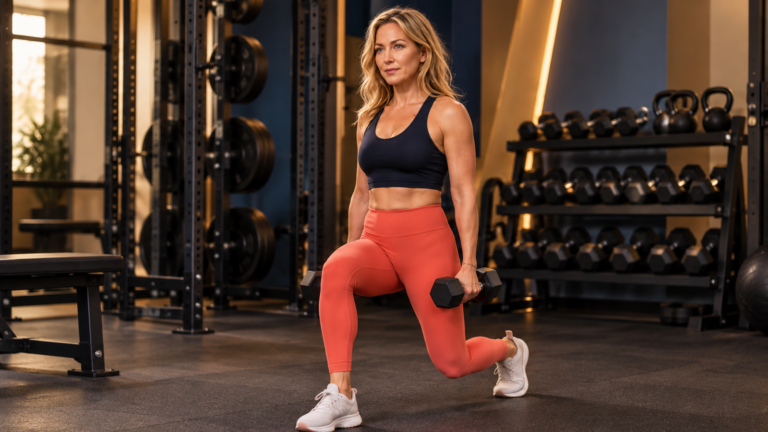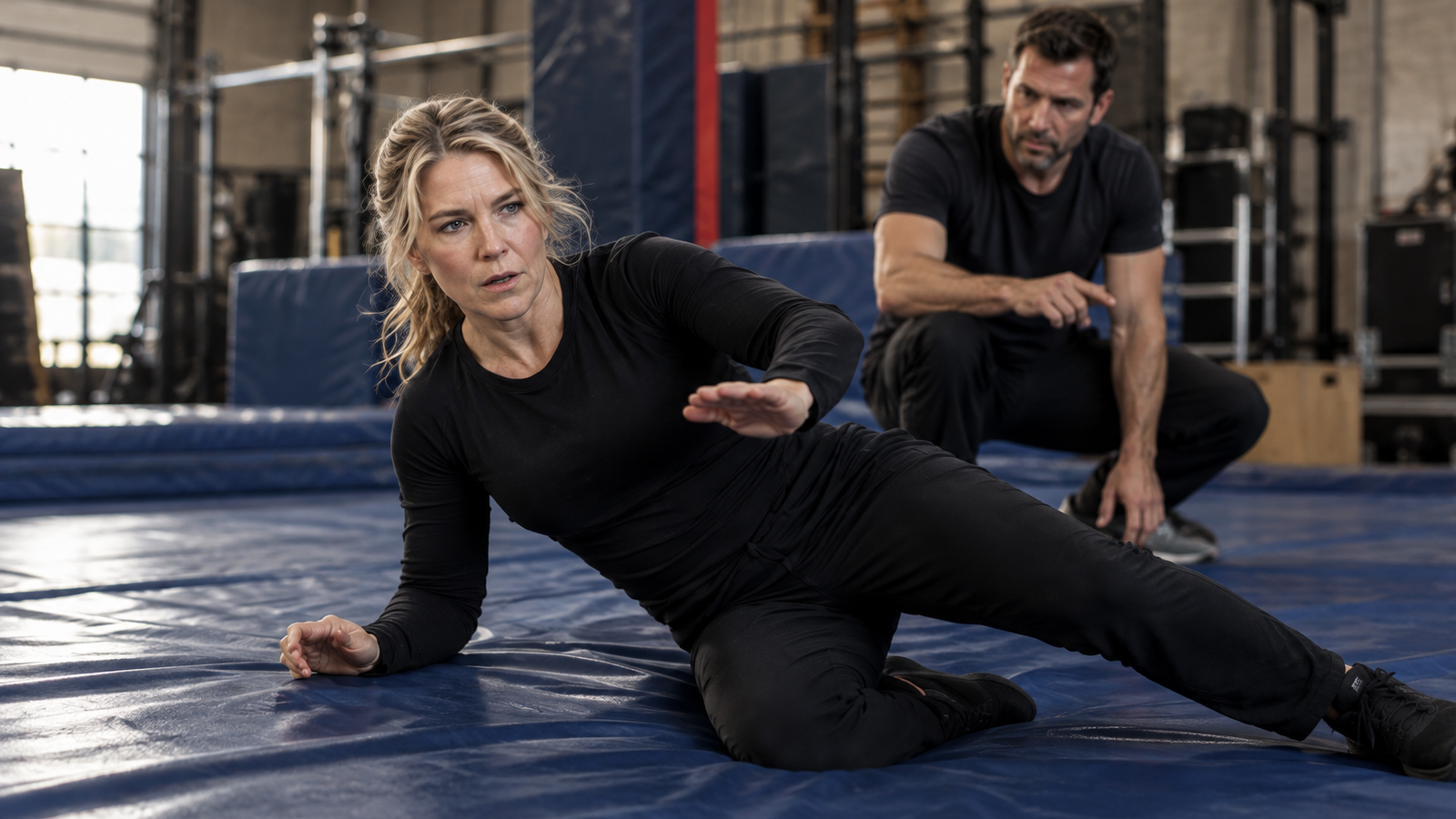

Editor’s note: This article describes a 2021 interview about preparation for a series filmed earlier; it is not a report on Lily Rabe’s current training. The featured and inline images are AI editorial illustrations, not production photographs.
Lily Rabe’s preparation for the psychological thriller Tell Me Your Secrets is a useful case study in training for a physical performance without confusing screen action with everyday fitness. In a February 2021 Shape interview, the actor and her trainers described a shift toward free-weight strength work, conditioning, and adaptable sessions during filming. Rabe said she performed the physical scenes herself. That is a statement about this production, not a reason for untrained viewers to copy stunts. The transferable idea is more modest: define the physical demands of a goal, build capacity gradually, and keep specialized risks under professional control.
The role and the preparation window
The series gave Rabe two identities to portray: Karen and Emma. According to Shape, director Houda Benyamina wanted Emma to look and move like someone hardened by difficult experience. The goal was not simply a number on a scale. Rabe needed strength and a convincing physical presence for chases, confrontations, and other demanding scenes. She was also a new parent when preparation began in 2018, a context that matters because recovery, feeding, and scheduling are real constraints rather than footnotes. This preparation was work for a specific acting job; it should not be presented as a universal postpartum plan.
Shape reported that Rabe had less than two months before shooting the pilot, followed by roughly four more months after the show was picked up. The timeline helps explain the intensity described in the interview. It does not establish that training multiple times a day is necessary or sensible for an average person. A production has a defined filming deadline, coaching resources, and a specific visual and movement brief. Most people are better served by a sustainable schedule that can continue after the first burst of motivation fades.
What her trainers actually used
Rabe began working with Johnny Fontana at a functional training facility in Hollywood. Fontana described a program with a little cardiovascular work and plyometrics, but a larger emphasis on strength training. The reported tools included free weights, battle ropes, sleds, and pull-ups. Deadlifts became prominent enough that Rabe noticed calluses on her hands. These are details from the published interview, not a fully specified workout prescription: the article did not provide a verified set-by-set program, weekly loading chart, or a stunt coordinator’s formal rehearsal plan.
That distinction prevents a common celebrity-fitness mistake. Knowing that a person used a deadlift or sled does not tell us what weight they lifted, how they scaled the movement, or what prior capacity made it appropriate. Training is not just a catalog of impressive-looking exercises. It is the dose, technique, rest, supervision, and progression that determine whether work is useful. A beginner can train the same movement pattern with a light dumbbell or body weight while an experienced performer uses heavier equipment.
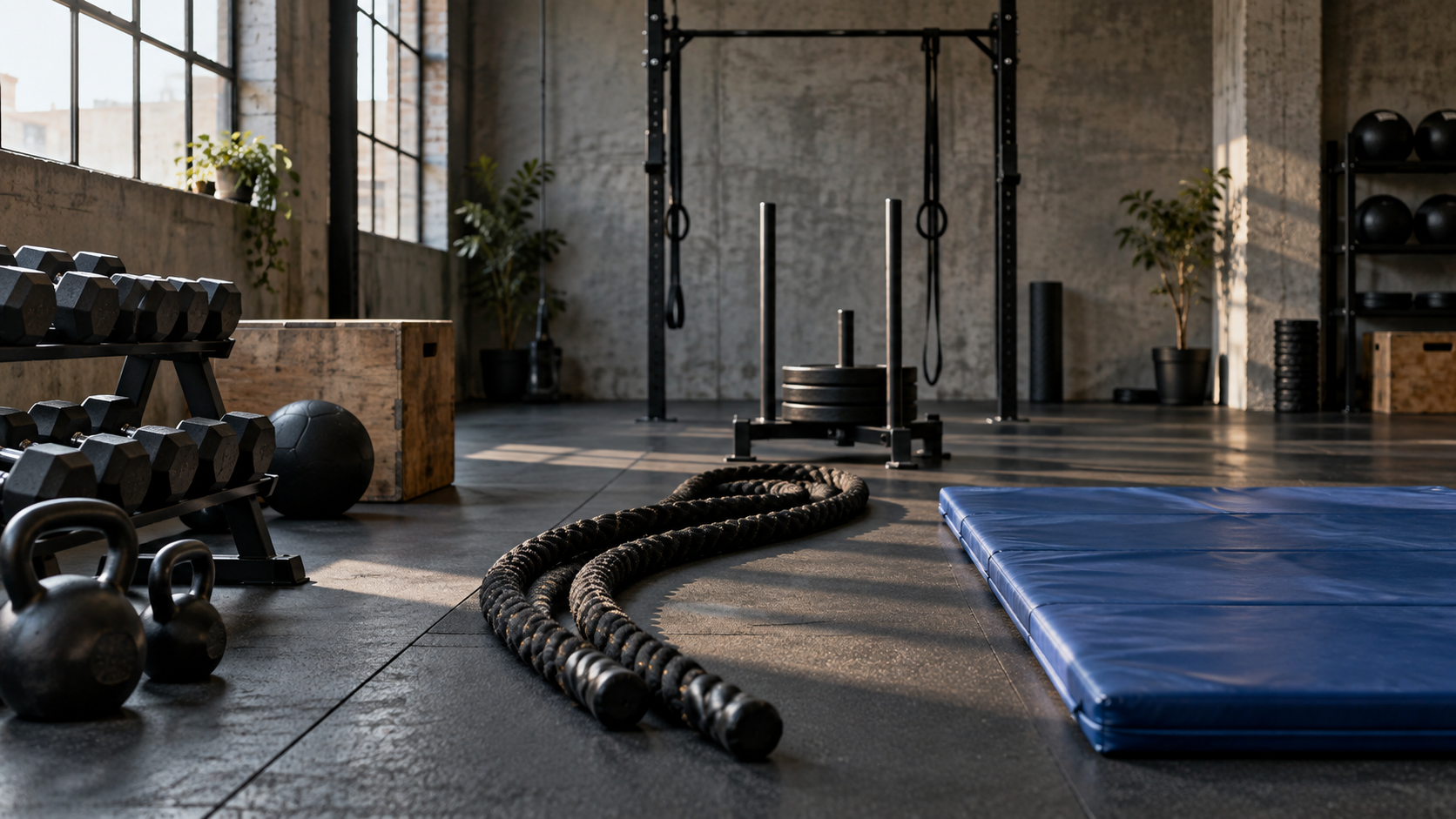
When production moved to New Orleans, the schedule shifted. Shape says Rabe continued with local trainer Jerren Pierce, sometimes meeting at lunch and sometimes late at night. The important point is not that a parking-lot workout at 11 p.m. is ideal. It is that the training plan was adjusted to the realities of a moving filming schedule. For a reader with a job, caregiving, or irregular hours, a shorter manageable session is usually more repeatable than a perfect routine that exists only on paper.
Strength was part of a character, not a beauty target
Rabe described strength training as a change in how she thought about exercise. In the Shape interview, she contrasted a former cardio-first mindset with interest in what she could lift and do. She said she did not focus on weighing herself during this period. That does not mean the scale is inherently useless for everyone. It means her stated goal was performance and the physical portrayal of a role. If a training plan has a functional goal, progress can also be tracked by controlled repetitions, load tolerance, range of motion, and how well a person recovers.
The interview also addressed food during a period when Rabe was breastfeeding. She described a calorie-sufficient, fat- and protein-rich eating pattern that she worked out by trial and error. This is a personal account, not evidence that another postpartum person should copy her food choices or energy intake. Individual nutrition needs differ substantially, particularly around pregnancy, lactation, medical conditions, and training volume. Readers in those situations should use qualified clinical guidance rather than a celebrity menu as a prescription.
What “doing her own stunts” means—and does not mean
Discussing physically demanding scenes, Rabe told Shape there were no stunt doubles for the sequences she described and that she did the work herself. The account mentions fighting, chasing, and immersion in swampland. It does not publish a comprehensive stunt-safety protocol or demonstrate that every moment of every episode was executed without other production specialists. The precise claim supported by the source is that Rabe reported performing the relevant action scenes herself, after substantial physical preparation.
General strength may help an actor tolerate the demands of repeated takes, but gym strength and stunt competence are different skills. Timing, falls, contact choreography, surfaces, camera positions, and other on-set hazards require specialized planning. A viewer should never translate a cinematic scene into a home challenge. If the appeal is movement skill, choose a reputable coached program in a controlled setting, with appropriate mats, spotting, and gradual instruction. There is no need to perform a dangerous stunt to gain the ordinary health benefits of activity.
The broader fitness lesson is less extreme
The U.S. Physical Activity Guidelines recommend that adults work toward 150 to 300 minutes of moderate aerobic activity each week and muscle-strengthening activity on at least two days. They explicitly encourage inactive adults to start with small amounts and build over time. Those recommendations are a more useful foundation for most readers than a compressed television-production timeline. Walking, cycling, and other aerobic work can coexist with lifting; Rabe’s account was a change in emphasis, not proof that cardio has no value.
An American College of Sports Medicine update emphasizes that moving from no resistance work to some resistance work is especially meaningful. You do not need a celebrity gym or a maximal effort to begin. A simple plan might include a squat or sit-to-stand pattern, a hinge, a push, a pull, and a carry or trunk-stability task. Those are illustrative movement categories, not Rabe’s confirmed exercise order. Pick versions that fit your abilities, use a load you can control, and increase the challenge only after the movement is dependable.
Training for a specific goal also means respecting recovery. If a session leaves technique deteriorating, pain escalating, or everyday function impaired, adding more is not automatically productive. Rabe had coaches and a role-driven schedule; readers should not infer that her reported frequency is a safe benchmark. Keep the goal clear, distribute harder days, and adjust for sleep, illness, injury, and life demands. A physical therapist or appropriately credentialed coach can help when previous injury or a complicated health history changes the risk.
How to borrow the good idea without borrowing the risk
First, identify a real-world outcome: climbing stairs comfortably, lifting a suitcase, carrying a child, or returning to a recreational sport. Second, identify the underlying capacities, such as leg strength, pulling strength, aerobic endurance, or balance. Third, choose a small set of exercises that train those capacities and can be measured. Fourth, practice them consistently enough to learn the movements before adding complexity. This is a general training framework inferred from the role-preparation story and public guidelines, not a reproduction of Rabe’s private program.
For example, a novice aiming to move more confidently might practice a supported squat, an easy hip hinge, a row, and a short walk on two or three days per week, scaling the amount to their starting point. Someone with more experience might use free weights and progressively heavier resistance. Battle ropes, sleds, and pull-ups are options, not prerequisites. The right exercise is the one a person can perform well, recover from, and continue long enough to adapt.
Finally, keep the story in its proper time and setting. Rabe was talking about a particular 2018 production and a 2021 interview, not announcing a current routine. The strongest takeaway is not that everyone should become their own stunt double. It is that thoughtfully selected strength training helped her prepare for a physically specific job, and she found value in measuring capability rather than appearance. For an everyday exerciser, the same mindset can be applied at a calmer pace: build useful strength, keep aerobic activity, and leave stunt work to trained professionals.
Sources and verification
- Shape, interview with Lily Rabe and trainers, February 18, 2021 — role, dates, exercises, on-set training, and Rabe’s account of physical scenes.
- U.S. Department of Health and Human Services, Physical Activity Guidelines Q&A — adult aerobic and strengthening recommendations and gradual starting advice.
- American College of Sports Medicine, 2026 resistance-training guidance update — evidence-based context on starting strength work.