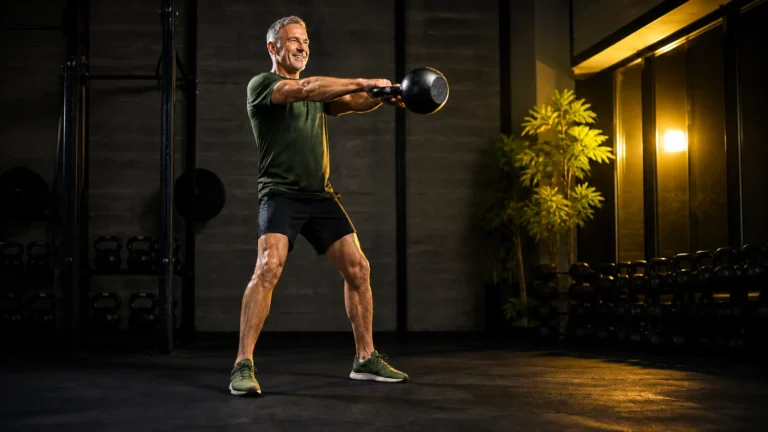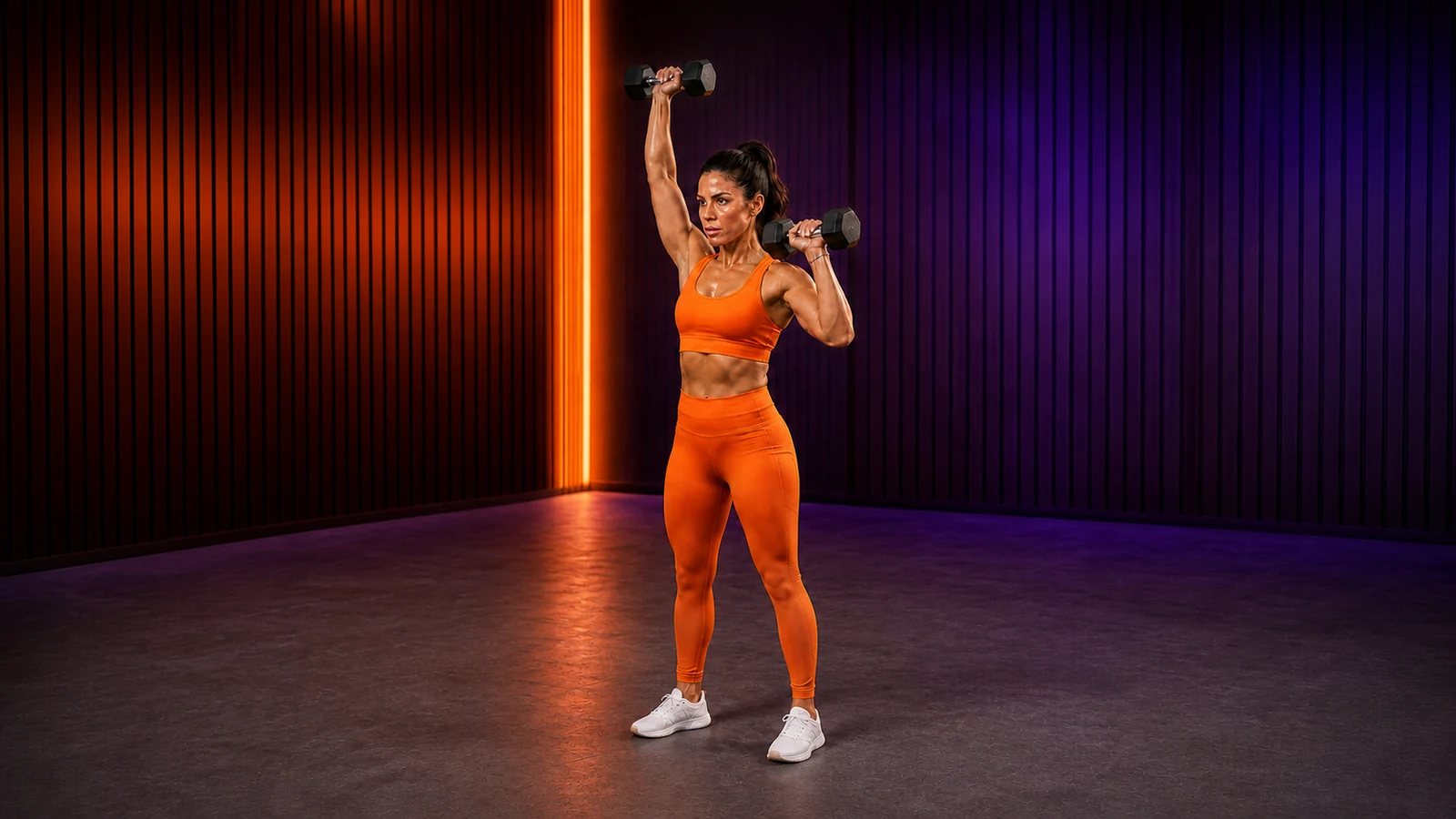

A HASfit video promises a complete full body workout using nothing but dumbbells.
The session runs 30 minutes.
It never repeats a single exercise from start to finish.
That combination sounds appealing for anyone short on time or without a gym membership.
But does real exercise science actually back up training this way?
This article checks the format against the published research on full body training, dumbbell training, and home based workouts.
The goal is not to attack a popular channel.
The goal is to separate what science supports from what is simply an entertaining way to present a workout.
What the Video Claims
HASfit markets the video as a no repeat strength session.
Every move in the workout is different from the one before it.
Nothing gets a second round within the same session.
The whole thing happens at home with a single pair of dumbbells.
HASfit frames this as an efficient way to train the entire body in one sitting.
Millions of people watch home workout videos like this one every year.
Many viewers assume a channel’s popularity means the format is backed by strong evidence.
That assumption is worth checking against the actual research.
In practice, a no repeat structure usually leans on compound movements.
A single dumbbell squat to press, for example, can hit legs, shoulders, and the core at once.
That design choice is smart programming, even before any citation gets involved.
A workout video can be popular and still leave out the research behind why parts of it actually work.
What the Research Shows About Full Body Dumbbell Training
Full body training means working most major muscle groups in one session.
That is different from a split routine that trains one or two muscle groups per day.
A 2019 systematic review and meta-analysis addressed a related question: how training frequency affects muscle growth when weekly work is matched.
Schoenfeld, Grgic, and Krieger analyzed studies on weekly resistance training frequency (Schoenfeld et al., 2019).
They wanted to know how often a muscle needs training each week to grow.
The answer was not about frequency on its own.
Total weekly training volume mattered more than how that volume got split across the week.
In the included studies, spreading matched weekly volume across more days did not meaningfully change average muscle growth. That does not mean one 30-minute video replaces a full training week.
The key is matching the total amount of work, not the number of training days.
The finding supports flexible scheduling, but it does not test this no-repeat format.
A single 30 minute full body dumbbell session is a legitimate way to train, not just a shortcut.
One likely mechanism is muscle protein synthesis, the process that repairs and builds muscle tissue.
That process stays elevated for roughly 24 to 48 hours after a hard set.
A full body session can trigger that response in every major muscle group on the same day.
A split routine simply spreads the same total stimulus across more days of the week.
Neither approach has a built in advantage once the weekly workload matches.
The next question is whether dumbbells themselves get the job done as well as gym machines.
A 2023 systematic review and meta-analysis compared free weight training to machine based training.
Haugen and colleagues pooled 13 studies covering more than 1,000 participants (Haugen et al., 2023).
They measured strength, muscle growth, and jump performance across both training styles.
When comparing the two directly, they found no meaningful overall difference in outcomes.
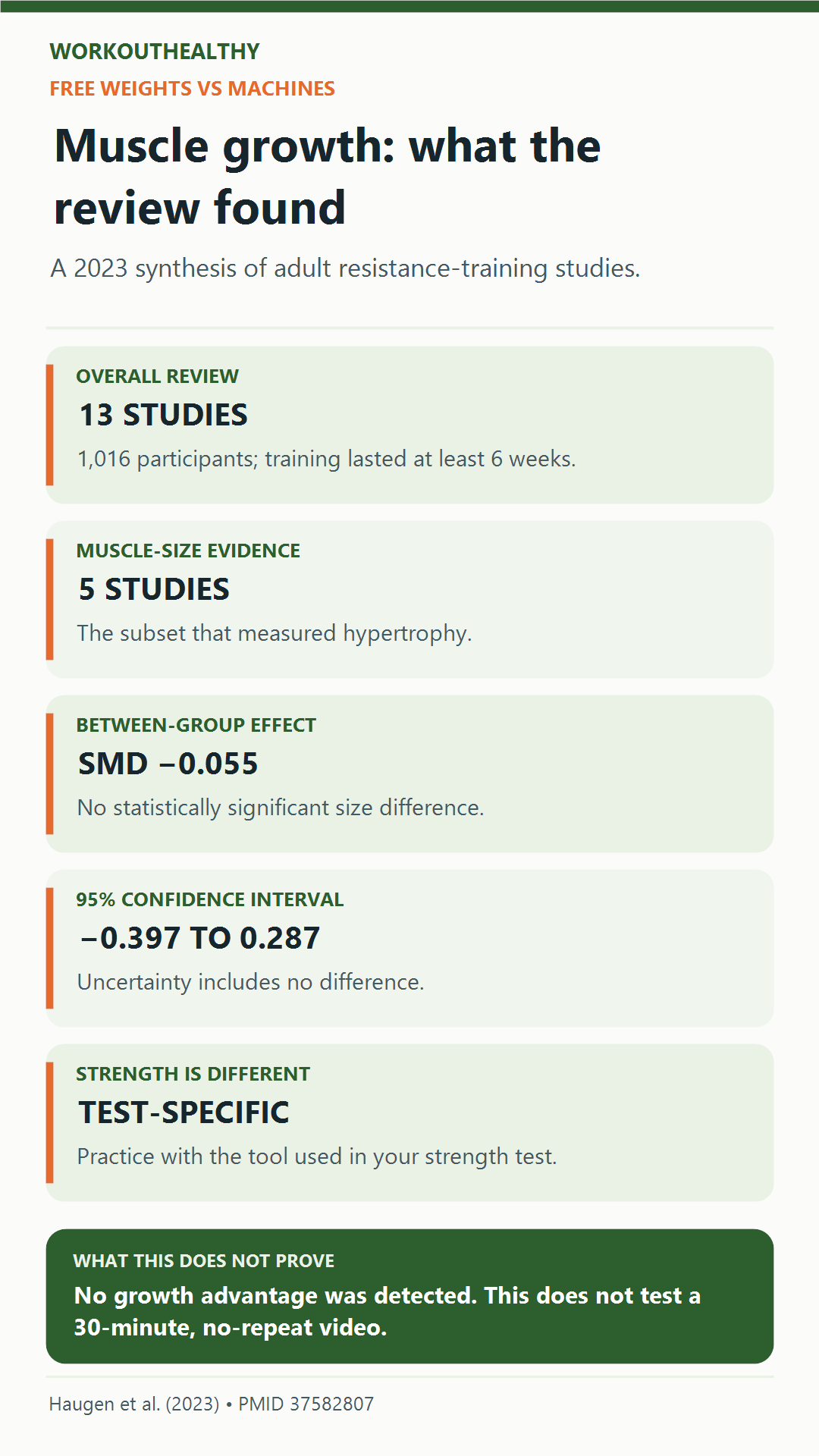
Dumbbells are free weights, but the review did not directly test this exact dumbbell routine.
The tool matters far less than showing up and doing the work consistently.
Free weights do ask more of the small stabilizer muscles around each joint.
A machine guides the weight along a fixed path, but a dumbbell does not.
That extra balance demand is one reason dumbbell training tends to carry over well to everyday movement.
Resistance training also does more than build visible muscle.
Our guide on whether lifting weights keeps your brain young looks at research on strength training and brain function.
That research gives another reason a simple dumbbell routine can be worth the 30 minutes.
Does Training at Home Work as Well as a Gym
Many people assume real results require a gym membership.
A 2021 systematic review and meta-analysis tested that assumption directly.
Mañas and colleagues reviewed randomized controlled trials of unsupervised home based resistance training (Mañas et al., 2021).
The trials studied community dwelling older adults training without any gym or supervisor.
Participants used simple tools like resistance bands and light dumbbells.
The review found meaningful improvements in strength and muscle function from home training alone.
That review focused on older adults, not general fitness enthusiasts of every age.
Still, the core finding matters for a video like this one.
A structured home program, done consistently, can produce real strength gains.
Home training does trade away a few things a gym normally offers.
There is no staff to correct your form on a new exercise.
There is also a practical ceiling on how heavy your dumbbells can get before space and cost become an issue.
Adjustable dumbbells or a small extra pair can push that ceiling further without needing a full rack.
The gym is not a requirement for progress. Consistency and enough real effort are.
Home training also removes common barriers like travel time and gym anxiety.
That matters for anyone trying to protect muscle while managing a busy schedule.
Our article on why people lose weight and muscle mass together explains why consistent resistance training matters more than the exact setting.
A living room with dumbbells can be a real training environment, not a lesser one.
A phone video or mirror can help you review form, though neither replaces qualified coaching for difficult or painful movements.
Filming a set and comparing it to a trusted tutorial catches most obvious mistakes.
What This Evidence Does Not Prove
None of these studies tested the HASfit video itself.
No study measured this exact 30 minute, no repeated exercise dumbbell format.
The frequency research supports full body sessions in general, not this specific workout.
The free weight research supports dumbbells broadly, not this specific exercise list.
The home training research studied older adults, not a general audience of every age group.
These findings are related and supportive, not a direct study of this video.
The idea of never repeating an exercise also has limited direct research behind it.
Repeating exercises across weeks is actually how most people track and build real strength.
Novelty can help motivation for a single session.
But skill and steady progress usually need some repetition over time.
A workout that constantly changes exercises makes it harder to know if you are actually improving.
People also respond differently to the same program.
Age, training history, and recovery capacity all shape how someone reacts to a given routine.
The reviewed studies report group averages, not a guarantee for any one individual.
No study has directly tested whether 30 minutes is the ideal length for a full body session either.
It could work well for many people simply because it fits into a busy day.
Common Mistakes With a Time Efficient, No Repeat Format
The biggest mistake is treating exercise variety as a substitute for progression.
A 2020 systematic review and meta-analysis looked at the minimum training needed for strength gains.
Androulakis-Korakakis, Fisher, and Steele reviewed how little training could still build strength (Androulakis-Korakakis et al., 2020).
They found that even small amounts of hard, focused training can work.
But that training still needs enough intensity and enough total sets over time.
Constantly switching exercises can quietly reduce how much real work each muscle gets.
Another common mistake is picking weights that are too light for a full body format.
Thirty minutes moves fast when a workout never repeats a movement.
Rushing through unfamiliar exercises raises the risk of sloppy form.
Our comparison of the floor press and bench press shows how small setup details change what a dumbbell exercise actually trains.
Skipping a proper warm up is another common mistake in any 30 minute format.
A short session leaves little room to recover from a rushed first few minutes.
Finally, some people chase novelty every single workout and never repeat a program long enough to see change.
Progress needs a program you can measure, not just a program that feels fresh.
A dumbbell only session can also skew toward pressing and squatting patterns.
Rows, pulls, and hip hinge movements are easy to underrepresent without a plan.
Skipping the back and hamstrings in favor of visible mirror muscles is a common long term mistake.
Check that any full body routine includes a pulling exercise for every pressing exercise.
A Practical Takeaway
A 30 minute, full body dumbbell workout is a reasonable way to train.
The research on training frequency, free weights, and home training all supports the basic structure.
Just do not assume every detail of the format is proven science on its own.
Pick a core set of exercises you can repeat and track across several weeks.
Write down your weights and reps so you can see real progress.
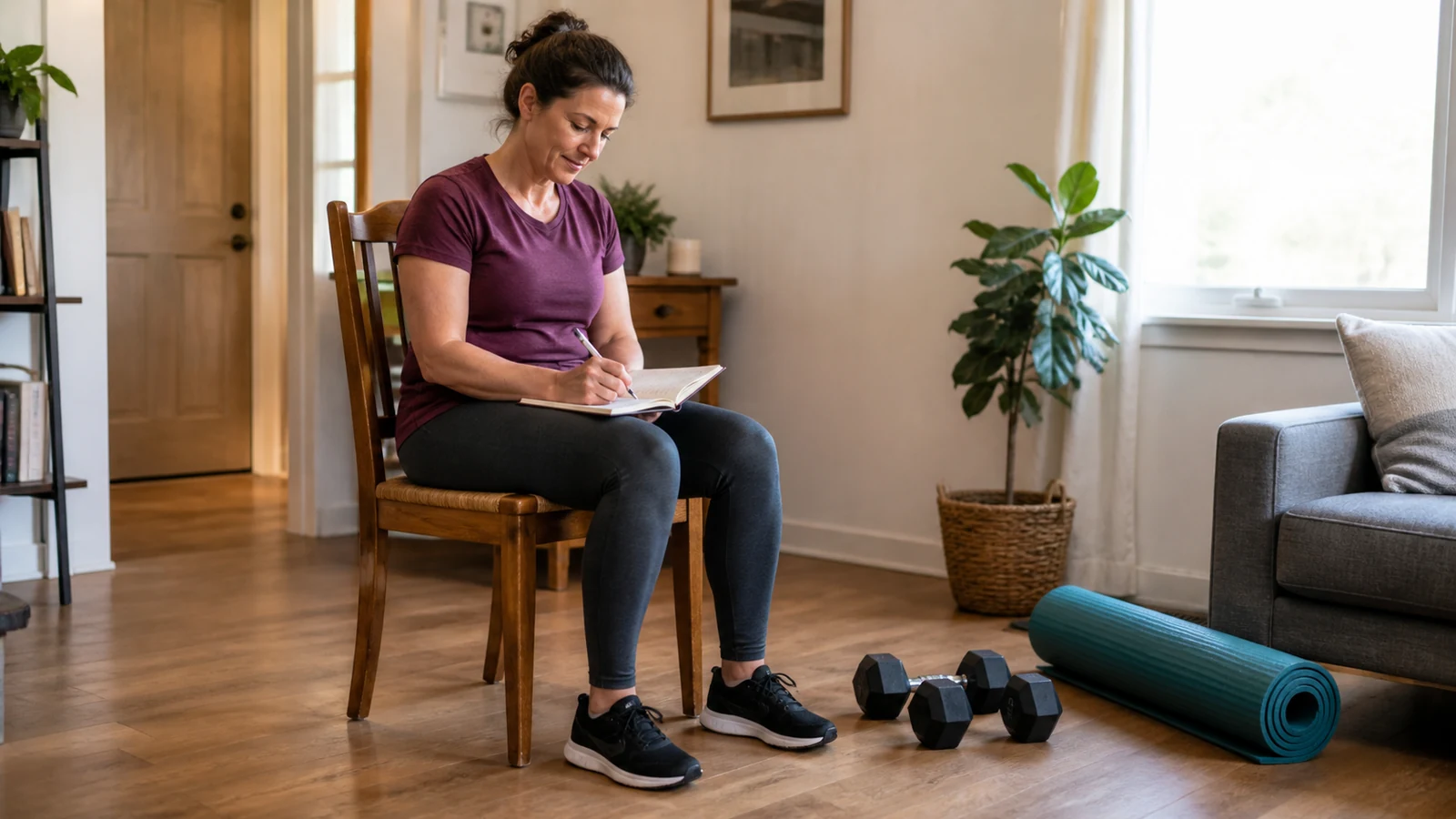
Increase the weight or reps gradually once a movement starts to feel manageable.
Variety can keep a routine interesting.
But real progress still needs some repetition and a clear way to measure it.
A simple approach is picking six to eight core exercises for four to six weeks.
Keep the same core list, and let the reps or weight go up gradually each week.
Rotate in new exercises only after that block ends, not every single session.
Rest 48 to 72 hours between full body sessions so muscles can recover.
Aim for two to four full body sessions per week for most goals.
If you enjoy lifting more than running, you are not alone.
Our breakdown of why most readers prefer weightlifting over running found similar reasons, including convenience and joint friendly training.
Whatever format you choose, the evidence points to one consistent theme.
Showing up regularly with real effort matters more than any single workout gimmick.
Watch the Original Video
Want more like this? Subscribe to WorkoutHealthy Insider for practical explanations behind popular fitness claims.
References
Androulakis-Korakakis, P., Fisher, J. P., & Steele, J. (2020). The minimum effective training dose required to increase 1RM strength in resistance-trained men: A systematic review and meta-analysis. Sports Medicine, 50(4), 751 to 765. https://doi.org/10.1007/s40279-019-01236-0
Haugen, M. E., Vårvik, F. T., Larsen, S., Haugen, A. S., van den Tillaar, R., & Bjørnsen, T. (2023). Effect of free-weight vs. machine-based strength training on maximal strength, hypertrophy and jump performance: A systematic review and meta-analysis. BMC Sports Science, Medicine and Rehabilitation, 15(1), Article 103. https://doi.org/10.1186/s13102-023-00713-4
Mañas, A., Gómez-Redondo, P., Valenzuela, P. L., Morales, J. S., Lucía, A., & Ara, I. (2021). Unsupervised home-based resistance training for community-dwelling older adults: A systematic review and meta-analysis of randomized controlled trials. Ageing Research Reviews, 69, Article 101368. https://doi.org/10.1016/j.arr.2021.101368
Schoenfeld, B. J., Grgic, J., & Krieger, J. (2019). How many times per week should a muscle be trained to maximize muscle hypertrophy? A systematic review and meta-analysis of studies examining the effects of resistance training frequency. Journal of Sports Sciences, 37(11), 1286 to 1295. https://doi.org/10.1080/02640414.2018.1555906
This article is for general information only and is not medical advice. If you have an injury, ongoing pain, or a medical condition, talk to a doctor or physical therapist before you change how you train or eat.