
A Viral Warning That Does Not Hold Up
A recent video titled “This Combination Destroys Muscle After 60” claims that eating eggs together with three common vegetables can destroy muscle tissue in older adults.
That claim has no real biochemical mechanism behind it. No published nutrition study supports it.
This article treats that specific claim as unverified clickbait and sets it aside, rather than repeating it as fact.
The real question is simpler and much better supported by research: does breakfast protein actually matter for keeping muscle after 60?
What Real Research Says About Protein and Breakfast Timing
Researchers have studied this exact question, and the pattern that shows up again and again is about distribution, not any single food.
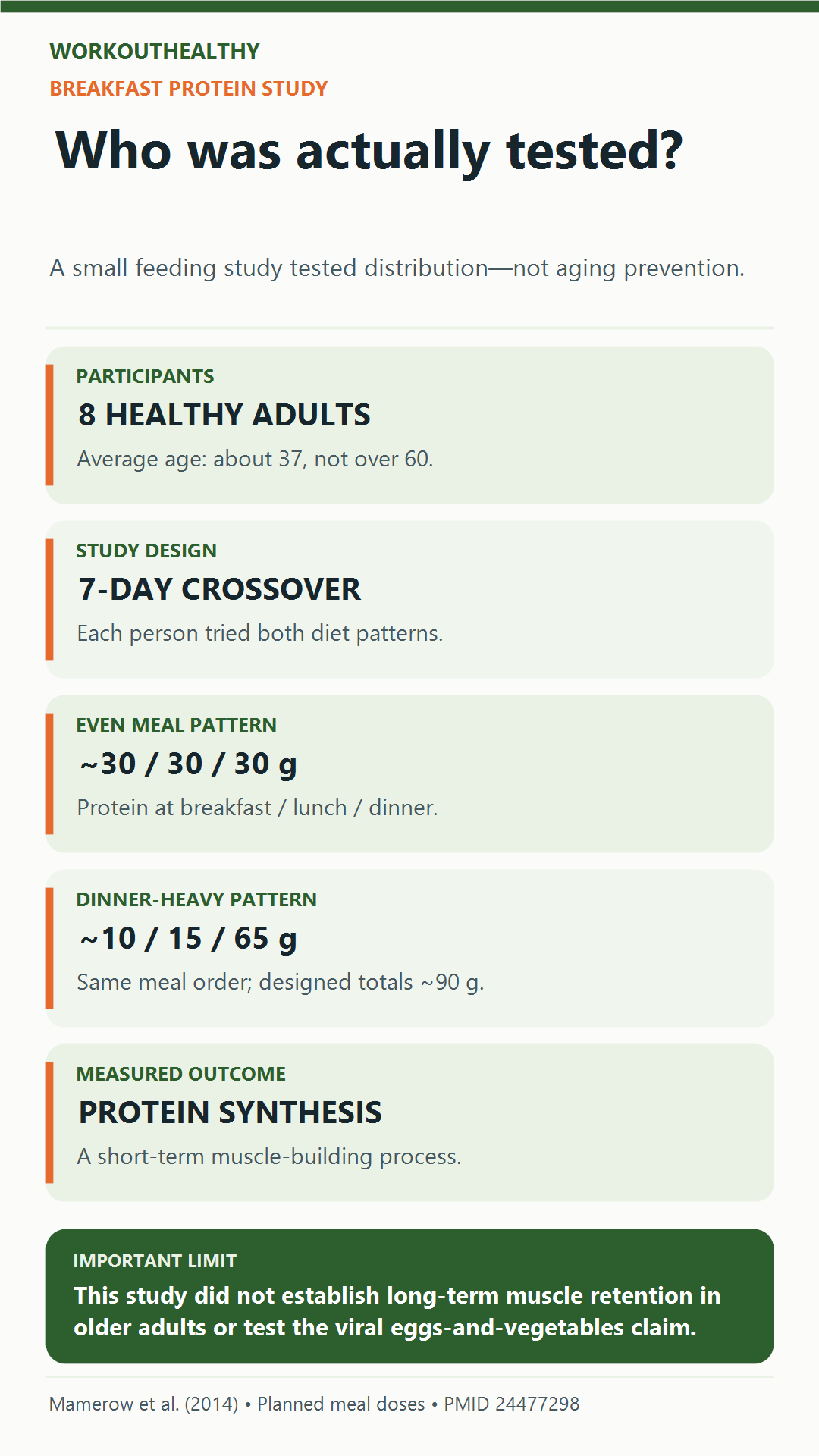
In a controlled feeding study, healthy adults ate the same total amount of protein each day, but in two different patterns.
One pattern spread protein evenly across three meals, roughly 30 grams at breakfast, lunch, and dinner.
The other pattern loaded most of the protein into dinner and left breakfast with only about 10 grams.
Muscle protein synthesis measured over 24 hours was about 25 percent higher in the group that spread protein evenly across the day (Mamerow et al., 2014).
The 30 gram breakfast alone triggered roughly 30 percent more muscle building activity than the 10 gram breakfast did.
A 2024 review of protein quantity and distribution research reached a similar conclusion at a larger scale.
Most adults in the United States eat the majority of their daily protein at dinner and very little at breakfast (Layman, 2024).
That same review found that shifting protein earlier in the day, without increasing total daily protein, tended to protect more lean muscle mass during weight loss.
Spreading protein evenly across meals, rather than saving most of it for dinner, appears to stimulate more muscle protein synthesis over a full day than the same total amount of protein eaten in an uneven pattern.
This is not proof that breakfast protein alone prevents muscle loss.
It also does not mean vegetables at breakfast are somehow dangerous.
It simply means that when protein arrives during the day matters, not just how much of it a person eats in total.
Why Timing Matters More After 60: Anabolic Resistance and the Leucine Threshold
Muscle tissue is constantly being broken down and rebuilt, and eating protein is one of the main signals that tells the body to build.
Inside a protein rich meal, one amino acid called leucine acts like a trigger switch for that building process.
In younger adults, even a modest amount of protein, around 20 grams, is usually enough leucine to flip that switch.
Aging muscle responds differently, a pattern researchers call anabolic resistance.
Older muscle needs a larger dose of protein and leucine in a single meal to trigger the same building response that a smaller dose triggers in younger muscle (Burd, Gorissen, and van Loon, 2013).
A direct comparison study found that older men needed a noticeably larger relative protein intake than younger men to reach the same rise in muscle protein synthesis after eating (Moore et al., 2015).
In practical terms, many researchers now suggest older adults aim for roughly 30 to 40 grams of high quality protein per meal, particularly at meals like breakfast that tend to run low.
A small bowl of cereal with milk, a piece of toast, or black coffee alone will not come close to that amount.
Protein quality plays a role here too, not just the total gram count on a label.
High quality protein sources contain a full mix of essential amino acids, including enough leucine to be useful in a single meal.
Eggs, dairy, fish, poultry, and red meat are generally considered complete proteins for this purpose.
Most single plant proteins are missing or low in at least one essential amino acid, though combining a few different plant sources across the day generally solves this.
What This Evidence Does Not Prove
It is worth being honest about the limits of this research.
These studies mostly measure muscle protein synthesis over hours or a single day, which is a useful marker but not the same as directly measuring years of muscle mass or strength outcomes.
No single study proves that changing breakfast alone will prevent sarcopenia, the medical term for age related muscle loss.
Muscle loss after 60 has several contributing causes, and breakfast timing is only one piece of a much larger picture that includes inactivity, illness, hormone changes, and low total daily protein, as this breakdown of the causes behind unwanted weight and muscle loss explains in more detail.
This research also does not prove that resistance exercise is optional.
Protein without any mechanical loading on the muscle, such as walking or lifting, produces a much smaller building effect than protein combined with resistance training.
And none of this research says vegetables are a problem when eaten with eggs or any other protein food.
Common Mistakes People Make With Breakfast Protein
Skipping breakfast entirely, or treating it as just coffee, is one of the most common mistakes.
Relying on carbohydrate heavy foods like cereal, a bagel, or juice for breakfast provides very little usable protein.
A splash of milk in coffee or a small yogurt cup often gets counted as a protein source, but it usually supplies less than 10 grams, far short of what older adults likely need in one sitting.
Choosing only plant based proteins without adjusting the portion size is another common misstep.
Plant proteins like oatmeal, beans, or toast generally contain less leucine per gram than eggs, dairy, or meat, so a larger portion is often needed to reach the same trigger point.
Some people try to fix everything at dinner instead, eating a large steak or fish fillet at night while still skipping protein all day.
Based on the distribution research above, that pattern misses the advantage of an earlier, well timed dose of protein.
Finally, some people cut vegetables and fiber out of breakfast entirely out of fear stirred up by videos like the one behind this article, which is an overcorrection with no real basis.
Who Should Check With a Doctor or Registered Dietitian First
Most healthy older adults can safely increase protein at breakfast without any special precautions.
A few groups should talk to a doctor or registered dietitian before making a significant change.
People with chronic kidney disease who are not on dialysis are often advised to limit total protein intake, so adding more protein at breakfast could work against their treatment plan (Bauer et al., 2013).
People managing gout may need to be thoughtful about which protein foods they increase, since some protein rich foods are also high in purines.
Anyone with diabetes who is changing meal composition should coordinate with their care team, since protein, fat, and carbohydrate balance can affect blood sugar management.
People recovering from unexplained or rapid weight loss should see a doctor first, since sudden muscle loss can sometimes signal an underlying medical condition that needs its own diagnosis and treatment.
Anyone taking blood thinners or following a restricted diet for another condition should also loop in their care team before making major dietary changes.
Practical High Protein Breakfast Ideas That Actually Help
The goal for most older adults is roughly 25 to 40 grams of protein at breakfast, depending on body size and overall health.
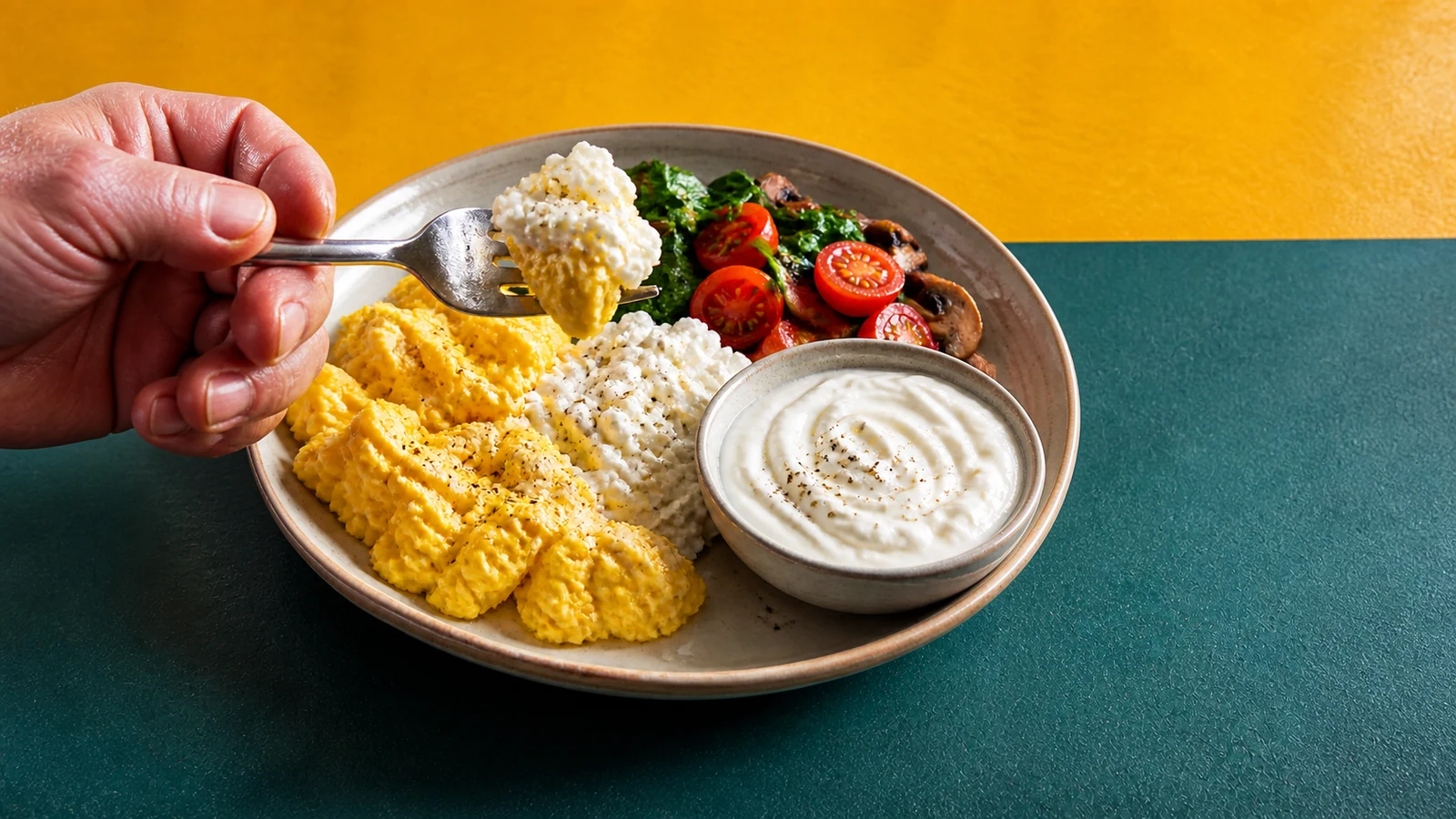
Whole eggs are one of the most efficient ways to get there, and there is no credible reason to avoid pairing them with vegetables like spinach, peppers, or tomatoes.

Three whole eggs plus a couple of egg whites, scrambled together with vegetables, comfortably supplies 25 to 30 grams of protein on one plate.
For a sense of how far egg based protein can be pushed, one bodybuilder’s famous 1993 diet reportedly built an entire day of eating around 140 egg whites and four pounds of meat, an extreme example rather than a template, but proof that eggs and other protein foods work together rather than against each other.
Greek yogurt, which typically contains 15 to 20 grams of protein per cup, pairs well with nuts, seeds, or berries to round out the meal.
Cottage cheese offers a similar protein amount and works well with fruit or a drizzle of honey for anyone who wants a milder flavor.
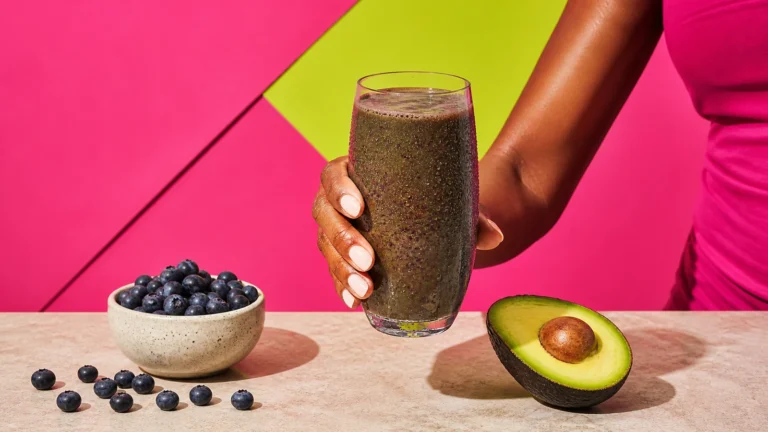
A protein smoothie made with milk or fortified soy milk, plain yogurt, and a scoop of protein powder can reach 30 grams or more with very little preparation time.
Oatmeal made with milk instead of water, stirred with a scoop of protein powder or a spoonful of nut butter, turns a low protein breakfast into a much stronger one.
Leftover chicken, fish, or beans from the night before, reheated alongside eggs or eaten on their own, is a simple way to raise the protein content of breakfast without buying new ingredients.
People who eat mostly plant based can combine tofu, beans, and a fortified plant milk to approach the same protein and leucine target, though larger portions are usually needed compared with animal proteins.
Building muscle after 60 is not just theoretical, and it has been done at a remarkable level, as shown by the woman who holds the Guinness World Record for oldest female bodybuilder, a reminder that age alone does not decide how much muscle a person can keep or build.
Total daily protein intake still matters alongside breakfast timing.
General guidance for healthy older adults points toward roughly 1.0 to 1.2 grams of protein per kilogram of body weight each day, higher than the amount typically recommended for younger adults (Bauer et al., 2013).
Someone weighing around 70 kilograms, or about 154 pounds, would land somewhere around 70 to 84 grams of protein across the whole day under that guidance.
Spreading that total across three or four meals, with at least 25 to 30 grams landing at breakfast, is a practical way to apply both the total intake guidance and the per meal threshold research at the same time.
Watch the Original Video
Want more like this? Subscribe to WorkoutHealthy Insider for practical explanations behind popular fitness claims.
References
Bauer, J., Biolo, G., Cederholm, T., Cesari, M., Cruz-Jentoft, A. J., Morley, J. E., Phillips, S., Sieber, C., Stehle, P., Teta, D., Visvanathan, R., Volpi, E., & Boirie, Y. (2013). Evidence-based recommendations for optimal dietary protein intake in older people: A position paper from the PROT-AGE Study Group. Journal of the American Medical Directors Association, 14(8), 542 to 559. https://doi.org/10.1016/j.jamda.2013.05.021
Burd, N. A., Gorissen, S. H., & van Loon, L. J. C. (2013). Anabolic resistance of muscle protein synthesis with aging. Exercise and Sport Sciences Reviews, 41(3), 169 to 173. https://doi.org/10.1097/JES.0b013e318292f3d5
Layman, D. K. (2024). Impacts of protein quantity and distribution on body composition. Frontiers in Nutrition, 11, Article 1388986. https://doi.org/10.3389/fnut.2024.1388986
Mamerow, M. M., Mettler, J. A., English, K. L., Casperson, S. L., Arentson-Lantz, E., Sheffield-Moore, M., Layman, D. K., & Paddon-Jones, D. (2014). Dietary protein distribution positively influences 24-h muscle protein synthesis in healthy adults. The Journal of Nutrition, 144(6), 876 to 880. https://doi.org/10.3945/jn.113.185280
Moore, D. R., Churchward-Venne, T. A., Witard, O., Breen, L., Burd, N. A., Tipton, K. D., & Phillips, S. M. (2015). Protein ingestion to stimulate myofibrillar protein synthesis requires greater relative protein intakes in healthy older versus younger men. The Journals of Gerontology: Series A, 70(1), 57 to 62. https://doi.org/10.1093/gerona/glu103
This article is for general information only and is not medical advice. If you have an injury, ongoing pain, or a medical condition, talk to a doctor or physical therapist before you change how you train or eat.